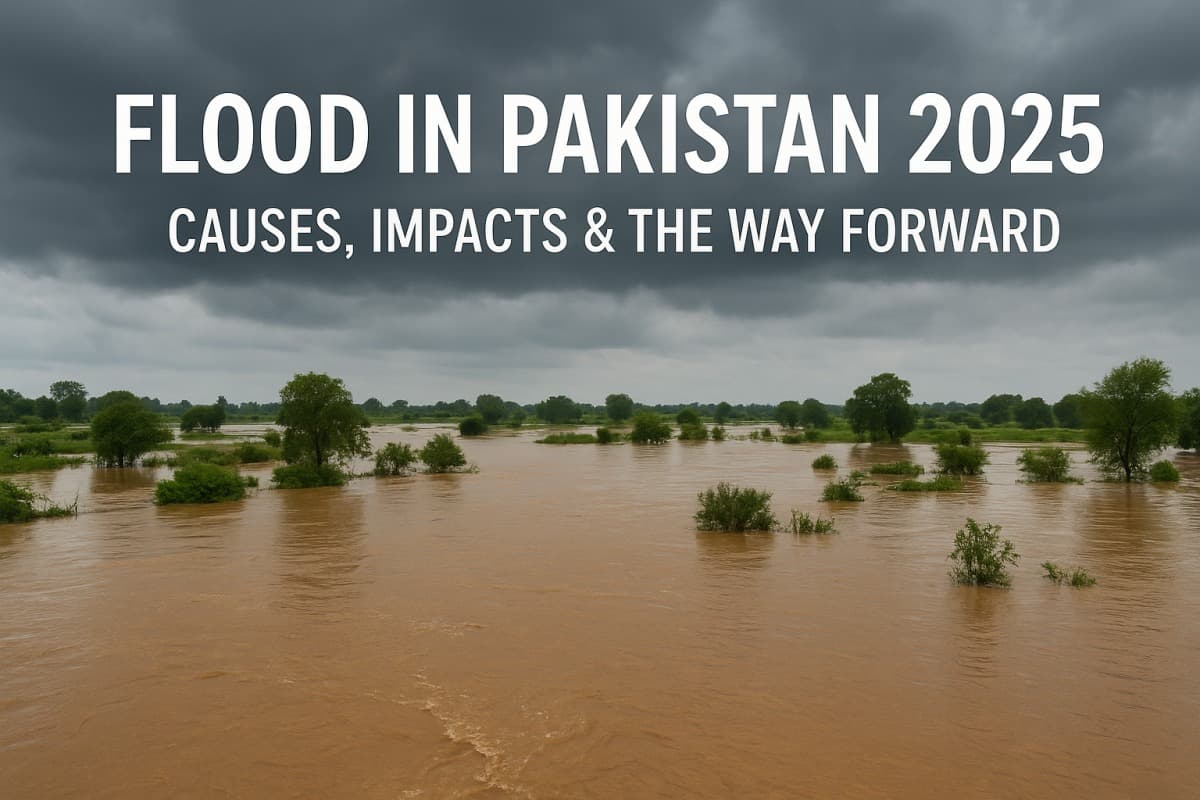
Causes of 2025 Flood in Pakistan: How Climate and Governance Failed
Explore the causes of 2025 flood in Pakistan. From climate change and glacial melting to poor governance and learn how failures turned rain into disaster.

Introduction
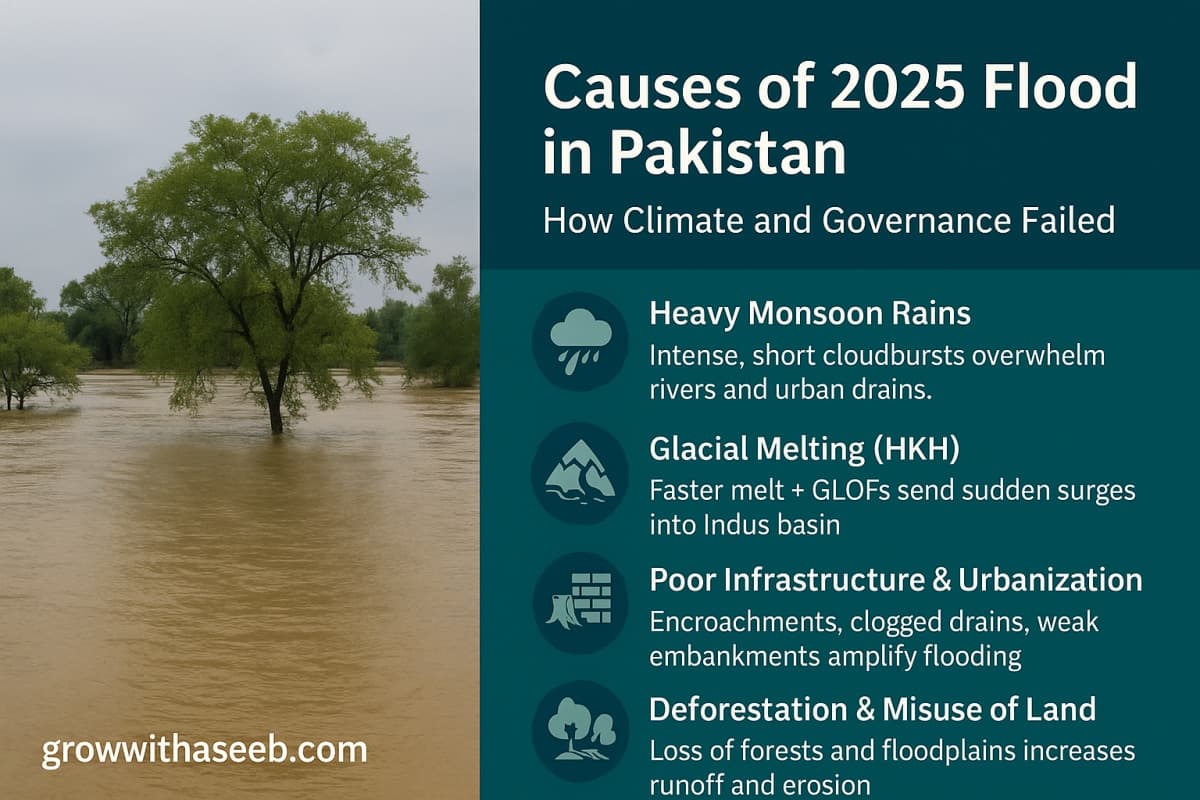
Pakistan faces recurring national disasters in the form of floods which have evolved from seasonal disturbances into destructive events that not only destroy infrastructure, livestock and agricultural but also destroy people's ability to earn a living. The monsoon cycle used to control floods but climate change together with glacial melting, urbanization, deforestation and poor governance have turned these events into catastrophic national disasters. The 2025 flood disaster demonstrated Pakistan's ongoing exposure to natural disasters is because of insufficient scientific knowledge and inadequate planning and governance systems. The study of rainfall patterns alone does not explain the situation because human activities and policy breakdowns have made a previously regular natural process more severe. The investigation of flood causes reveals the reasons behind escalating flood damage and demonstrates the need for immediate Pakistani reforms to survive.
 Causes of Flood in Pakistan
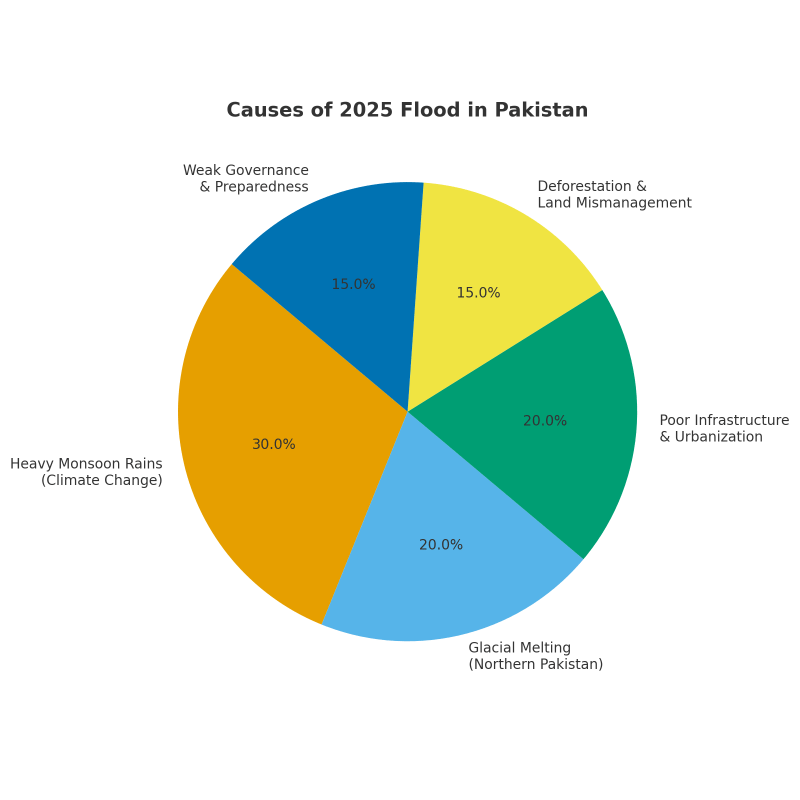
1. Heavy Monsoon Rains Intensified by Climate Change
The monsoon rains which used to sustain Pakistan's agricultural sector have evolved into a major danger for the country during the past several decades. The Pakistan Meteorological Department (2024) reports that monsoon rainfall intensity has increased by 20% throughout the past twenty years while showing an increasing pattern.
Climate change is not only increasing the volume of rainfall but also altering its timing and distribution. The monsoon season now delivers its rainfall through brief intense downpours that exceed capacities of rivers and destroy embankments while flooding low-lying regions. The drainage systems in Karachi and Lahore and Islamabad struggle to handle sudden floods because their design lacks proper functionality which causes streets to transform into waterways during short periods of time.
The UN Climate Risk Assessment (2023) identified South Asia together with Pakistan as one of the three regions which experience the most severe impacts from unpredictable monsoon weather patterns. These erratic weather patterns not only damage infrastructure but also disrupt the agricultural cycle. For farmers, too much rain at the wrong time can be as devastating as drought.
The rising global temperatures enhance atmospheric moisture retention which creates an additional challenge for the situation. The atmosphere absorbs 7% more moisture for each degree Celsius rise in temperature according to the Intergovernmental Panel on Climate Change (IPCC 2021). This means heavier and more destructive rainstorms in the years ahead if global emissions remain unchecked. The seasonal pattern which used to be controlled and manageable has evolved into catastrophic climate-related disasters which threaten millions of people annually.
2. Glacial Melting in Northern Pakistan Faces This Situation
Pakistan is considered as the "third pole" because it contains more than 7,000 glaciers which represent the biggest ice reserve outside polar areas. The glaciers serve as essential water sources which supply the Indus River system that provides drinking water and generates power and supports agricultural activities for millions of Pakistani citizens.
The vital water source faces an extreme danger at present. The World Bank (2023) published research which proved that global warming has caused the Himalaya–Karakoram–Hindukush (HKH) ranges to experience faster glacial melting. The seasonal ice melting process has evolved into an uncontrollable water surge which causes river levels to rise and produces destructive floods in lower areas.
Glacial Lake Outburst Floods (GLOFs) present the most concerning threat among all glacial hazards. The process of glacier retreat creates unstable lakes which form when loose debris and ice block the water flow. The failure of these natural barriers leads to immediate water and debris discharges that destroy all objects in their path.
The UNDP (2024) conducted research which found more than 3000 glacial lakes exist in northern Pakistan while 30 of them present high danger levels. The residents of Gilgit-Baltistan and Chitral face ongoing threats from natural disasters. Scientific studies indicate that the situation continues to deteriorate. The International Centre for Integrated Mountain Development (ICIMOD) predicts that HKH glaciers will lose 33% of their volume during the next 80 years based on present emission rates (ICIMOD 2022). The short-term increase in flood dangers will lead to long-term water scarcity because glaciers will disappear beyond restoration point.
The situation in Pakistan creates two major problems for the country.
- The immediate danger includes floods which damage buildings and agricultural land and eliminate local economic activities.
- The long-term situation will bring about decreased water resources for farming and power generation which will harm food security and economic stability.
The current glacial melting situation has evolved into an active disaster which requires immediate implementation of adaptation strategies and construction of resilient northern valley infrastructure and advanced warning systems to safeguard exposed communities.
3. Poor Infrastructure and Urbanization
The combination of natural forces with human carelessness and inadequate planning systems produces the severe flooding in Pakistan. The Asian Development Bank (2022) conducted research which demonstrated that outdated drainage systems and uncontrolled urban growth are the leading factors behind 40% of urban flooding in Pakistan.
The three major cities of Karachi and Lahore and Islamabad have experienced rapid population growth during the previous decades. The rapid urban development throughout the past decades has resulted in uncontrolled construction that disregards both floodplains and natural water systems. The construction of residential areas and commercial buildings and roads happens regularly in areas that serve as stormwater channels and flood-prone lowlands. Heavy monsoon rains create an unmanageable situation because streets, homes and markets become flooded with water.
Karachi serves as an excellent illustration of this situation. The natural stormwater drain system of Karachi known as nalas has suffered from two major problems: solid waste accumulation and physical encroachment. The city of Karachi experiences complete shutdown during moderate rainfall because its drainage system has failed to operate properly which results in extended waterlogging and traffic congestion and property destruction. The Pakistan Institute of Development Economics (PIDE) conducted a 2019 survey which demonstrated that 75% of urban residents identify poor drainage systems as the primary cause of flooding in their residential areas rather than rainfall amounts.
The current infrastructure faces two major problems because of its advanced age and insufficient maintenance activities. The drainage and sewerage networks throughout major cities were constructed during a time when population numbers were significantly lower than present levels. The present-day drainage systems operate at maximum capacity when dealing with wastewater and heavy rainfall but they fail to manage these combined loads effectively. The combination of deteriorating embankments and malfunctioning pumping stations and insufficient flood protection investments transforms regular rain into catastrophic flooding events.
The World Bank's Pakistan Infrastructure Report (2023) demonstrates that the nation loses 2% of its GDP each year because of insufficient infrastructure which primarily stems from water management failures and urban flooding. The current economic and social costs from flooding will escalate because of intensifying climate change effects on rainfall patterns. The combination of urban flooding creates multiple severe problems which include business closures and school closures and disease outbreaks from standing water and extreme hardship for people living in informal settlements.
The Pakistan's 2025 flood disaster results from both inadequate infrastructure and uncontrolled urban development and climate change effects. The design of cities with flood-resistant drainage systems and green spaces and proper zoning regulations remains essential to prevent urban areas from becoming disaster zones during monsoon seasons.
4. Deforestation and Land Mismanagement
Forests are nature’s first line of defense against floods. They absorb rainwater, stabilize soil, and slow the flow of runoff. Pakistan has been removing its natural flood protection system through deforestation for multiple decades. The Food and Agriculture Organization (FAO) reports that Pakistan maintains less than 5% forest cover which stands as one of the lowest rates in the region while being significantly lower than the worldwide average of 31% (2023).
The results of these actions have proven to be catastrophic. Forested land with healthy trees and soil functions as a water-absorbing system which controls the release of water at a steady pace. The absence of forest cover in these areas leads to uncontrolled water flow that causes soil destruction and rapid river expansion. The deforestation of Khyber Pakhtunkhwa and Gilgit-Baltistan has resulted in recurring flash floods and landslides because these areas used to be forested.
The improper use of land resources makes the situation worse. The construction of unauthorized housing settlements together with riverbank intrusions and uncontrolled agricultural activities create barriers that prevent water from following its natural flow. Research conducted by the Pakistan Forest Institute (2022) demonstrates that extensive illegal logging combined with forest-to-farm conversions has resulted in a 25-30% rise of surface water runoff in flood-prone areas. The absence of soil absorption leads to excessive rainfall that directly flows toward defenseless residential areas.
The World Wildlife Fund (WWF Pakistan 2024) indicates that forest ecosystem destruction leads to increased soil degradation. The transportation of sediments through rivers decreases their storage ability which makes them more susceptible to flooding when heavy rainfall occurs. The ongoing pattern of deforestation followed by soil degradation and decreased river capacity leads to flooding which occurs annually during monsoon season.
The environmental impact of these events extends far beyond the occurrence of floods because:
- The disappearance of habitats results in a complete loss of biodiversity.
- The decrease in soil quality negatively affects agricultural production for local farmers.
- The reduction in tree numbers leads to higher carbon emissions because trees function as carbon sinks.
The “Ten Billion Tree Tsunami” initiative launched by Pakistan (Government of Pakistan 2023) has received criticism because its tree planting efforts remain insufficient to counter the ongoing rate of forest destruction. The lack of effective law enforcement against illegal logging and land encroachment makes these campaigns likely to remain symbolic instead of creating meaningful change. Human activities that remove forests serve as a primary cause of Pakistan's floods because forests act as our main defense against natural disasters. The prevention of future disasters requires immediate implementation of green cover restoration alongside land use control and watershed protection measures.
5. Weak Governance and Preparedness
The floods in Pakistan represent both a natural disaster and a failure of proper governance. The combination of weak institutions and poor coordination and insufficient preparedness enables heavy rainfall to become a major humanitarian disaster despite scientific risk predictions and known rainfall patterns.
The National Disaster Management Authority (NDMA) conducted a survey in 2025 which showed that 70% of households located in flood-risk areas received no advance flood warnings before the 2025 floods occurred. The lack of warning left millions of people without any possibility to evacuate or protect their possessions. The communication breakdown and uncoordinated disaster response systems demonstrate that technology limitations exist alongside fundamental problems with institutional communication and management structures.
The National Disaster Management Authority (NDMA) operates at the federal level while the Provincial Disaster Management Authorities (PDMAs) function at provincial and district levels. The reports from Transparency International (2023) and UNDP Pakistan (2024) demonstrate several key problems.
- The authorities at federal and provincial and district levels show poor coordination in their operations.
- The bureaucratic system creates delays that slow down emergency response operations.
- The country allocates less than 0.1% of its GDP to disaster management funding.
- The emergency response teams at local levels receive insufficient training.
The governance deficit becomes most apparent through the breakdown of early warning systems. The country possesses advanced meteorological data yet warning systems fail to deliver alerts to people at the grassroots level before time runs out. The people of Sindh and Balochistan depend on radio broadcasts and personal word of mouth for information yet these methods prove unreliable during crisis situations. The implementation of community-based disaster management in Bangladesh has led to a significant decrease in flood-related deaths throughout the last twenty years.
The current state of governance hinders the ability to create sustainable development plans. The combination of illegal floodplain development and construction corruption and non-enforcement of building standards creates extensive danger zones in urban areas. The PIDE (Pakistan Institute of Development Economics) 2022 study demonstrated that uncontrolled riverbank development led to greater flood damage in 2022 and this patterned itself in 2025.
The poor management of governance has resulted in catastrophic consequences for human lives. The process of obtaining relief compensation through official channels takes extended periods of time because of administrative delays. Relief distribution becomes unfair because political interference and favoritism lead to unequal distribution of aid. The breakdown of public trust in institutions leads communities to seek assistance from NGOs and international donors instead of depending on state support.
The absence of effective governance turns what should be a routine seasonal occurrence into a devastating national emergency. The improvement of Pakistan's disaster readiness needs more than technological solutions because it requires strong political commitment and responsible leadership and people-oriented strategies. The best flood predictions become meaningless when governance reforms are absent because they fail to deliver warnings to the most vulnerable populations.
Final Thought
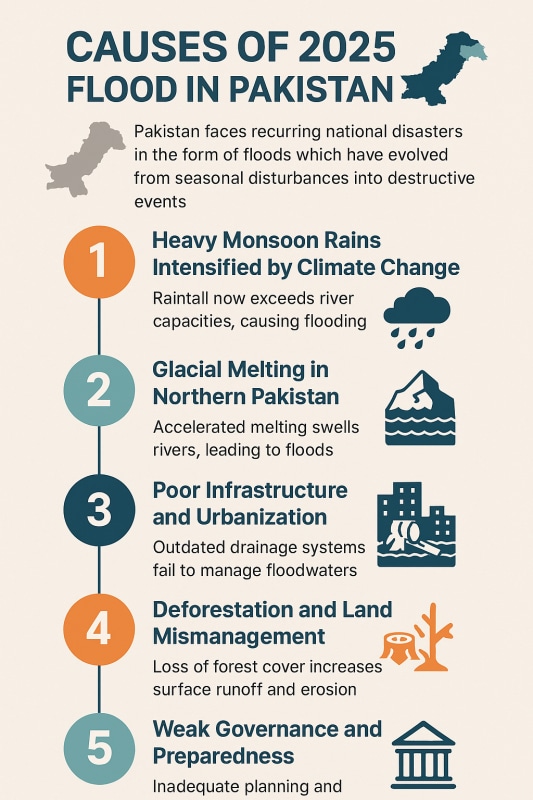
Floods in Pakistan are not the result of a single factor. They are the outcome of a dangerous intersection of climate extremes, melting glaciers, reckless urban growth, deforestation, and weak institutions. Each cause adds another layer of risk, turning heavy rains into national tragedies. The lesson is clear: unless Pakistan strengthens climate resilience, invests in green infrastructure, restores forests, and builds a culture of disaster preparedness, the cycle of loss will only deepen. The future of millions of lives and livelihoods depends on whether policymakers and citizens alike can transform these recurring disasters into a turning point for sustainable water and land management. Floods will always be a part of Pakistan’s geography but with the right actions, they don’t have to be a part of its tragedies.
References
https://www.bbc.com/news/articles/cn0xjd7wvy1o
https://www.hrw.org/news/2025/09/10/pakistan-floods-highlight-urgent-need-for-reforms