Pakistan Agriculture Crisis: Causes, Challenges, and Solutions
Explore the Pakistan agriculture crisis, including its major causes, current challenges, and practical solutions.

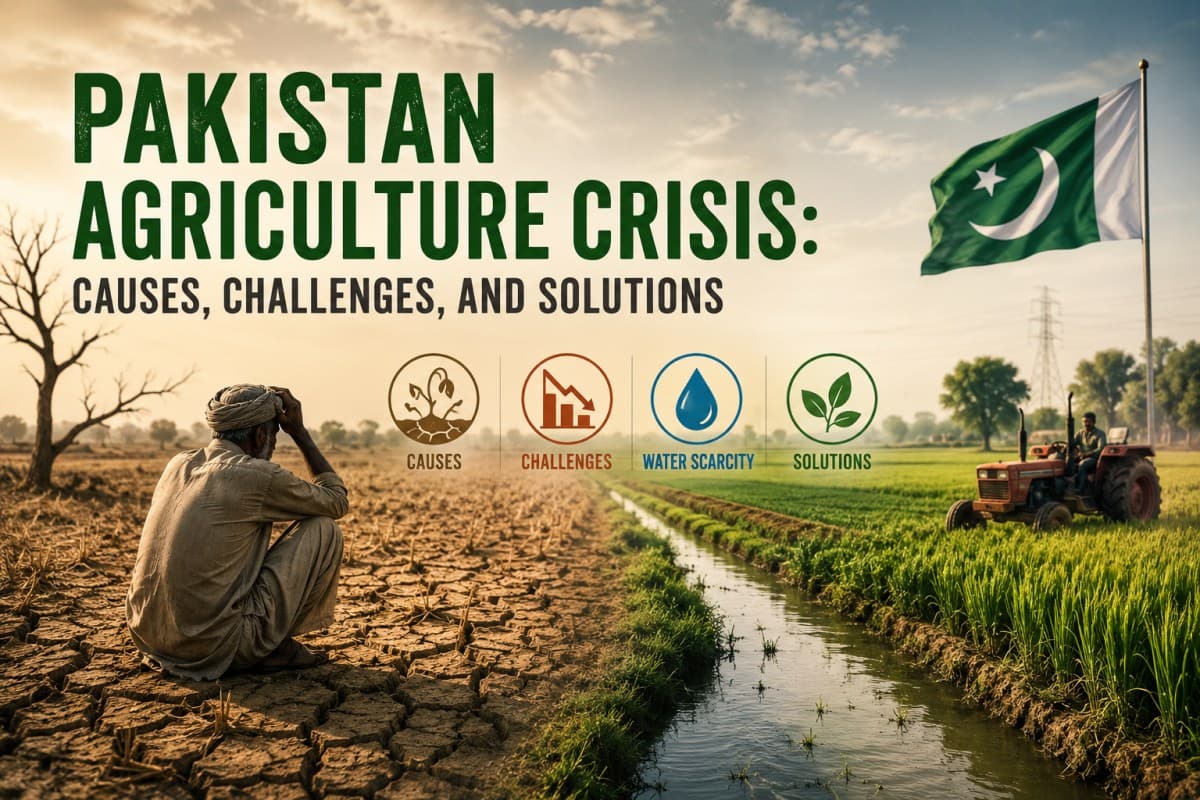
Introduction
Agriculture is often described as the backbone of Pakistan’s economy. The sector contributes nearly 23% to the country’s Gross Domestic Product (GDP), employs around 43% of the labor force, and supports the livelihood of almost 60% of the population directly or indirectly. It also plays a crucial role in foreign exchange earnings and national food security.
Pakistan’s economy heavily relies on agriculture, yet the sector is facing one of the most serious crises in its history. Despite possessing the world’s largest contiguous irrigation system, fertile land, and favorable climatic conditions, Pakistan continues to struggle with low agricultural productivity and rising food insecurity.
Agriculture is also deeply connected to Pakistan’s economic stability. Former Governor of the State Bank of Pakistan, Salim Raza, emphasized that sustainable agricultural growth could help resolve the country’s balance-of-payment and current account deficit crises within a few years. According to him, Pakistan cannot achieve a sustainable GDP growth rate of 6% annually without at least 6% growth in the agriculture sector.
Pakistan ranks among the world’s top producers of major crops such as wheat, rice, cotton, sugarcane, and maize. However, most farmers continue to cultivate water-intensive and low-income crops, which generate limited economic value while consuming enormous water resources. The agriculture sector alone uses nearly 90% of the country’s available water supply.
Ironically, despite being an agricultural country, Pakistan imports agricultural products worth approximately $7.5 billion annually, while nearly 40 million people face food shortages and malnutrition. Climate change, population growth, declining water availability, poor policies, and lack of modern technology have further worsened the situation.
This article explores the major causes behind Pakistan’s agriculture crisis, the challenges faced by farmers and the practical solutions needed to transform the sector into a sustainable and productive pillar of the economy.
Key Challenges/Issues and Solution
Pakistan’s agriculture is facing different challenges and issues related to structure, policy and governance which has resulted in low agriculture production and overall decline of agriculture sector. The detail is explained beow
1. Minimum Support Price (MSP)
The government often announces Minimum Support Price (MSP), but many farmers do not receive the promised price due to weak enforcement and middlemen exploitation. Small farmers in remote areas may not benefit because government procurement systems are inaccessible or inefficient. Moreover, MSP decisions are sometimes driven by political interests rather than actual production costs or farmers’ welfare.
The government should improve MSP enforcement, expand procurement centers in rural areas, and reduce the role of middlemen through direct purchasing and digital payment systems. MSP prices should be decided based on production costs and farmers’ welfare rather than political interests.
2. Lack of Input Subsidy
Subsidy programs are sometimes poorly managed, non-transparent, or influenced by political interests instead of farmers’ actual needs. Large landowners often benefit more from government support, while small farmers are neglected due to weak policy implementation. Without subsidies, farmers must pay high prices for fertilizers, seeds, diesel, and electricity, which reduces their profits.
The government should provide fair and transparent subsidies to small farmers for fertilizers, seeds, diesel, and electricity. Proper monitoring systems and direct financial support can reduce corruption and ensure that subsidies reach farmers based on their actual needs instead of political influence.
3. Lack of Investment in Research and Development
Without proper research, farmers continue using outdated farming methods and low-yield seed varieties. According to Pakistan Institute of Development Economics (PIDE), Pakistan imports 80% of hybrid seed which increase input cost and are less resistant to local environment. That is the reason Pakistan only have 50% seed germination as compare to global average of 80% which ultimately lead to low agriculture productivity. Moreover, insufficient research makes it difficult to develop crops that can survive droughts, floods, and changing weather conditions.
The government should increase investment in agricultural research and develop high-quality local seed varieties that are suitable for Pakistan’s climate. Improving research centers, supporting modern farming techniques, and promoting climate-resistant crops can increase seed germination, reduce import dependence, and improve agricultural productivity.
4. Fragmented Lands
Average farm size in Pakistan was 6.5 acre in 2010 which has now further reduced to 5.1 acre. It has been estimated that about 64% farmers have less than 5 acres farms size and only 5% have about 20 acres farms size. Small farm affect produce quality which is major hindrance in export and revenue earning. In addition, fragmented lands restrict adoption of mechanization and modern techniques and perpetuates rural poverty due to increased input cost.
Land reforms and policies to empower smallholders with better land access and resources are essential for a more efficient and equitable agricultural sector.
5. Outdated Agricultural Practices and Technology
Agriculture in Pakistan remains heavily reliant on traditional farming methods and many farmers lack access to modern tools and techniques. This has contributed to lower crop yields and limited per-hectare productivity.
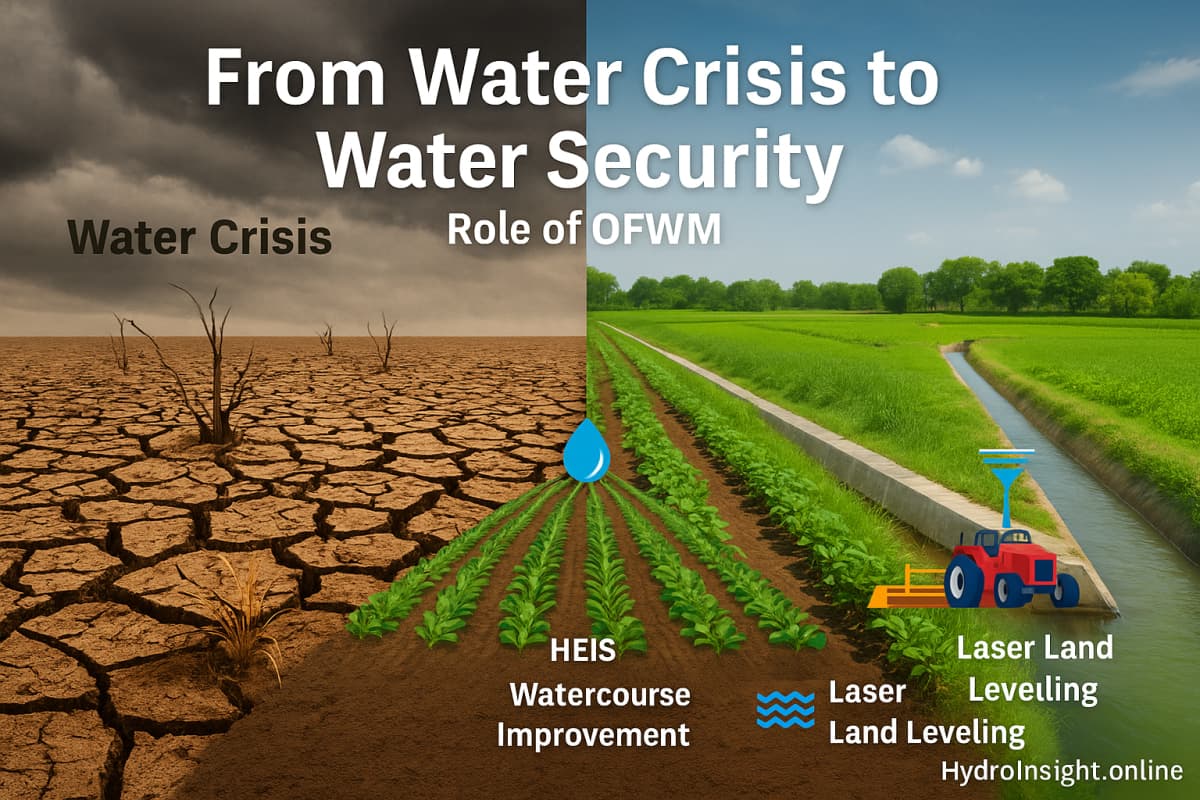
Introducing technologies like precision farming, High Efficiency Irrigation System (HEIS) and soil health & moisture monitoring could transform productivity and sustainability. However, the uptake of such technologies is still limited due to insufficient training and awareness among farmers.
6. Population Growth
Rapid population growth is putting heavy pressure on Pakistan’s agriculture sector. Population growth rate in Pakistan is 2.7 whereas land and water resources are stagnant. As the population increases, the demand for food also rises. Agricultural land is decreasing due to urbanization and housing development, reducing the area available for farming.
Under this high population growth rate, Pakistan needs to develop crop verities which will give higher yield to counter food insecurity challenges. In addition, population control policies and public awareness campaigns should be strengthened to reduce pressure on land and water resources and ensure sustainable agricultural growth.
7. Water Scarcity
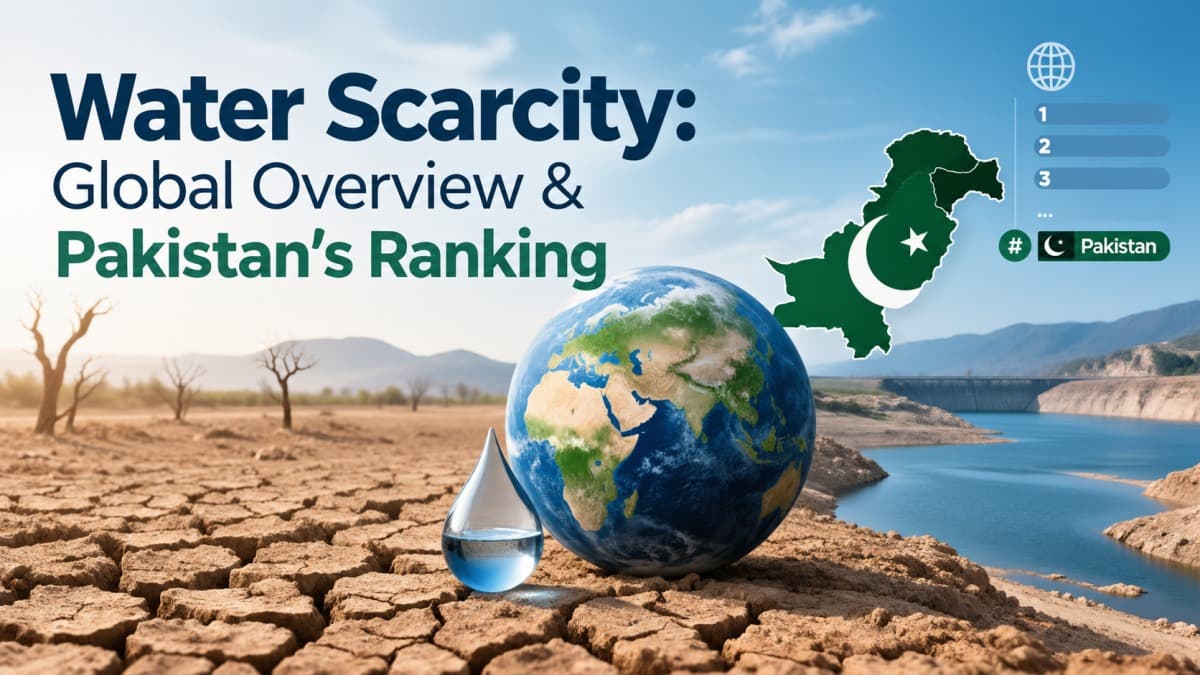
Pakistan ranked at 14th number among the world’s most water-stressed nations. Rapid population growth, climate variability, inefficient irrigation practices, cross sectoral mismanagement of water and over-exploitation of groundwater have collectively placed unprecedented pressure on the country’s finite freshwater resources. In Pakistan, per capita water availability has reached below 850 m3. Pakistan irrigation system is 40% efficient. 105 MAF water available at canal heads, out of which 42 MAF available to crops whereas remaining water is lost during conveyance and application. Estimates suggest that Pakistan could transition from a water-stressed to a water-scarce state in the near future if current consumption patterns persist.
The construction of new dams, groundwater regulation, and adoption of efficient irrigation techniques are urgent to ensure farmers get adequate water supply when needed. Equally important is tackling the unequal distribution of water, which significantly hampers agricultural productivity.
8. Climate Change
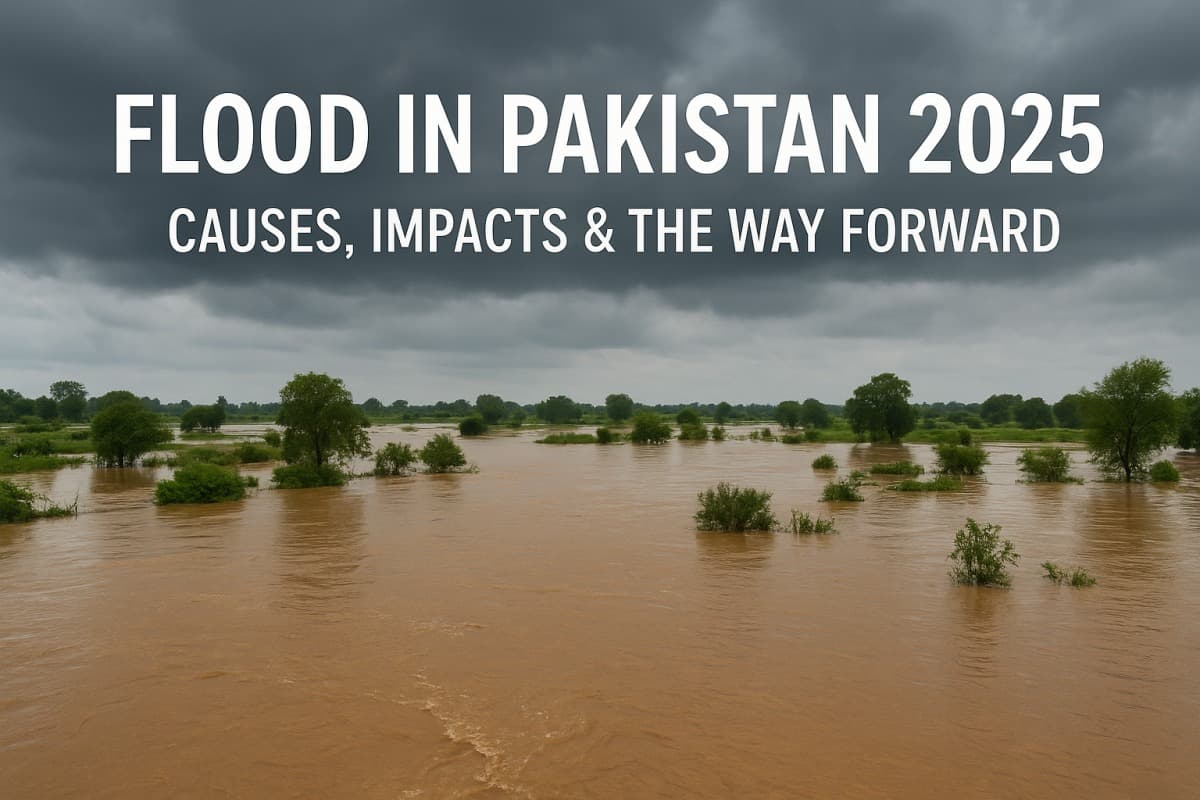
Pakistan present in heat surplus zone which makes the country more vulnerable to climate change. Climate change has resulted in extreme weather events, frequent floods, long duration droughts and glacial retreat which make water availability highly unpredictable for agriculture. Pakistan faced at least 10% reduction in the domestic production of wheat and 30% reduction in mangoes in Sindh in the year 2022 due to heat waves. Moreover, the 2024-25 cropping year saw a 13.5% decline in major crop production, including wheat, cotton, maize, sugarcane, and rice, due to climate shocks compounded by policy missteps (concaveagri.com).
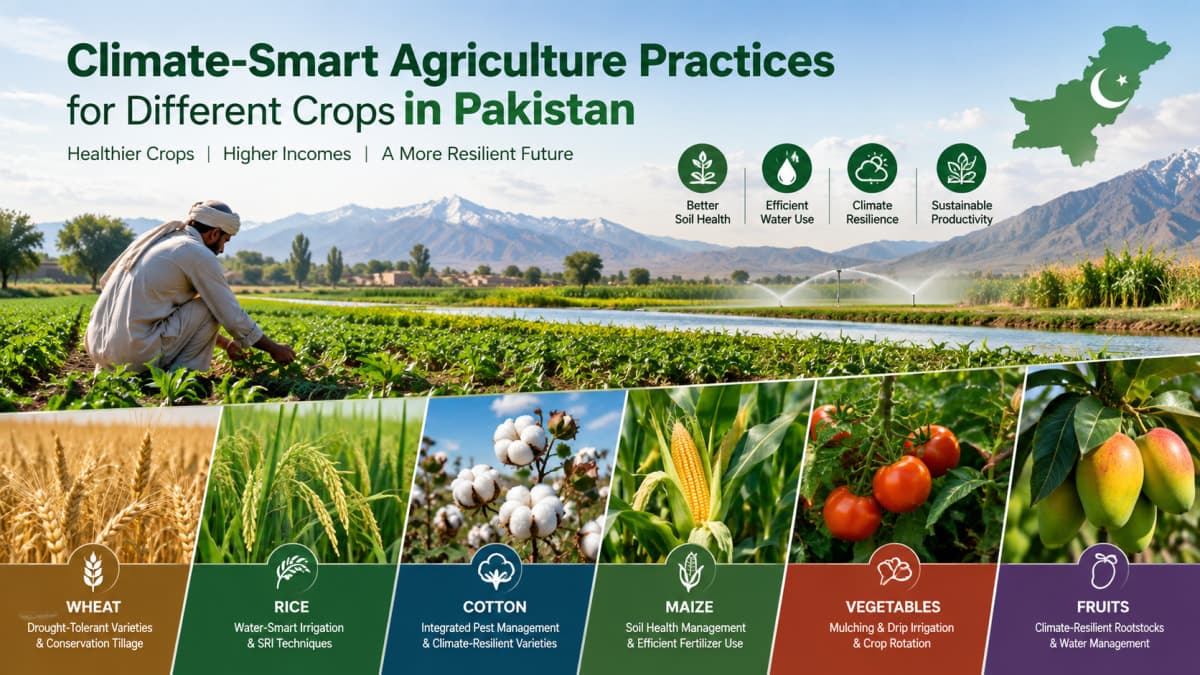
Farmers need access to climate-resilient crops, improved weather forecasting, and insurance schemes to protect against losses. Sustainable strategies like crop rotation, agroforestry, and water conservation will be vital in reducing vulnerability.
9. Lack of Farmer Trainings
In Pakistan, only 10% farmers received formal training whereas in Bangladesh 50% farmers received some sort of training. Due to insufficient training, farmers often misuse fertilizers, pesticides, and water resources, which lowers crop quality and productivity. They also face difficulties in dealing with climate change, crop diseases, and market demands, resulting in financial losses and low agricultural growth.
To solve this issue, the government should expand agricultural extension services and provide regular training programs for farmers on modern farming methods, efficient irrigation, pest control, and climate-smart agriculture. Workshops, mobile applications, and awareness campaigns should be introduced in rural areas to improve farmers’ knowledge and skills. Better farmer education will increase productivity, reduce costs, and strengthen Pakistan’s agriculture sector.
10. Low Seed Quality
About 70% farmers use traditional low-quality seeds. Less than 20% seed used are certified. In India, around 80% seed used are certified. Poor-quality seeds have low germination rates and are more vulnerable to pests, diseases, and harsh weather conditions.
The government should invest in agricultural research and promote the production of certified, high-quality, and climate-resistant local seeds. Farmers should also be provided with subsidies and training to encourage the use of modern seed varieties that can improve crop yield and agricultural productivity in Pakistan.
11. Over-Use of Fertilizer
Due to provision of subsidies on fertilizer, farmer over-use fertilizer. In Pakistan, farmers use 140kg/ha fertilizer without even testing the soil. That is the reason, soil nutrient balance has disturbed which led to low agriculture productivity.
Farmers should be educated about the balanced and proper use of fertilizers through training programs and agricultural extension services. In addition, awareness campaigns and subsidies for bio-fertilizers can help reduce the excessive use of chemical fertilizers and improve agricultural productivity in Pakistan.
12. Lack of Mechanization
In Pakistan, on average 0.5 tractor use per 100 hectare (0.5 tractor/100 ha) whereas in Brazil on average 2-3 tractors per 100 hectares are used. Due to manual harvesting and low mechanization 10-15% yield loss occurred. Limited mechanization also makes it difficult to adopt modern farming practices and compete with advanced agricultural economies.
The government should provide subsidies and easy loans for the purchase of agricultural machinery. Machinery rental centers should also be established in rural areas so small farmers can access modern equipment at affordable rates. In addition, farmer training programs should promote the use of modern technology and mechanized farming methods to increase productivity and reduce agricultural losses in Pakistan.
13. Soil Degradation
Soil degradation is one of the major environmental and agricultural problems in Pakistan. It has been estimated that Pakistan’s 30% land is saline and waterlogged due to poor drainage and over-irrigation. Around 90% farmers use centuries old flood irrigation method. As a result, excess water seeps into the soil, raising the underground water table and causing waterlogging. Over time, salts accumulate on the soil surface, making the land infertile and reducing crop yields.
Farmers should shift from flood irrigation to modern systems such as drip irrigation and sprinkler irrigation. These methods use water efficiently and prevent over-irrigation. Proper drainage channels should be constructed to remove excess water from agricultural lands and prevent waterlogging. By adopting modern irrigation methods, improving drainage, and promoting sustainable agricultural practices, Pakistan can protect its soil resources and ensure long-term agricultural productivity.
14. Over-Use of Pesticide & Insecticide
Farmers often use large quantities of chemicals to protect crops from insects, weeds, and diseases in order to increase agricultural production. However, the continuous and uncontrolled use of these chemicals has created many harmful effects on crops, soil, water, human health, and the environment. It has been observed that over-use of pesticide have developed resistant in insects and results in 20-30% yield loss.
If sustainable farming practices, proper regulations, and modern pest-management techniques are adopted, Pakistan can reduce pesticide dependence, improve crop yields, and protect the environment for future generations.
15. Access to Markets and Fair Prices
One of the biggest concerns for farmers is the lack of fair access to markets. Farmers often have to sell their produce to middlemen at lower prices, leaving them with little profit. Additionally, the lack of proper infrastructure and transportation facilities makes it difficult for farmers to access markets, especially in remote areas.
Improving market access, reducing the role of middlemen, and providing farmers with better storage facilities can help them get better prices for their produce. Strengthening agricultural cooperatives and linking farmers directly with buyers can also improve market efficiency and ensure fair pricing.
16. Gender Inequality in Agriculture
In Pakistan, women play a crusical role in agriculture, especially in rural areas. However, their contributions often go unnoticed, as they are typically not recognized as farmers or landowners. Women farmers face significant barriers, such as lower wages, lack of property rights, and limited access to training and resources.
Empowering women in agriculture is essential for the sector’s development.
17. Political Instability and Lack of Consensus
The agricultural sector in Pakistan is also affected by political instability and the lack of a cohesive strategy across federal and provincial governments. With a coalition government at the center and varying political interests across provinces, it becomes difficult to implement long-term policies that could address structural issues in agriculture.
For the sector to thrive, there needs to be broad political consensus on key agricultural policies. The government must prioritize agriculture as a key sector for economic growth and ensure that all stakeholders, including farmers and landowners, work together to address the challenges facing the sector.
Conclusion
Pakistan stands at a crucial point in deciding the future of its economy. Despite being an agriculture-based country, lack of modernization, innovation, and proper policymaking has weakened the agricultural sector and reduced self-sufficiency in important crops. To strengthen agriculture and ensure sustainable economic growth, the government must prioritize agricultural development through research and innovation, protection of fertile land, crop diversification, modern farming methods, and better market opportunities for farmers.
In addition, climate-resilient policies and agricultural insurance are essential to protect farmers from environmental disasters. With timely reforms and strong commitment, agriculture can once again become the backbone of Pakistan’s economy and ensure food security, employment, and long-term prosperity.
References
https://concaveagri.com/farmer-challenges/
https://www.scribd.com/document/842907252/Pakistan-agriculture-problems-and-solutions
https://pakistonomy.substack.com/p/agriculture-is-in-a-crisis
https://www.scribd.com/document/972186518/Agricultural-Crisis-Pakistan
FAQs
What were the major challenges faced by farmers in Pakistan in 2024-25?
Farmers struggled with severe water shortages caused by aging irrigation systems and high canal water losses, outdated farming methods limiting productivity, high fertilizer costs, and uneven land distribution. Climate change added unpredictability, with floods and droughts damaging major crops.
Why does Pakistan import agricultural products despite being an agricultural country?
Pakistan imports agricultural products due to low productivity, poor storage facilities, water shortages, outdated farming methods, and increasing domestic demand that local production cannot fully meet.