Solar Powered Irrigation in Pakistan: Merits, Demerits & Its Role in Combating Climate Change
Explore the merits, demerits, and climate impact of solar powered irrigation in Pakistan, and how it supports sustainable agriculture and food security.

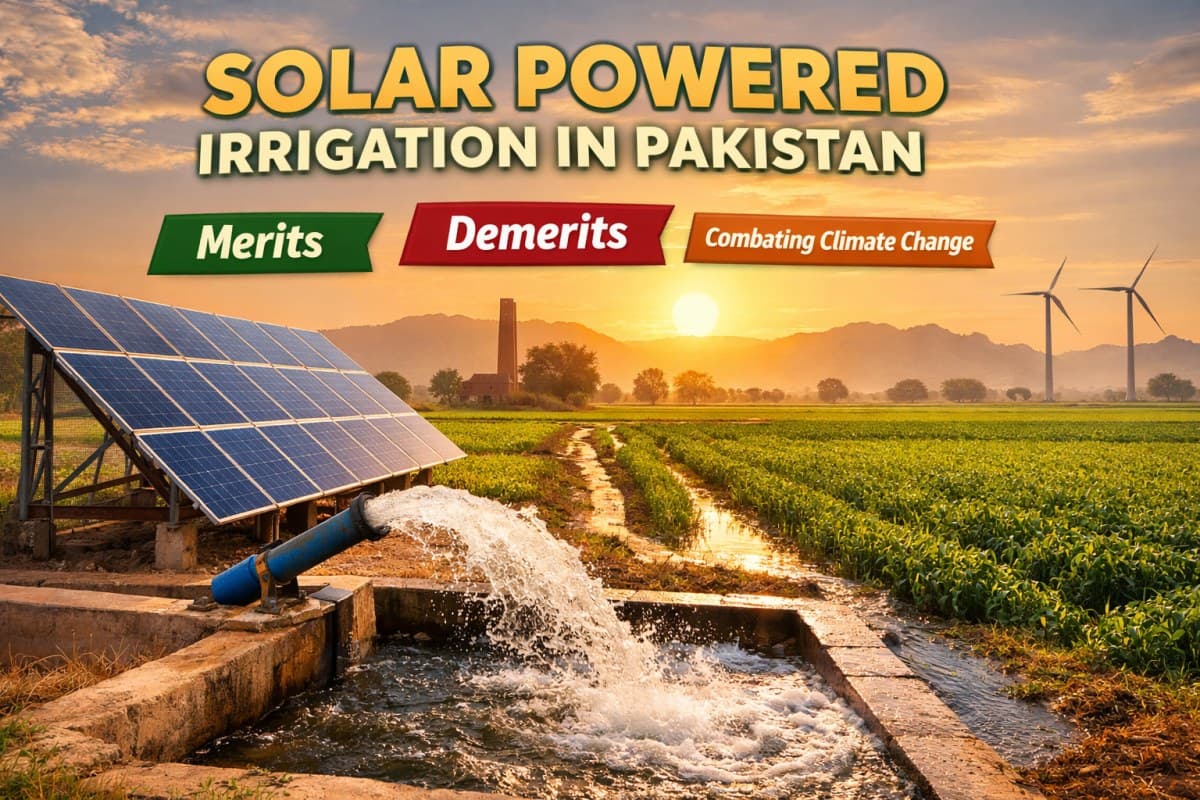
Introduction
Agriculture is the backbone of Pakistan’s economy, contributing about 21% to the national GDP. It also provides employment to nearly 40% of the labor force. Irrigated agriculture is very essential because Pakistan lies in arid to semi-arid climate with irregular rainfall patterns. Canal irrigation system hardly meets 50% water requirment of crops whereas rest of the demand is fulfiled by groundwater . Average annual abstraction of groundwater is about 50 MAF which has already reached the safe yield limit.
Groundwater is extracted through diesel and electric tube wells. Historic data shows that around 1.4 million private tubewells with average discharge of 1 cusec are working in Pakistan. According to recent estimates, 13% of these tubewells are run by electricity whereas rest of 87% use diesel engines (Qureshi et al). Diesel engines are preferred by farmers due to low installation cost and assured operation. However, the use of diesel and electric tubewells is very expensive and environmentally harmful.
Climate change is another major challenge that needs to be addressed on a priority basis. Pakistan has experienced more frequent floods, prolonged droughts, and erratic rainfall patterns due to climate change. Therefore, climate-resilient development is the need of the hour.
At the provincial level, the Government of Punjab has launched initiatives such as the Chief Minister’s Solarization Program for Agricultural Tubewells and the Punjab Resilient and Inclusive Agriculture Transformation (PRIAT), which have emerged as flagship programs aimed at converting thousands of diesel and electric powered tubewells to solar energy. Under the prevailing challenges of climate change and food insecurity, Solar-Powered Irrigation Systems (SPIS) offer a sustainable alternative.
Merits of Solar Powered Irrigation in Pakistan
1. Cost-Effective in the Long Run
One of the biggest advantages of solar-powered irrigation in Pakistan is its long-term cost-effectiveness. It has been established that diesel operated tubewells cost around Rs 3,000/- per acre while the electricity based tubewell’s operational cost is about Rs 1500/- per acre in Pakistan (INP.PK). Unlike diesel pumps that constantly demand expensive fuel, solar systems run on free sunlight which is available in abundance. Once the initial installation is complete, farmers are freed from rising fuel prices and unpredictable electricity bills.
Moreover, maintenance costs are also relatively low, making the system economically sustainable over time. Although the upfront investment can seem high, the savings begin to add up quickly, allowing farmers to reinvest in better seeds, equipment, and improved farming practices. In the long run, solar irrigation isn’t just an environmental choice, it’s a smart financial decision.
2. Reliable Energy Source
Solar-powered irrigation offers significant advantages in Pakistan, primarily because the country is blessed with abundant sunlight averaging 8 to 10 hours a day in most regions. This plentiful solar energy provides farmers with a reliable and consistent power source for operating irrigation systems throughout the year. Especially in remote and off-grid rural areas, where access to electricity is limited, solar irrigation systems serve as a practical and dependable solution. By harnessing the sun’s energy, farmers can reduce their dependence on unreliable electricity supply, ensuring timely irrigation to crops and improving agricultural productivity.
3. Environmentally Friendly
Solar-powered irrigation systems offer a clean and sustainable alternative to conventional diesel and electric tubewells in Pakistan. Unlike diesel pumps, which emit significant amounts of carbon dioxide and other harmful pollutants, solar irrigation systems produce zero greenhouse gas emissions during operation, making them an environmentally responsible solution for the agriculture sector. Research by the International Renewable Energy Agency (IRENA, 2016) highlights that replacing diesel irrigation pumps with solar systems can substantially reduce carbon emissions and improve air quality.
In addition, Solar Powered Irrigation also reduce both air and noise pollution. By promoting the use of renewable energy, solar irrigation not only supports climate change mitigation goals but also contributes to a greener and more sustainable agricultural future.
4. Increased Agricultural Productivity
Solar Powered Irrigation (SPI) plays a transformative role in boosting agricultural productivity in Pakistan. Solar systems ensure the timely and uninterrupted availability of water, which is critical for optimal crop growth. Research by the International Water Management Institute (IWMI, 2019) and the Food and Agriculture Organization (FAO, 2018) indicates that reliable irrigation access significantly improves cropping intensity, enables multiple cropping seasons, and enhances overall farm output. With assured water supply, farmers can better plan sowing and harvesting cycles, reduce the risk of crop stress, and ultimately stabilize crop yields, contributing to improved food security and rural incomes across Pakistan.
5. Government Support
Initial installation cost of Solar Powered Irrigation (SPI) is high which makes its adaptation very difficult especially for small land holders. To overcome this issues/challenges, On Farm Water Management (OFWM) wing of Agriculture Department in collaboration with World Bank (WB) and Asian Development Bank (ADB) has initiated different project like Punjab Irrigated-Agriculture Productivity Improvement Project (PIPIP) and Promotion of High Value Agriculture through Solarization of Drip & Sprinkler Irrigation Systems to provide subsidy to poor and small land holding farmers.
At the provincial level, the Punjab government’s Chief Minister’s Solarization Program for Agricultural Tube Wells has emerged as a flagship initiative, aiming to convert thousands of diesel and grid-powered tube wells to solar energy. Under these programs, farmers receive substantial subsidies, reducing the upfront cost of installing solar pumps and making renewable irrigation systems far more accessible to small and medium-scale farmers.
These subsidy schemes are further reinforced by broader agriculture support frameworks like the Punjab Resilient and Inclusive Agriculture Transformation (PRIAT), which integrates solar irrigation support with modern farming technology, mechanization, and climate-smart agriculture to boost productivity and resilience across rural communities. PRIAT’s holistic approach offers financing, training, and irrigation subsidies, helping farmers adopt sustainable irrigation and modern farming practices under a structured, inclusive policy umbrella.
Additionally, historical development projects such as the Punjab Irrigated Agriculture Productivity Improvement Program (PIPIP) laid groundwork for improving irrigation efficiency and water productivity in the province, creating an enabling environment for solar irrigation adoption by enhancing On-Farm Water Management infrastructure and knowledge, a foundation that many current renewable irrigation initiatives are building upon.
Together, these government policies and programs not only reduce the financial barriers to solar irrigation but also align with Pakistan’s climate and renewable energy goals, making sustainable agriculture a more achievable reality for farmers nationwide.
Demerits of Solar Powered Irrigation
1. Water Over-Extraction Risk
The Indus Basin is the second most over-stressed aquifer in the world. It contributes more than 50% of the water used in the agricultural sector, about 70% of domestic water supply, and fulfills nearly 100% of industrial water demand. Moreover, unregulated and uncontrolled abstraction of groundwater has already depleted this precious resource. Excessive mining of aquifer in fresh groundwater area has resulted in falling water tables and groundwater has become inaccessible in 15% and 20% of the irrigated area of Punjab and Baluchistan respectively. As solar provide free energy which may lead to excessive groundwater pumping which can more worsen groundwater depletion if not regulated. (hydroinsight.online)
2. Deterioration of Water Quality Risk
The unchecked exploitation has already created looming crisis of falling water tables, saltwater intrusion and widespread deterioration of groundwater quality. In Sindh, the area of fresh ground water is confined to a narrow strip along the river Indus. Excessive pumping of this layer is causing salt water intrusion into fresh groundwater areas which resulted in abandoning of about 200 public tubewells located in fresh groundwater zones of Sindh province. Solar Powered Punpage can more worsen groundwater deterioration if not regulated.(hydroinsight.online)
2. High Initial Investment
Installation cost is expensive for small farmers. Requires solar panels, inverter, controller, and pump which makes the cost high.
3. Weather Dependency
Performance decreases on cloudy or rainy days. No energy production at night (unless battery storage is used, which increases cost).
4. Technical and Maintenance Issues
Requires skilled installation and occasional technical support. Risk of theft of solar panels in rural areas.
Role in Combating Climate Change
According to the Germanwatch Global Climate Risk Index, Pakistan has repeatedly appeared among the top ten countries most affected by extreme weather events over the past two decades (Germanwatch, 2021). The devastating floods of 2022 further highlighted this vulnerability, as reported by the United Nations, which described the floods as a climate-induced humanitarian crisis affecting millions.
Geographically, Pakistan lies in a heat-surplus zone, characterized by high temperatures and increasing evapotranspiration rates, making its water and agricultural systems particularly sensitive to rising global temperatures. However, climate change is not confined to national boundaries; it is a global challenge that demands coordinated international action under frameworks such as the United Nations Framework Convention on Climate Change (UNFCCC).
As a responsible member of the international community, Pakistan has undertaken significant measures to combat climate change and enhance agricultural resilience. In collaboration with the World Bank and the Asian Development Bank, the Government of Pakistan has launched major initiatives such as the Pakistan Irrigated Agriculture Productivity Improvement Program (PIPIP) and the Punjab Resilient and Inclusive Agriculture Transformation (PRIAT) project. These programs aim to address climate change and food insecurity by promoting solar-powered tubewells, improving water-use efficiency, and integrating modern irrigation practices. By replacing diesel and electricity operated tubewells with solar-powered systems, these initiatives not only reduce greenhouse gas emissions but also enhance long-term sustainability and agriculture resilience.
1. Reduction in Carbon Emissions
One of the most tangible ways to combat climate change is by cutting carbon emissions at the source, and switching away from diesel-powered agricultural pumps. Traditional diesel pumps emit significant amounts of CO₂ and other pollutants whereas electric and renewable-powered pumps can operate much more cleanly and efficiently. Research shows that replacing diesel pumping systems with electric or renewable solutions like solar significantly reduces energy consumption and associated CO₂ emissions.
For countries like Pakistan, which has submitted updated climate commitments under the Paris Agreement aimed at reducing greenhouse gas emissions and enhancing sustainability, this transition supports national climate goals while improving agricultural resilience.
2. Promotes Sustainable Agriculture
Promoting sustainable agriculture is essential for building climate resilience, and adopting efficient irrigation methods like drip irrigation plays a pivotal role in this transition. Unlike traditional flood irrigation that wastes water and energy, drip systems deliver water directly to the plant roots, dramatically increasing water use efficiency and reducing the amount of energy needed for irrigation.
Studies show that precision irrigation techniques can cut water use by up to 50% while boosting crop yields and reducing greenhouse gas emissions from farm operations, helping mitigate climate change impacts. By cutting reliance on fossil-fuel-powered pumps and inefficient practices, these sustainable methods not only conserve precious water resources but also align with global research advocating for smarter, climate-friendly farming to secure food production in the face of mounting environmental pressures.
3. Climate Adaptation
A key component of climate change mitigation in agriculture is building resilience to water scarcity and unpredictable weather. As climate change drives more frequent droughts and erratic rainfall, reliable access to water becomes essential for farmers to sustain crop production even under stress. Research shows that adaptation strategies such as improved water storage, efficient irrigation, and drought-resilient farming practices, help communities maintain stable yields despite fluctuating climate conditions.
In Pakistan and other vulnerable regions, farmers who adopt climate-smart water management techniques are better equipped to cope with long dry spells and shifting precipitation patterns, safeguarding both livelihoods and food security. These strategies are widely recognized as foundational for climate adaptation, enabling agricultural systems to withstand extreme variability while reducing vulnerability to droughts and water shortages.
4. Supports Green Economy
Supporting a green economy through renewable energy goes far beyond environmental benefits. It also creates real economic opportunity. As countries and communities invest in solar panels and other clean technologies, they unlock a wave of new jobs in manufacturing, installation, operation, and maintenance. According to research, the renewable energy sector already employs millions worldwide, with solar energy alone accounting for a large share of these roles and global renewable employment expected to rise significantly as the clean energy transition accelerates.
This job creation isn’t just about numbers, it helps diversify economies, supports local livelihoods, and provides pathways for workers transitioning from fossil-fuel industries. Furthermore, green investments tend to generate more jobs per dollar spent than equivalent fossil fuel investments, amplifying their impact on economic growth and stability. By fostering employment while scaling up low-carbon technologies, renewable energy supports both climate goals and sustainable economic development.
Conclusion
Solar Powered Irrigation Systems (SPIS) represent a transformative opportunity for Pakistan’s agriculture sector at a time when the country faces mounting challenges of groundwater depletion, rising fuel costs, food insecurity, and climate vulnerability. With agriculture serving as the backbone of the economy and employing a significant share of the population, transitioning from diesel and electric tube wells to solar energy is not merely a technological shift, it is a strategic necessity.
Solar irrigation offers long-term cost savings, reliable energy access, environmental protection, and enhanced agricultural productivity. However, its success depends on responsible groundwater management, strong regulatory frameworks, and equitable access for small farmers. If implemented with proper planning and monitoring, solar-powered irrigation can become a cornerstone of climate-smart agriculture in Pakistan, reducing carbon emissions while strengthening food security and rural livelihoods.
Way Forward
- Introduce Groundwater Regulation Mechanisms:
Develop and strictly enforce groundwater monitoring systems to prevent over-extraction under free solar energy use.
- Link Solarization with Efficient Irrigation Methods:
Make drip and sprinkler irrigation mandatory alongside solar pumps to improve water-use efficiency.
- Targeted Subsidies for Small Farmers:
Expand subsidy programs with priority for small and marginal landholders to ensure inclusive adoption.
- Smart Metering & Monitoring Systems:
Integrate digital monitoring tools to track water abstraction and promote responsible pumping.
- Capacity Building & Technical Training:
Provide farmers with training on system maintenance, water management, and climate-smart agricultural practices.
- Encourage Public–Private Partnerships (PPP):
Involve private sector and financial institutions to offer affordable financing models and leasing options.
- Promote Research & Innovation:
Invest in local research to develop cost-effective, efficient, and theft-resistant solar technologies.
- Solar Suitability mapping (SSM)
Distributing solar pumps everywhere can actually worsen groundwater depletion. SSM offers a data-driven way to expand solar irrigation sustainably. It solves the biggest problem in agricultural solarization: where solar irrigation should be promoted and where it should not.
- Align with National Climate Policies:
Integrate solar irrigation expansion within Pakistan’s Nationally Determined Contributions (NDCs) under the Paris Agreement.
- Solar irrigation pump sizing
Oversized solar pumps can extract excessive groundwater because solar energy has near-zero running cost after installation. In Pakistan where energy costs, water scarcity, and farmer affordability are major issues, correct pump sizing can determine whether a solar irrigation project succeeds or fails.
- Strengthen Institutional Coordination:
Enhance collaboration between irrigation, agriculture, energy, and climate departments for cohesive policy implementation.
By combining renewable energy adoption with sustainable water governance, Pakistan can ensure that solar irrigation becomes not just an energy solution, but a long-term strategy for climate resilience and agricultural sustainability.
References
World Bank. (2018). Solar Pumping: The Basics.
FAQs
1. Why is solar irrigation important for Pakistan?
Pakistan faces energy shortages, rising fuel prices, groundwater depletion, and increasing climate vulnerability. Since the country receives abundant sunlight (8–10 hours daily in most regions), solar irrigation offers a reliable, cost-effective, and environmentally friendly alternative to conventional tube wells.
2. Does solar irrigation increase the risk of groundwater depletion?
Yes, if left unregulated. Since solar energy is essentially free after installation, farmers may pump more water than required. Without proper groundwater monitoring and regulation, this can accelerate aquifer depletion, especially in stressed regions like the Indus Basin.
3. What are the main challenges in adopting solar irrigation?
Key challenges include high initial investment, weather dependency (reduced performance during cloudy days), lack of technical expertise in rural areas, and the risk of solar panel theft.
4. How is the government supporting solar irrigation in Pakistan?
The government, through programs like PRIAT, PIPIP, and the Chief Minister’s Solarization Program in Punjab, provides substantial subsidies and financial assistance to help farmers convert diesel and electric tube wells to solar systems.