Micro-Irrigation Adoption Gap: Pakistan Compared with Developed Countries
Discover why Pakistan lags in micro-irrigation adoption compared to developed countries, the key barriers, and strategies to boost water-efficient farming.

Introduction
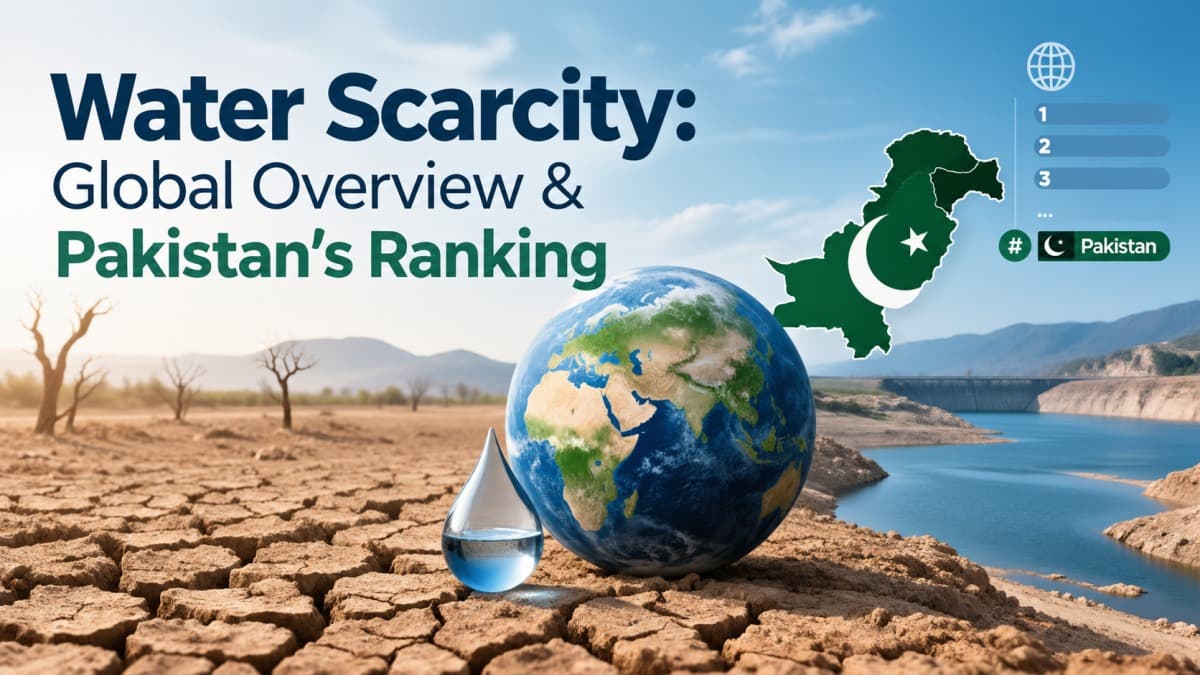
Pakistan is an agricultural country where 90% of available water is consumed in the agriculture sector. Poor irrigation infrastructure, centuries-old irrigation practices and poor mechanisation result in huge losses of water, especially at the farm level. Under prevailing challenges of water scarcity, climate change and food insecurity, adoption of HEIS irrigation systems is a dire need of the time. High-efficiency irrigation systems (HEIS) not only save water but also increase yield and economic stability. This technology provides sustainability and resilience to climate change.
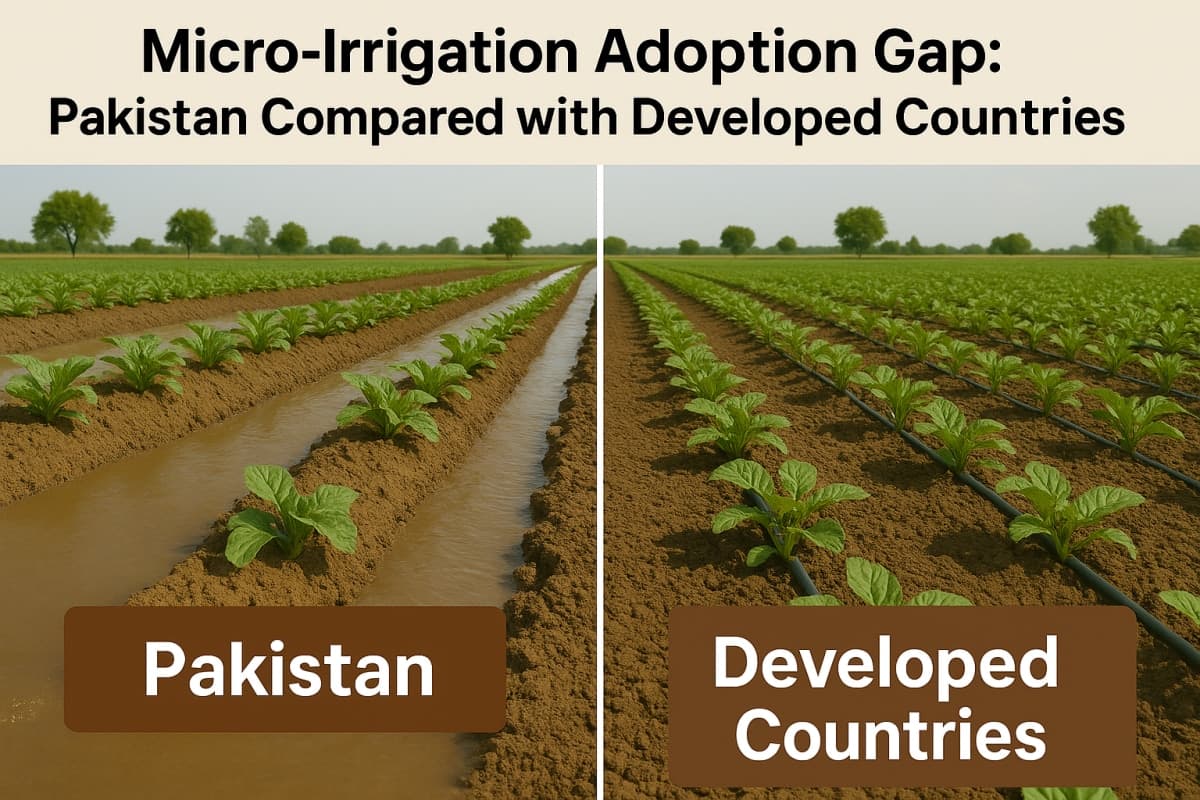
Micro-irrigation (drip and sprinkler, both termed as High Efficiency Irrigation Systems (HEIS) in Pakistan) is now a standard technology in many developed countries but remains marginal in Pakistan. The gap is visible both in the percentage of irrigated area covered and in the speed and scale of adoption.
This blog will give you deep insight about challenges in the adoption of HEIS and their solution.
1. Adoption of Micro-Irrigation in Developed Countries
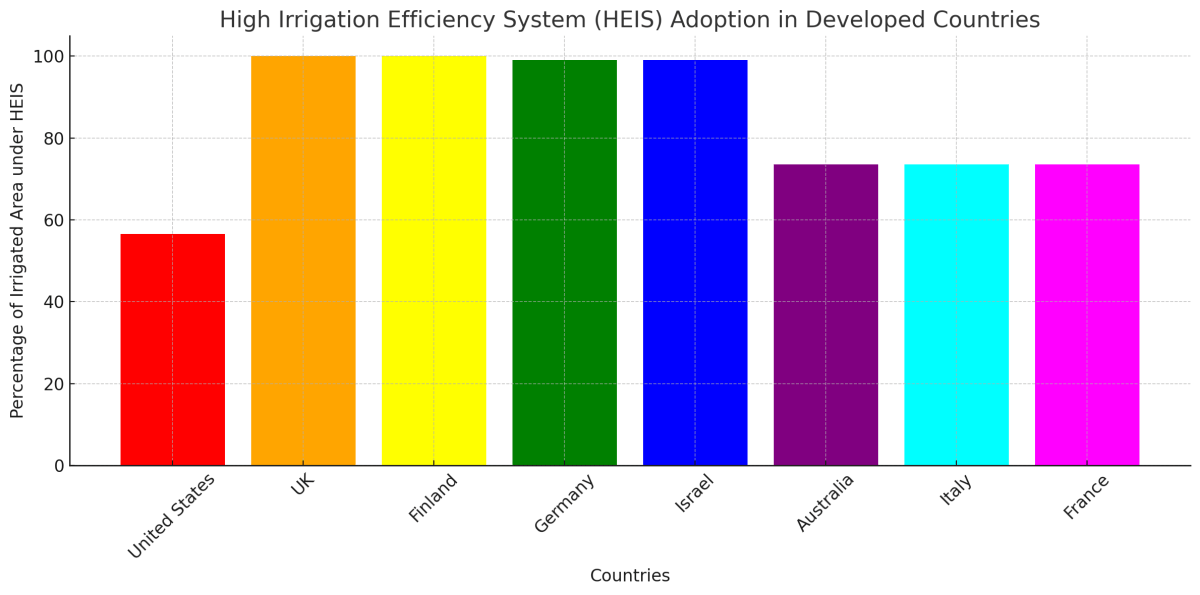
According to the International Commission on Irrigation and Drainage (ICID) statistics, in developed countries on an average about 53% of total irrigation area in under High Irrigation Efficiency System (HEIS). For example,
- United States– Around 56.5% of the irrigated area is under sprinkler and micro-irrigation systems.
- UK, Finland– 100% of the irrigated area is under sprinkler and micro-irrigation systems.
- Germany, Israel– Around 99% area is under HEIS.
- Australia, Italy, France– These countries have 48–99% of irrigated land under sprinkler/micro-irrigation.
Micro-irrigation technologies are tightly integrated with fertigation and have been a key driver of very high Water Use Efficiency (WUE) and crop productivity. This is the reason, in many developed countries, pressurized irrigation (sprinkler + micro) is now the dominant mode of irrigation.
2. Status of Micro-Irrigation / HEIS in Pakistan
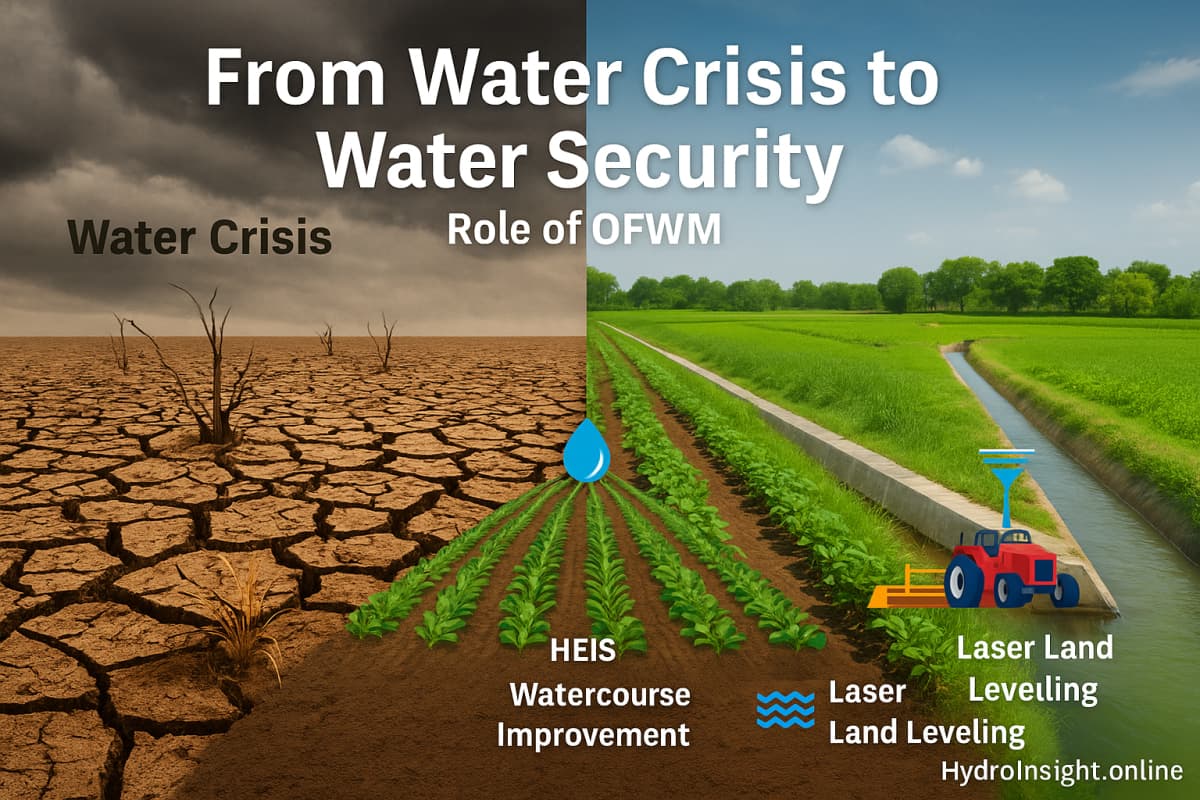
In contrast, centuries old flood irrigation is still the dominant irrigation practice in Pakistan which is only 50-55% efficient. More than 90% of irrigation in Pakistan is carried out through flood/gravity irrigation. Pakistan has launched several HEIS programmes, among those projects, the most prominent is “Punjab Irrigated-Agriculture Productivity Improvement Project (PIPIP)” and currently doing “Punjab Resilient and Inclusive Agriculture Transformation Project (PRIAT)”. But the total coverage remains very small relative to its irrigated area which is 17 million ha in the Indus Basin alone.
Evidence on scale of adoption:
- A World Bank completion review notes that by 2021, only 90,000 acres were actually brought under HEIS against the 120,000-acre target (≈75% achievement).
- A 2023 study on Southern Punjab finds that 6,496 acres were under HEIS (mostly drip) between 2012–2016, with most systems installed in orchards; many systems for field crops were non-functional.
- A 2022 report in Dawn estimates that, across Pakistan, only 70,000–100,000 acres are currently on drip irrigation, which is less than 0.2% of the total cropped area. (Dawn)
Given that Pakistan’s total cropped area is about 24 million ha, out of which only 1% of cropped land is under micro-irrigation.
This shows that HEIS is practiced only on a very small area, and that most irrigated land still relies on inefficient flooding with on-farm application efficiency often below 50%.
3. Nature of the Adoption Gap between
Putting the numbers side by side:
- Developed countries (overall):
Around 53% of irrigated area under HEIS whereas in some cases area under HEIS exceeds 70% (Spain, Brazil, South Africa). In some developed countries (Israel, Germany, Slovak Republic) almost all irrigated area is under High Efficiency Irrigation System (HEIS).
- Pakistan:
Flood irrigation still the dominant method of irrigation and used on more than 90% of irrigated area. In contrast, area under HEIS ranges 70,000–100,000 acres (<0.2% of cropped area), even after large public investments.
In short, pressurized irrigation systems are common in many developed countries, but in Pakistan they are still uncommon and mostly used only in small pilot projects.
4. Why do developed countries adopt HEIS more quickly?
- Economic incentives and water pricing
In developed countries, expensive water and energy, charges based on how much water is used, and strict environmental rules create strong incentives which encourage farmers to save water, so they choose drip and sprinkler irrigation systems.
In Pakistan, canal water is highly subsidized and often charged on an area basis (abiana) instead of volumetric basis. So, individual farmers capture little direct financial benefit from saving water. Ultimately, weakening the economic case for HEIS adaptation in Pakistan. (World Bank)
- Access to capital, technology and services
Developed countries have mature irrigation equipment industries, reliable after-sales service, and easier access to credit, reducing perceived risk of micro-irrigation investments. Studies from Punjab show that Pakistani farmers struggle to keep using modern irrigation systems because the initial cost is very high, and they do not receive enough technical guidance on how to run them properly.
Farmers also face difficulties when the system breaks down, since repair services and spare parts are hard to find or expensive. As a result, many farmers who first adopt these systems stop using them once the initial subsidies or technical support programs end.
- Farm structure and crop patterns
Micro-irrigation is particularly attractive for high-value horticulture (fruit, vegetables), which occupies a large share of irrigated land in developed countries like Spain and Israel.
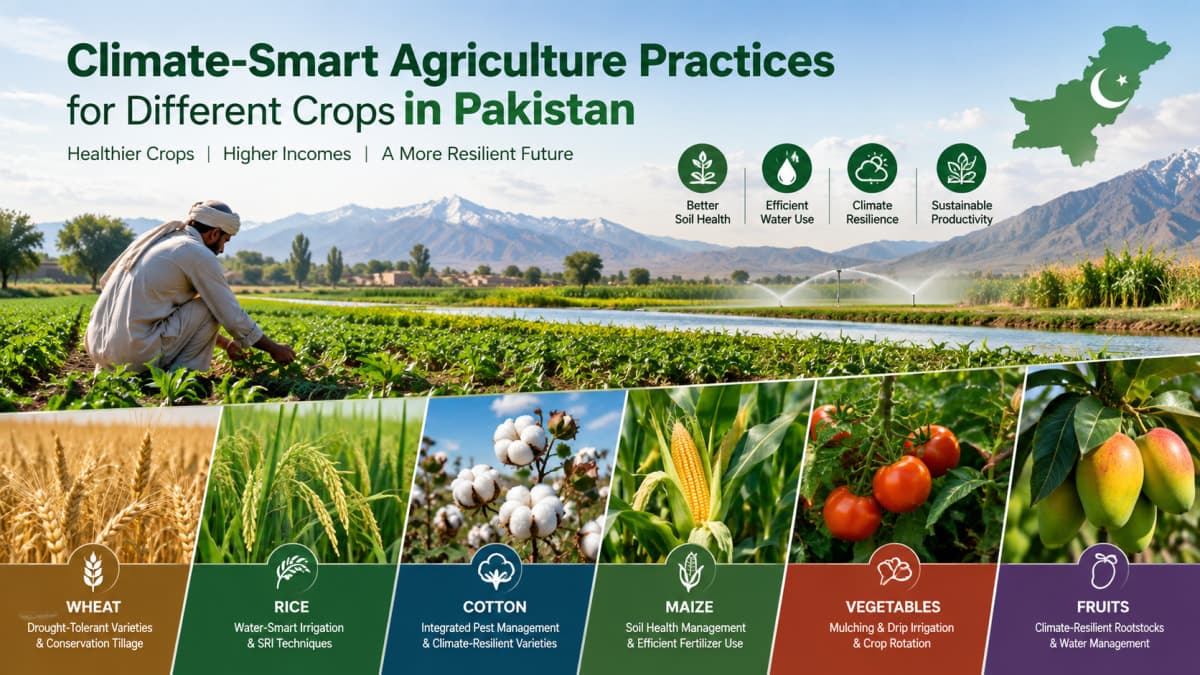
In Pakistan, much irrigated area is planted to relatively low-value, water-intensive field crops (wheat, rice, sugarcane, cotton). HEIS projects show better performance in orchards and tunnel farming, but HEIS systems often become non-operational when installed under conventional cropping pattern.
- Institutional support and extension
Developed countries typically combine investment subsidies with strong extension services, training, and long-term advisory support.
In Pakistan, while Punjab and Sindh governments provide up to 60–80% subsidy on HEIS and solar-coupled HEIS, adoption still lags because of low awareness, lack of skilled operators, and weak follow-up support, as repeatedly highlighted in farm surveys.
5. Implications
Research and experience from HEIS systems installed under PIPIP project shows that this technology is transforming agriculture in extraordinary ways. Findings of PIPIP project are detailed below:
- Water Saving: HEIS resulted in a significant water saving of 50 percent compared to traditional irrigation methods.
- Crop Yield Enhancement: Farmers using HEIS experienced a yield increase ranging from 20 to 100 percent, indicating improved productivity.
- Fertilizer Use Reduction: HEIS facilitated better nutrient management, leading to a reduction in fertilizer use by 40 percent.
- Orchards Maturing Earlier: Fruit orchards using HEIS were observed to mature earlier, resulting in faster fruit production within one to two years.
- Early Picking of Vegetables: Vegetable crops irrigated with HEIS could be harvested 10 to 15 days earlier than those using conventional irrigation methods.
Yet, despite these technical benefits, Pakistan’s adoption remains two orders of magnitude lower than in many developed countries. Bridging this adoption gap will require:
- Stronger economic incentives (water/energy pricing and targeted subsidies),
- Reliable technical and after-sales services,
- Focus on high-value crops and suitable soils,
- Farmer training and capacity building, and
- Long-term, province-wide monitoring to keep systems functional rather than just installed.
Conclusion
Pakistan can no longer afford to waste water through outdated flood irrigation. HEIS offers a clear path to saving water, increasing yields, and strengthening climate resilience. The world has already embraced this technology, now it is Pakistan’s turn. With the right policies, support, and awareness, HEIS can reshape our agriculture and secure a more sustainable future for generations to come.
References
https://ofwm.agripunjab.gov.pk/high_efficiency_irrigation_systems
https://www.jaffer.com/jaspl/irrigation/
https://www.paspk.org/wp-content/uploads/2016/12/Adoption-of-High-Efficiency-Irrigation.pdf
https://www.dawn.com/news/1874583
FAQs
What is the most efficient irrigation system?
Drip irrigation can be one of the most water-efficient ways to irrigate many types of plants. This is because they direct water to the base of the plants at a rate the soil can absorb.
What is the success rate of drip irrigation?
With drip irrigation, survival rates of plants can reach 90–95%. Without it, survival often drops below 40–50%. Imagine planting 10,000 trees and losing half of them that's not only wasted money, but also wasted effort and hope.