Water Scarcity in Pakistan: How Smart Water Accounting Can Save the Future
Discover how smart water accounting can help Pakistan combat severe water scarcity through data-driven management, technology, and policy reform.

INTRODUCTION
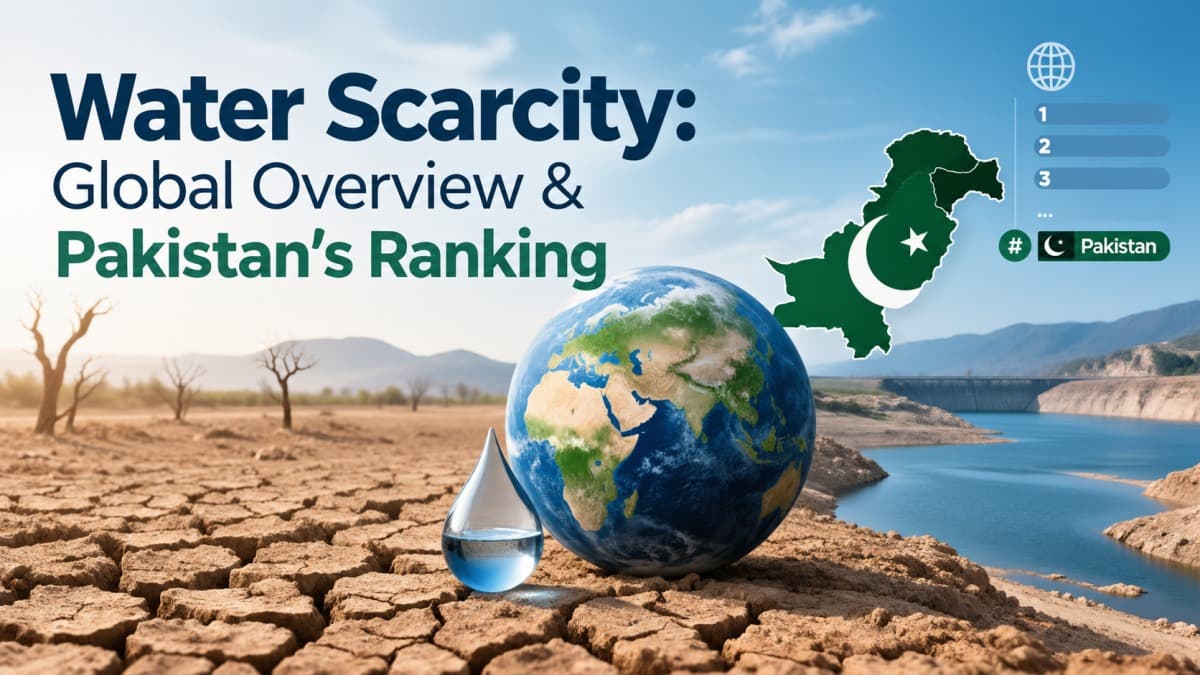
Water scarcity has emerged as one of Pakistan’s most critical environmental and socio-economic challenges in the 21st century. Despite being historically recognized as a river-fed agricultural economy, Pakistan is now categorized among the world’s most water-stressed nations. Rapid population growth, climate variability, inefficient irrigation systems, and declining groundwater tables have collectively placed unprecedented pressure on the country’s finite freshwater resources. Estimates suggest that Pakistan could transition from a water-stressed to a water-scarce state in the near future if current consumption patterns persist.
In this context, traditional approaches to water management, characterized by fragmented governance and inadequate measurement of water flows are no longer sufficient. Modern water security requires accurate, transparent, and timely data to inform planning and policy. Smart water accounting has therefore emerged as a strategic tool for evaluating water availability, distribution, and use across sectors. By enabling evidence-based decision-making, it offers a practical pathway to improve water governance, optimize resource allocation, and enhance climate resilience.
This article examines how smart water accounting can contribute to mitigating water scarcity in Pakistan, with a focus on institutional reforms, technological integration, and the development of a sustainable water budgeting framework.
WHERE DOES PAKISTAN’S WATER GO?
Pakistan’s hydrological allocation is heavily skewed toward agricultural production, reflecting its status as an agrarian economy. However, this concentration of usage, combined with outdated distribution systems and limited monitoring of withdrawals, has contributed significantly to water inefficiency across the country.The following table provides a simplified overview of sector-wise water consumption:
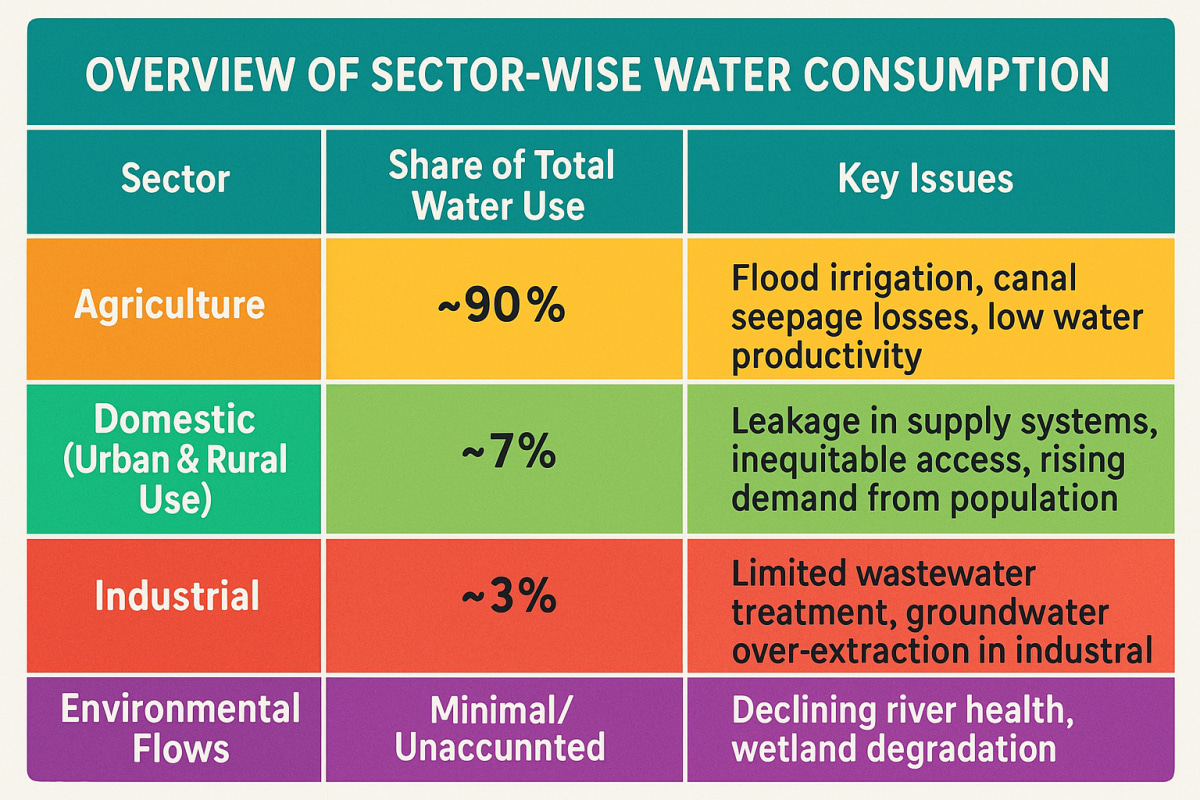
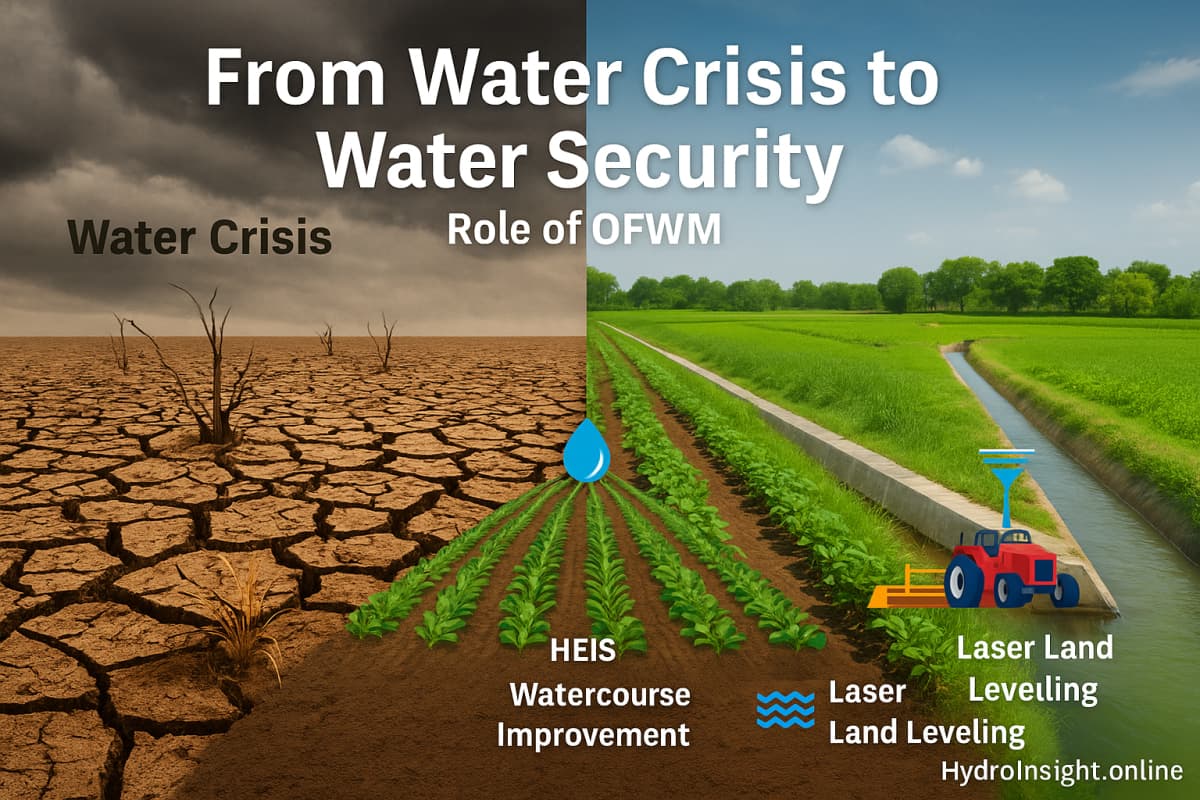
Despite agriculture’s dominant footprint, the sector often exhibits low water-use efficiency relative to global averages. Much of the irrigation infrastructure, especially within the Indus Basin canal network, suffers from seepage, siltation, and inequitable distribution between head and tail reaches. As a result, water losses of up to 30–40 percent are documented before reaching farmlands.
Moreover, poor regulation of groundwater extraction has led to a rapid decline in aquifer levels in major agricultural and urban centers. The absence of reliable measurement tools and real-time monitoring continues to impede informed policymaking and allocation across sectors.
These structural gaps illustrate the critical need for advanced water accounting frameworks that can track water flows, reduce inefficiencies, and ensure more sustainable distribution of Pakistan’s freshwater resources.
THE SCOPE OF WATER SCARCITY IN PAKISTAN
1. Declining Per-Capita Availability
Historically, Pakistan had a comfortable margin of water availability per person; today that margin has shrunk dramatically. In 2009 the per-capita annual water availability stood at around 1,500 m³; by 2021 it dropped to approximately 1,017 m³. Some estimates warn of falling to less than 500 m³ per person by 2025, a threshold often used to define absolute water scarcity.
2. Heavy Dependence on the Indus Basin
Pakistan’s water portfolio is strikingly concentrated: more than 95 % of renewables come from the Indus River Basin, and over three-quarters of those resources originate outside the country’s borders, exposing Pakistan to external risks.
3. Agriculture’s Overwhelming Footprint
Approximately 90 % of Pakistan’s water withdrawals are consumed by the agriculture sector, yet the productivity per cubic meter of water is among the lowest in the world, indicating significant inefficiency.
4. Infrastructure & Governance Weaknesses
- Storage capacity is minimal relative to comparable arid nations: Pakistan’s major reservoirs hold only about 30 days of supply.
- Wastewater treatment is practically negligible: only around 1 % of collected wastewater is treated.
- Groundwater over-extraction is rampant, with major aquifers already overstressed.
In sum: the water scarcity in Pakistan issue is driven by a perfect storm of demand exceeding sustainable supply, weak infrastructure, and inefficient institutional systems.
WHAT IS WATER ACCOUNTING AND WHY IT MATTERS
1. Definition & Components
Water accounting is a systematic method to quantify and report on water stocks, flows, uses, losses, and returns within a defined hydrological system. It brings transparency and scientific precision to resource management.
Key components include:
- Hydrological measurements (surface runoff, rainfall, groundwater recharge)
- Monitoring of sectoral water use (agriculture, domestic, industrial)
- Identification of losses (evaporation, seepage, unmetered use)
- Return flows (wastewater, irrigation runoff)
- Reporting mechanisms, audits and scenario modelling
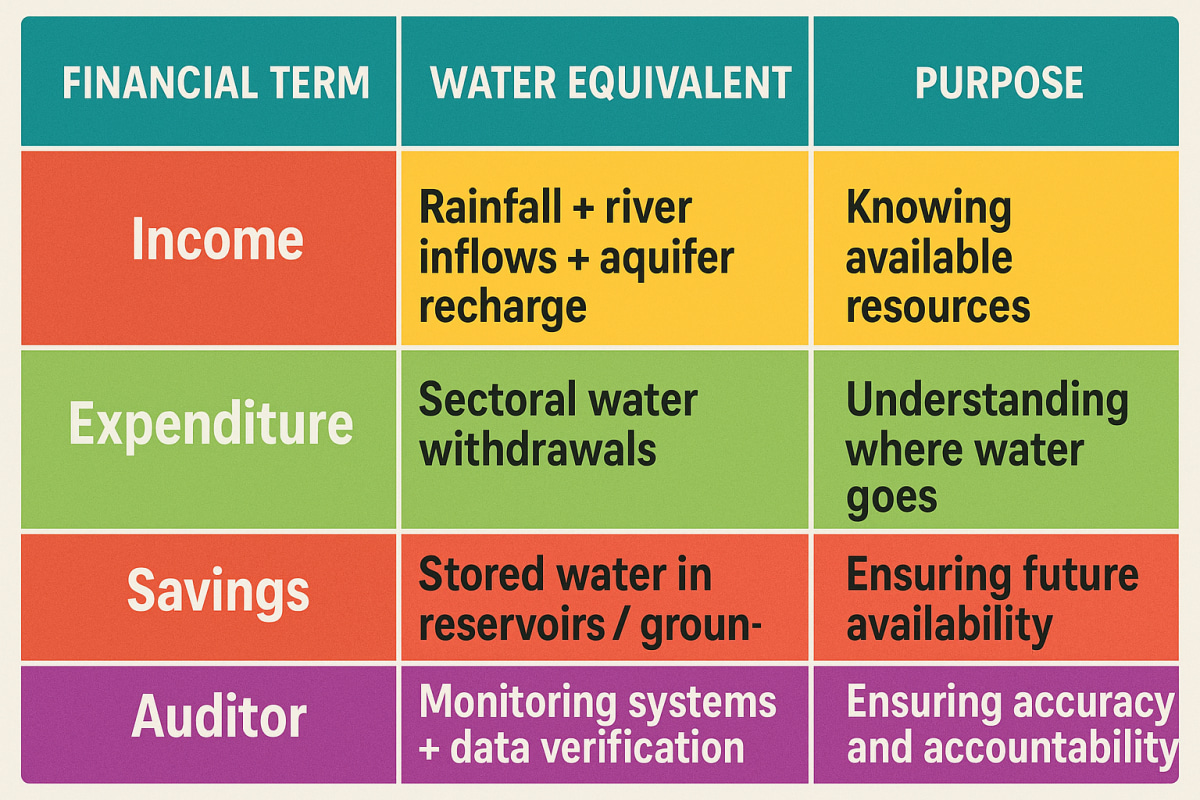
Analogy: Water Accounting is to Water Governance what Financial Accounting is to an Economy
Bringing an analogy can clarify:
HOW SMART WATER ACCOUNTING CAN SAVE THE FUTURE
1. Technological Levers
- Remote sensing & satellite imagery to monitor evapotranspiration and crop-water use in real time
- IoT sensors and telemetry in irrigation canals and groundwater wells to register actual volumes
- GIS-based aquifer mapping and recharge tracking
- Data dashboards and decision support systems for resource planners
2. Governance & Institutional Gains
- Transparent allocation of water across provinces and sectors based on data, not guesswork
- Real‐time monitoring enables adjustments in allocation, reducing wasteful losses
- Accountability mechanisms discourage unmetered extractions, especially of groundwater
- Scenario modelling helps assess future demand under climate change, supporting proactive budgeting
3. Benefits for Pakistan
- Improved water-use efficiency in agriculture → higher yield with less water
- Better domestic water supply planning → more equitable access, reduced conflict
- More sustainable groundwater management → preserving aquifers for future generations
- Enhanced climate resilience → ability to manage variability in supply
CONCLUSION
The challenge of water scarcity in Pakistan is terrible but not unbeatable. By shifting from “how much water do we use?” to “how well do we account for the use, loss and return of water?”, Pakistan can transition from crisis mode into strategy mode. Smart water accounting offers a means to convert data into policy, meters into management, and scarcity into stewardship.
With the right institutional frameworks, technological levers, and political will, Pakistan can ensure its next chapter isn’t one of water wars or depleted aquifers but one of resilient, sustainable resource governance for generations to come.
RECOMMENDATIONS FOR PAKISTAN
For water accounting to fulfil its promise in addressing water scarcity in Pakistan, the following steps are critical:
- Establish a national water-accounting framework, mandated across provinces, with standard protocols and data formats
- Enhance storage capacity (reservoirs, aquifer recharge) to reduce reliance on immediate flows
- Modernize irrigation infrastructure to reduce conveyance losses and promote precision delivery
- Incorporate smart-metering and real-time monitoring of large-scale irrigation withdrawals and groundwater pumping
- Reform water governance: empower institutions, create transparency, align incentives with conservation and efficiency
- Foster capacity building among provincial agencies, water managers, and farming communities
- Raise public awareness linking water scarcity in Pakistan to actionable data and budgeting reforms
REFERENCES
https://www.fao.org/in-action/remote-sensing-for-water-productivity/water-accounting/en
https://openknowledge.fao.org/items/6a2be098-eaad-47b2-8f98-00178df52e96
https://agriculture.institute/elements-of-hydrology/understanding-water-budget-hydrology/