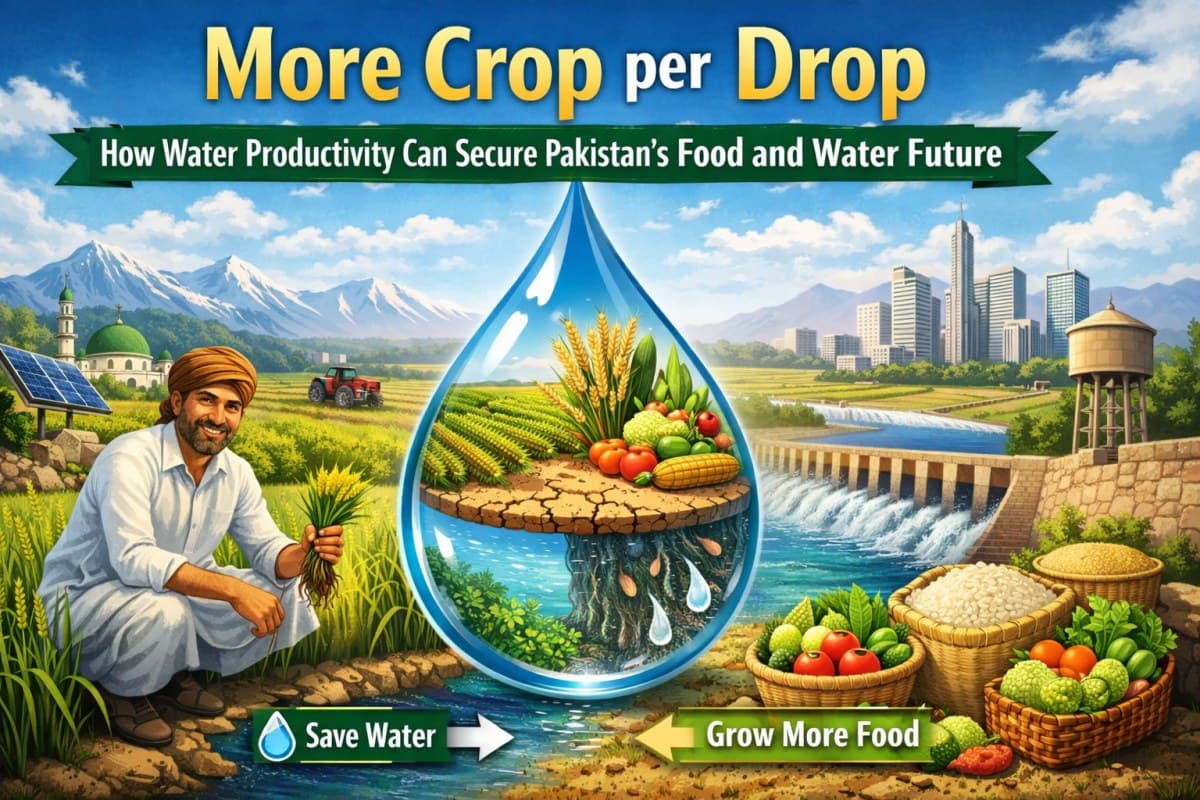
More Crop per Drop: How Water Productivity Can Secure Pakistan’s Food and Water Future
Explore how improving water productivity can address water scarcity and strengthen food security in Pakistan.

Introduction
Water productivity in agriculture means producing more crop per unit of water used. Water productivity is no longer just good practice; it has become essential to cope up the prevailing challenges of water scarcity and food insecurity. In Pakistan, agriculture sector consumes about 90% of available water. Farmers are using centuries old irrigation practices which results in very low water productivity as compare to the world average. Low water productivity not only remain imited to producing less crop yied with more water, instead it further aggravates the water scarcity and food insecurity issues. Hence, improving water productivity is critical to ensure that limited water resources support both ecosystem health and human needs.
a. Water Scarcity
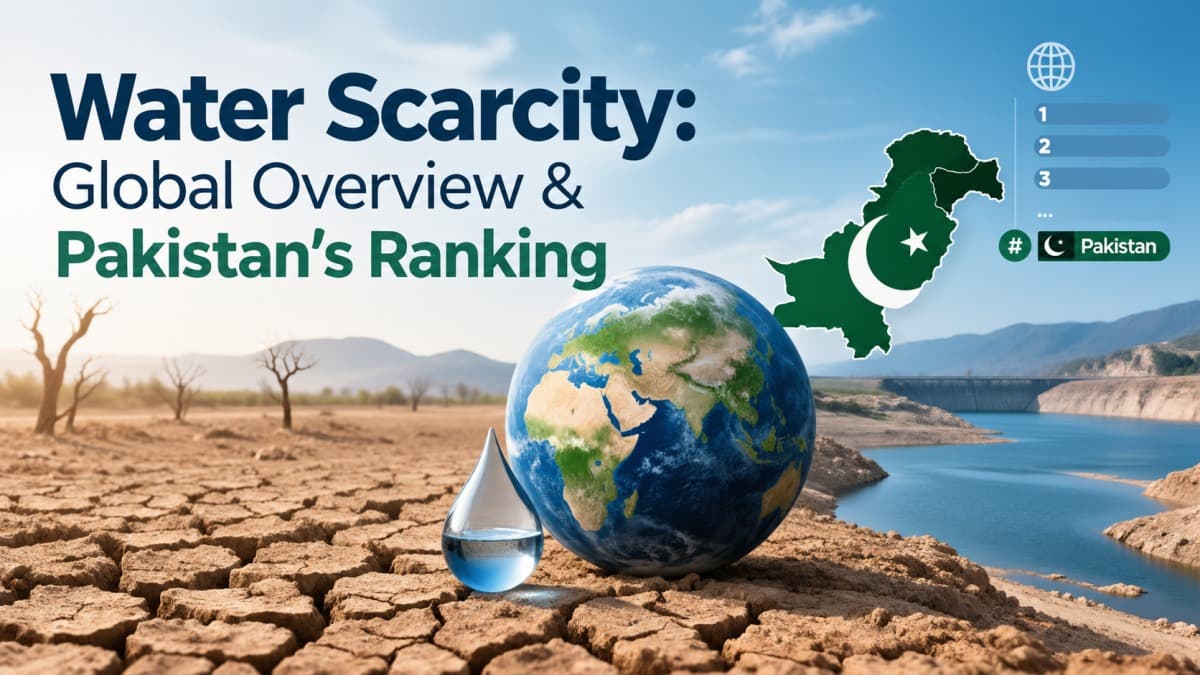
Water scarcity is intensifying due to climate change impacts and rising water demand. Climate change has made rainfall increasingly unpredictable, and droughts more frequent and severe, significantly reducing available water. The country experienced abundant water resources in 1950 with 5,260 m³ per capita but its water availability has decreased to less than 1,000 m³ per person today which has transformed Pakistan from water-stressed to nearly water-scarce (Hydroinsight.online).
Water scarcity isn’t just about having “less water.” Inefficient irrigation systems and aging infrastructure also mean large proportions of delivered water are lost before it ever reaches crops. In some regions, poor conveyance and application efficiency result in water losses exceeding 50%.
b. Food Insecurity
It is evident that without water security, food security can’t be ensured. Because, water scarcity directly threatens food production. Pakistan witnessed more than 2% population growth during last 4 decades, ultimately increasing food demand. Water resource development and effective water management is key to feeding a growing population. Precision irrigation and optimized water use are shown to increase productivity significantly in water-scarce regions, thereby reducing the risk of food shortages.
How to Improve Water Productivity
Improving water productivity requires actions at multiple levels, from conserving water during delivery, to optimizing its application, to enhancing how plants use water. Let’s discuss in detail
1. By Improving Conveyance Efficiency
Conveyance efficiency refers to water losses occurring in canals, distributaries, and watercourses during conveyance. While lining main canals and distributaries requires substantial capital investment and is often economically unfeasible, lining watercourses offers a cost-effective solution and can play a significant role in conserving this precious resource.
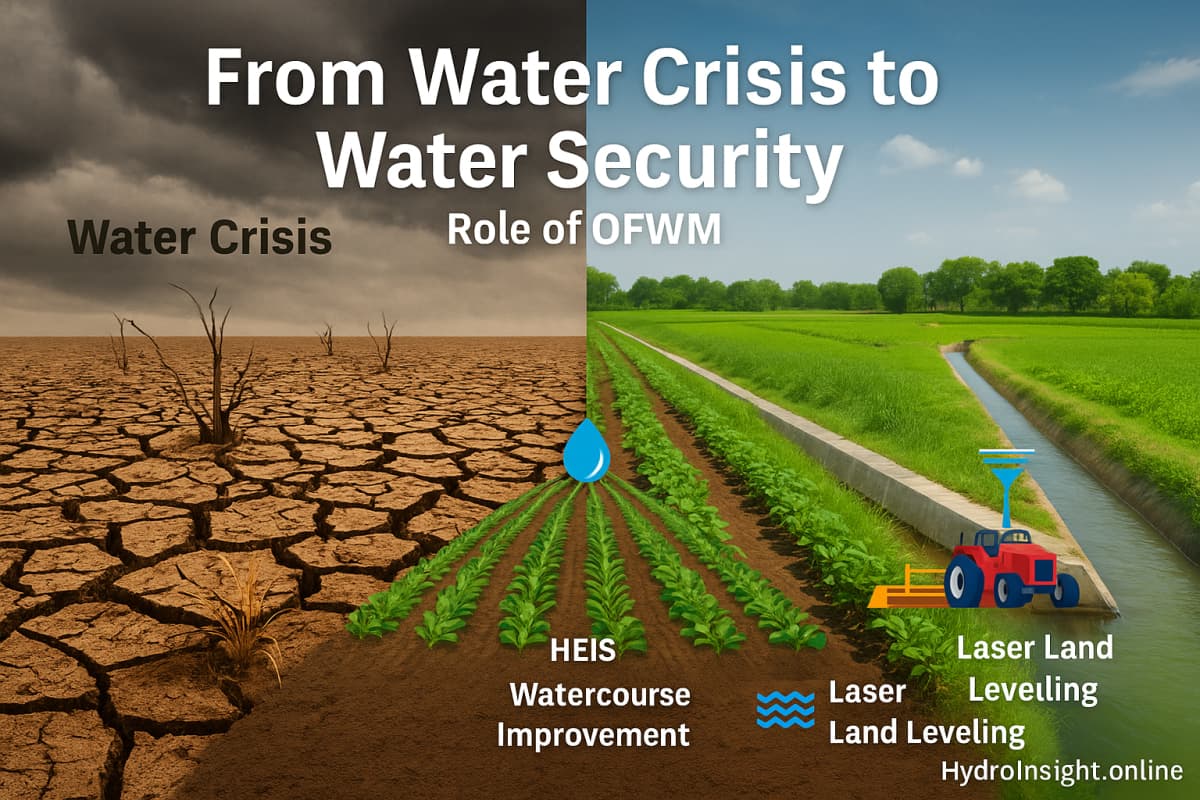
a. Watercourse Lining
In Pakistan, several initiatives have been launched to improve conveyance efficiency through watercourse lining. Some major projects, such as the Punjab Irrigated-Agriculture Productivity Improvement Project (PIPIP) and the National Program for Improvement of Watercourses (NPIW), have been successfully completed, while other, most notably the Punjab Resilient and Inclusive Agriculture Transformation (PRIAT) project is currently underway.
The completed programs, particularly PIPIP and NPIW, have delivered remarkable results across the agricultural landscape. Evaluations of the PIPIP project revealed substantial water savings, including approximately 229 acre-feet in regular watercourses, 164 acre-feet in additional watercourses, and 55 acre-feet across irrigation schemes. These improvements in conveyance efficiency led to a 9% increase in cropping intensity and an impressive 31% rise in crop yields, enabling farmers to enhance productivity, increase incomes, and improve their overall livelihoods.
2. By Improving Application Efficiency
Application efficiency relates to how effectively water is delivered to and absorbed by crops.
a. Laser Land Levelling
Studies have indicated that a significant (20-25%) amount of irrigation water is lost during its application at the farm due to unevenness of the fields. This problem is more pronounced in the case of rice fields. Laser land levelling ensures uniform water distribution across fields, reducing unnecessary water accumulation and runoff. Precision land levelling has been shown to save 20–25% of irrigation water, improve fertilizer use efficiency, and increase crop yields (OFWM Agriculture, Punjab).
b. High-Efficiency Irrigation Systems
Techniques such as drip and sprinkler systems supply water directly to the crop root zone with minimal loss, considerably improving water use efficiency. Experience from systems installed across Pakistan under PIPIP project shows that this technology is transforming agriculture in extraordinary ways. Farmers are witnessing up to 50% water savings, fertilizer savings of up to 60% and more than a 100% increase in crop yields (OFWM Agriculture, Punjab).
c. Bed & Furrow Irrigation
Bed and furrow systems reduce surface runoff and evaporation compared to traditional flooding, enabling water to move directly where crops need it most. Studies on water use show improved efficiency and crop growth through optimized furrow management.
d. AWD Method in Rice
Alternate Wetting and Drying (AWD) is a water-saving technique in rice where fields are allowed to dry intermittently rather than remain continuously flooded. AWD can reduce irrigation water use by up to 30% without yield loss while also lowering methane emissions.
3. By Improving Water Use Efficiency (WUE)
Water use efficiency focuses on maximizing the amount of crop produced per unit of water consumed. This can be achieved through smarter irrigation scheduling and better soil and crop management.
a. Smart Irrigation Scheduling
Irrigation scheduling ensures that water is applied in the optimal amount, at the right time, and in the most suitable manner. This practice ultimately maximizes water use efficiency. Irrigation should be based on:
- Real-time Evapotranspiration (ET):Using actual crop water-use data allows irrigation to be scheduled with greater precision. Rather than relying on pre-calculated values, this approach utilizes real-time evapotranspiration (ET) data generated through advanced models and monitoring instruments (Eddy Covariance Flux Tower). By capturing current weather and crop conditions, real-time ET-based scheduling also helps address the growing challenges posed by climate change.
- Soil Moisture Sensors: These sensors help determine when crops really need water, preventing overwatering and reducing waste.
- Weather Forecasts: Integrating weather forecasts into irrigation decisions can prevent unnecessary applications during rainfall events.
- Smart Technologies (IoT & AI): Emerging technologies can automate irrigation based on data from sensors and predictive models, enabling efficient water use with minimal labor inputs.
b. Soil & Crop Management Practices
Beyond improved irrigation practices , agronomic practices greatly affect how water is retained and used by crops efficient:
- Crop Rotation: Rotating crops with different water needs can improve soil structure, reduce disease pressure, and spread water demand more evenly across seasons.
- Zero Tillage: Zero tillage reduces soil disturbance and improves moisture retention, boosting water availability in the root zone.
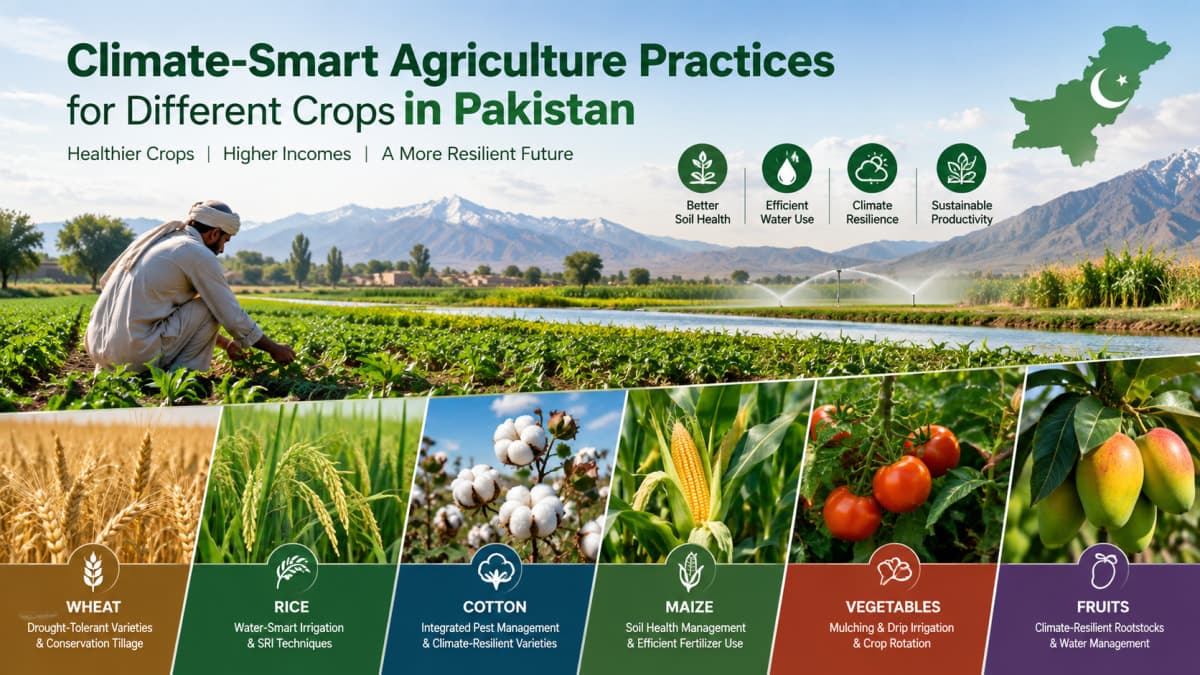
- Mulching: Mulch reduces soil evaporation losses, keeps soil temperatures stable, and enhances water retention, especially important during heat waves.
- Drought-Tolerant & Early Maturing Varieties: Plant varieties that can withstand water stress or complete their lifecycle quicker reduce the total water required per unit of yield.
c. Policy & Institutional Support
Sustainable improvements require enabling policies and institutional backing:
- Incentives for Micro-Irrigation: Subsidies and financial support can help farmers adopt high-efficiency systems like drip and sprinkler irrigation.
- Farmer Training: Education and extension services are essential to spread knowledge about efficient irrigation and modern water management practices.
- Water Pricing Reforms: Introducing fair water pricing encourages efficient use and discourages wasteful practices, while generating funds for infrastructure improvements.
Conclusion
Water productivity in agriculture is a cornerstone of climate resilience, food security, and sustainable water management. Under current intensifying climate change and rapid population growth, the principle of “more crop per drop” is no longer merely a best practice, it has become an urgent necessity to secure Pakistan’s water and food future.
From improving conveyance and application efficiency to adopting smarter irrigation scheduling, better soil management, and enabling policy frameworks, every effort to enhance water productivity contributes directly to producing more food with less water. Together, these measures play a vital role in safeguarding limited water resources while ensuring a reliable and resilient food supply for generations to come.
References
https://www.sciencedirect.com/science/article/abs/pii/S0378377405000429
https://www.mdpi.com/2077-0472/12/7/1058
https://www.waterproductivity.org/water-productivity/
https://www.futurewater.eu/expertise/water-productivity-irrigation/
https://thewaterchannel.tv/videos/what-is-water-productivity/
https://openknowledge.fao.org/items/6c2f5c4b-8805-44a8-a14e-0c0484e16354
https://www.cabidigitallibrary.org/doi/book/10.1079/9780851996691.0000