Water Crisis in Pakistan and Role of On-Farm Water Management
Discover the causes of Pakistan’s water crisis and learn how On-Farm Water Management (OFWM) can save water, boost yields, and secure food security.

1. Introduction:
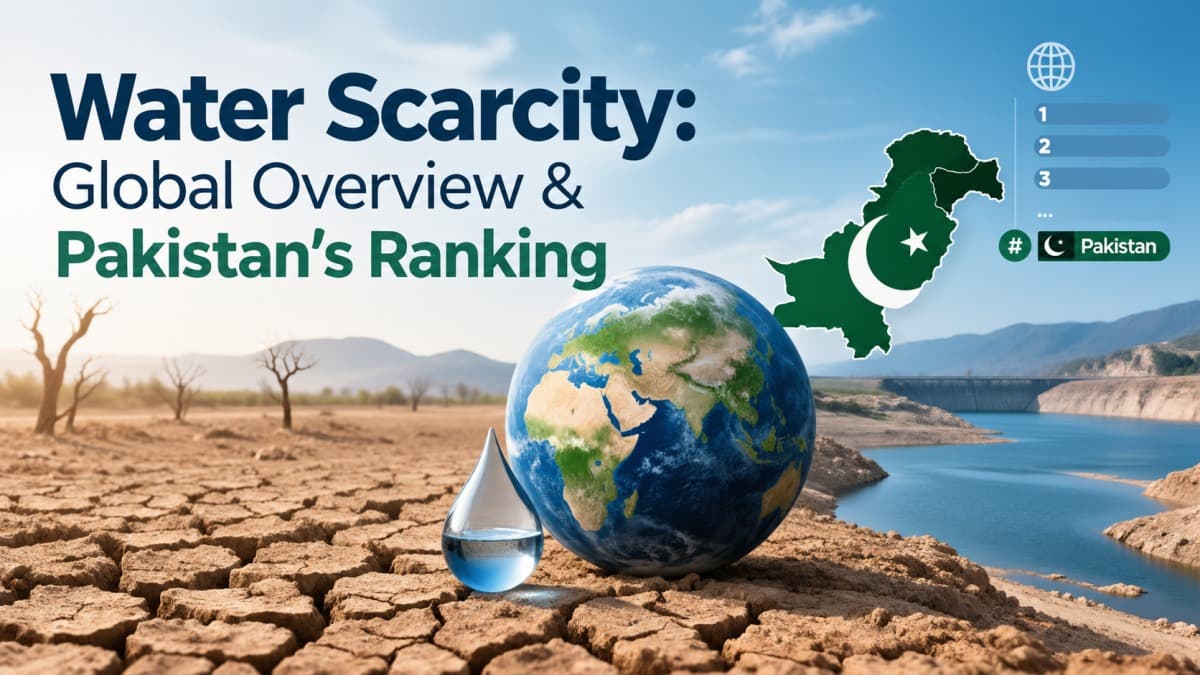
Pakistan depends on water as its essential life source but faces severe water crisis. The country experienced abundant water resources in 1950 with 5,260 m³ per capita but its water availability has decreased to less than 1,000 m³ per person which has transformed Pakistan from water-stressed to nearly water-scarce. The Falkenmark Indicator shows that countries with less than 1,700 m³ per person face water stress while those with under 750 m³ per person are considered water-scarce. The water scarcity in Balochistan reaches extreme levels because the region has only 250 m³ of water available per person.
The situation becomes worse because Pakistan depends heavily on unstable water resources. The water supply in Pakistan depends on three main sources: glaciers which provide 40%, snowmelt which provides 22% and rainfall which provides 27%. All of these sources are facing significant threats from climate change. The agricultural sector which drives Pakistan's economy requires 90% of the nation's water supply but four major crops (rice, wheat, cotton, sugarcane) use 80% of agricultural water while producing only 5% of the country's GDP.
The practice of using groundwater as a supplementary water source does not provide a solution to the problem. The Indus Basin aquifer which spans 40 million acres has become the world's second most severely depleted aquifer system. The excessive water extraction rates exceed natural recharge processes which leads to rapid water table decline and increasing salt concentrations in the soil. The national emergency status has been reached because groundwater supplies 50% of irrigation water and 70% of domestic water and 100% of industrial water needs.
The current water crisis worsens because Pakistan fails to manage its water resources effectively. The country loses significant water resources because of its outdated canal systems and inefficient irrigation practices and insufficient water storage facilities. The annual 30 MAF of unused water that flows into the sea combined with only 30 days of storage capacity creates an escalating gap between water availability and national requirements.
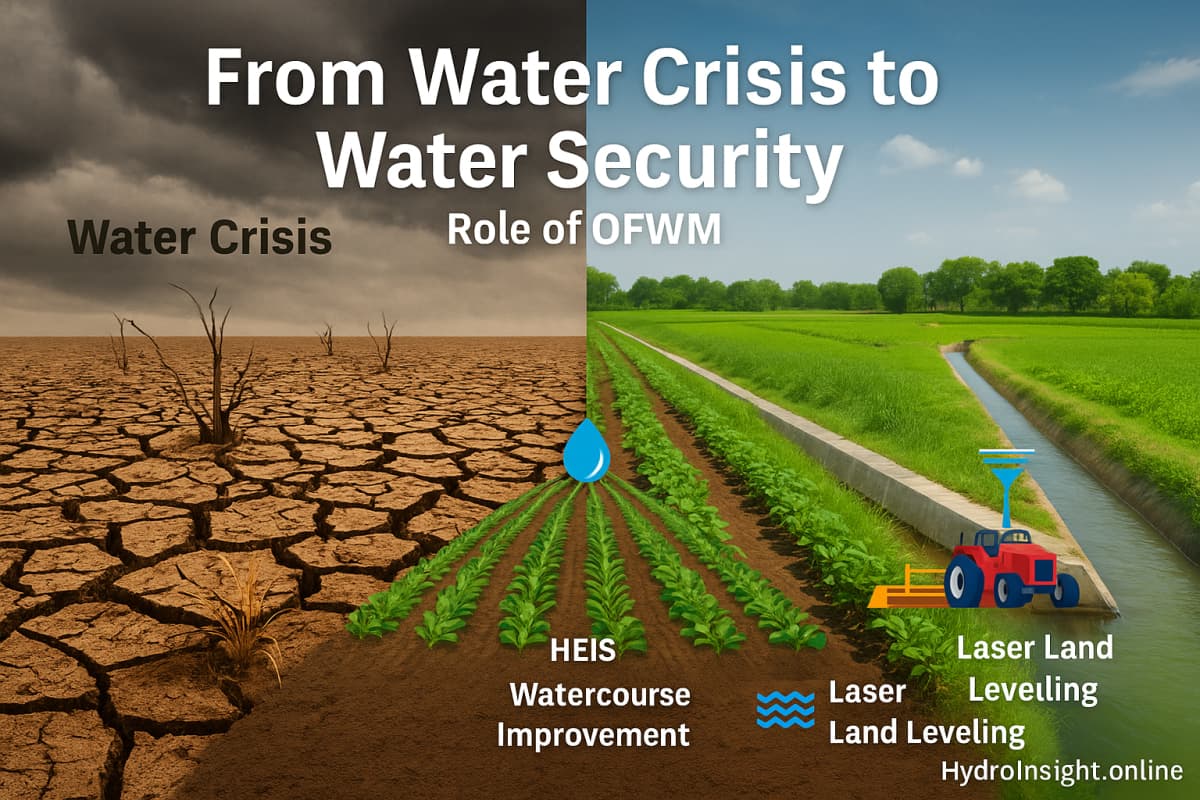
The implementation of On-Farm Water Management (OFWM) systems becomes essential at this critical point. The implementation of watercourse improvement and laser land leveling and high efficiency irrigation systems and rainwater harvesting through OFWM enables the conservation of millions of acre-feet of water while enhancing agricultural production and climate change resistance. The way Pakistan handles water resources at farm level will decide whether the nation faces scarcity and food insecurity or achieves sustainable water security.
From above discussion, it’s quite clear that water scarcity in Pakistan is not the result of a single factor. It’s the outcome of multiple challenges that have intensified over decades. From climate change to poor management, the crisis is deep-rooted and complex. Let’s explore the major reasons fueling this looming threat.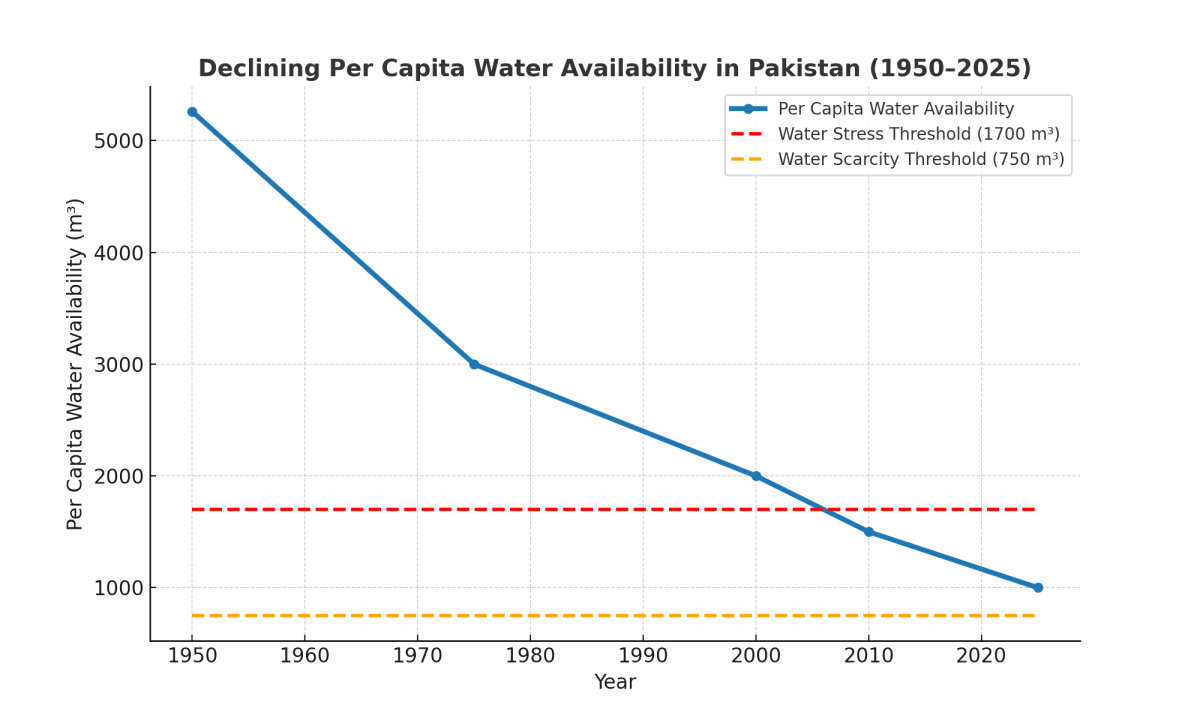
2. Why Pakistan is Facing a Growing Water Crisis:
a. Climate Change
Pakistan ranked among top 10 most vulnerable countries to climate change. Climate change has posed serious threats of extreme weather events, more frequent and intense floods, long duration drought, heat waves, glacier melt, Glacial Lake Outburst Floods (GLOF), coastal area flooding and many other direct and indirect risks.
Globally, average surface temperatures have risen by 1.3°C in the past century, and the last decade was the warmest on record. The rate of warming has nearly doubled in the last 50 years, forcing Pakistan into a dangerous cycle of longer summers, shorter winters, and faster snowmelt. As glaciers retreat and melting accelerates, the country’s water reservoirs are shrinking, pushing it toward scarcity.
b. Increasing Population
The biggest challenge to deteriorating water resources and decreasing per capita water availability in Pakistan is population growth. Between 1972 and 2020, Pakistan’s population has increased by 2.6 times. Total water use in Pakistan increased by about 0.7 percent per year between 1977 and 2017 whereas total water resources remained static, resulting in a decrease in per capita water availability. This has resulted in an increase in pressure on water resources, reflected by the ratio of water withdrawals to renewable water resources going up from 62 percent to 82 percent between 1977 and 2017.
There is strong empirical link between population and sustainable development. Pakistan current population is 230 million which is expected to reach over 350 million by the year 2050 thus further putting mounting pressure upon its already scarce and depleting natural resources.
c. Insufficient Existing Storage Capacity
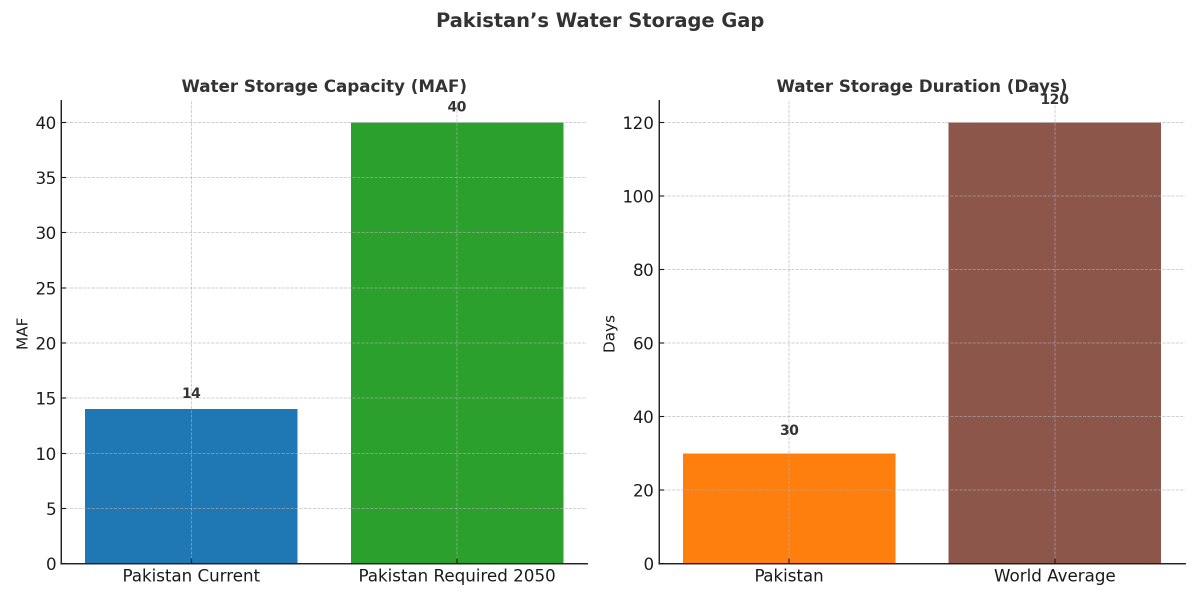
Pakistan receives 80% of its surface flow during 100 days whereas remaining 20% in 265 days. There is large variability in flows which leads to severe imbalance between supply and demand. To minimize the difference between supply and demand, new storage dam need to build up. Due to insufficient storage capacity, around 30 MAF flows directly goes to sea unutilized every year.
Pakistan has 30-day storage which is very low as compare to the world average. Pakistan has three major storages including Terbela, Mangla and Chashma with overall live storage capacity of 18 MAF which has now reduced to 14 MAF due to sedimentation. Pakistan hasn’t built any new storage dam since commissioning of Terbela in 1974. Due to increasing population, climate change and increasing cropping intensity, existing resources are under severe stress. Pakistan needs additional storage of 40 MAF by 2050 to cope up the said challenges.
d. Overexploitation of Groundwater
Unregulated and uncontrolled use of groundwater is diminishing the relative accessibility. Depth to water table has decline in many areas of the Indus Basin which is evident that there is serious imbalance between abstraction and recharge. Due to excessive urbanization and construction of impermeable membrane over the natural strata, rate of groundwater extraction is much higher than its recharge rate.
Many tubewells have gone out of production whereas production of remaining wells has reduced below 50% in many areas. Excessive mining of aquifer in fresh groundwater area has resulted in falling water tables and groundwater has become inaccessible in 15% and 20% of the irrigated area of Punjab and Baluchistan respectively.
e. Water Quality Deterioration
Both surface and groundwater reserves of water are getting deteriorated due to indiscriminate discharge of untreated wastewater from industrial, agriculture and domestic sector. Subsequently this is leading to severe contamination of groundwater (including drinking water), pollution of surface water in major rivers and seawater. Pakistan ranks among the countries with the lowest water treatment rate.
f. Competing Demands & Future Water Requirement
Water is becoming scarcer due to continuous increase in competing demands of various sectors like agriculture, domestic and industry. Adequate water would also need to be committed for conservation of fresh water lakes, delta and coastal ecosystem. All additional water requirements of these sectors will have to be met out of the water already committed to agriculture which is barely able to meet the existing need.
The study carried out on water resource development during 2000-2002 with the assistance of Asian Development Bank and World Bank and study carried out in the technical paper 240 for the symposium held in 2003 on water crisis for the Pakistan Engineering Congress has established that additional water requirement for the year 2050 as 40 MAF at the farm gate or 50 MAF additional diversion.
g. Transboundary Disputes
Existing and proposed development on western rivers by India badly impacted water availability in Pakistan. India had seized 70% water of Chenab and Jhelum as a result of which 0.9 million acres of land, being irrigated from Marala headworks is now presenting the view of Thar and cholistan desert. In addition to this, Pakistan’s water experts have established that all planned and under construction projects by India on western rivers may block 43 MCM of water from flowing to Pakistan.
h. Poor Water Management
Over 80 percent of the country’s water resources are used by four major crops (rice, wheat, sugarcane and cotton) which contribute only 5 percent to GDP. The productivity of these crops is low in Pakistan compared to other major agricultural economies of the world.
Moreover, canal water is underpriced, recovering only one-fifth [20 percent in the form of abiana (canal water charges)] of annual operating and maintenance costs, while the collection is 60 percent of total receivables. Though the farm sector accounts for one-fifth of GDP and almost half of the country’s employment, it contributes less than 0.1 percent to total tax revenues, providing little finance for the maintenance of the irrigation system. The crumbling of water infrastructure contributes to extensive water wastage.
The country’s irrigation is one of the most inefficient in the world with an overall efficiency of 40 percent, reflecting aging and poor maintenance of the irrigation system. This means, out of 143 BCM of water available at the canal headworks, only 55 BCM is being used for the farm sector. The rest (61 percent or 87 BCM) of water is lost during conveyance through canals, distributaries, minors and watercourses and during application in the field.
3. Role Of On Farm Water Management (OFWM)
Under prevailing challenges of water scarcity, climate change and food insecurity, On Farm Water Management (OFWM) department is playing key role in addressing these challenges. On Farm Water Management (OFWM) has started various irrigated agriculture improvement initiative to enhance its performance at grassroots level which include improvement of watercourses, LASER land levelling, high efficiency irrigation systems (HEIS), recharge bore wells and rainwater harvesting ponds etc. These interventions have significantly contributed in water saving by enhancing conveyance, application and water use efficiencies at farm level along with increasing crop yield. The detail of each intervention is explained below;
a. Impact Of Watercourse Improvement
The tertiary level irrigation system is facing a significant challenge due to the loss of irrigation water. It has been established that around 40% of irrigation water is lost in the century-old community watercourses due to poor maintenance and aging which results in the wastage of a precious resource. The watercourse improvement program has had a significant impact on the irrigation system. Key impacts of watercourse improvements under PIPIP projects are;
- Water saving: The program has resulted in an annual water saving of 229 acre feet in regular watercourses, 164 acre feet in additional watercourses, and 55 acre feet in irrigation schemes.
- Increased cropping intensity: There has been a 9% increase in cropping intensity, allowing for more agricultural production
- Improved crop yield: Crop yield has increased by 31%, resulting in higher profits for farmers
- Reduced theft and amicable dispute resolution: The program has reduced water theft and improved dispute resolution among farmers
- Improved equity: The program has promoted equity among farmers by ensuring that everyone has access to an adequate water supply
- Economic benefits: The program has resulted in an annual production gain of PKR 3 million per watercourse, benefiting the local economy
- EIRR: The estimated internal rate of return (EIRR) for the program is 42%, indicating its financial viability
b. Impact Of High Efficiency Irrigation System
Based on the system installed so far in Pakistan, it is concluded that technology has shown enormous impact in term of water saving, fertilizer saving, crop productivity enhancement and crop diversification. These impacts are summarized below;
- Water Saving: HEIS resulted in a significant water saving of 50 percent compared to traditional irrigation methods.
- Crop Yield Enhancement: Farmers using HEIS experienced a yield increase ranging from 20 to 100 percent, indicating improved productivity.
- Fertilizer Use Reduction: HEIS facilitated better nutrient management, leading to a reduction in fertilizer use by 40 percent.
- Orchards Maturing Earlier: Fruit orchards using HEIS were observed to mature earlier, resulting in faster fruit production within one to two years.
- Early Picking of Vegetables: Vegetable crops irrigated with HEIS could be harvested 10 to 15 days earlier than those using conventional irrigation methods.
- Value Addition: HEIS contributed to improved produce quality, enhancing the overall value of agricultural products.
- Increase in Net Farm Income: The adoption of HEIS resulted in an increase in net farm income per acre per annum, with an average gain of PKR 75,000.
- Economic Internal Rate of Return (EIRR): The EIRR for HEIS was calculated at 35.1 percent, indicating a positive economic impact and return on investment.
These findings highlight the positive and significant impacts of HEIS implementation, including water savings, yield enhancements, reduced fertilizer use, earlier maturation of orchards and vegetables, improved produce quality, increased farm income, and a favorable economic return on investment.
c. Impact Of Laser Land Levelling
An impact assessment study carried out by PIPIP Monitoring and Evaluation Consultants in 2018 revealed that Precision Land Leveling using LASER technology resulted in a 25% water saving, 23% improvement in crop yield, 11% enhancement in fertilizer use efficiency, and 18% saving in farm labor. This translates to an annual net revenue generation of PKR 410,000 and an Economic Internal Rate of Return (EIRR) of 29.6%. Overall, LASER Land Leveling technology offers a range of benefits that can improve the efficiency and productivity of agriculture. Here are some of the key benefits:
- Minimizes cost of operation: LASER Land Leveling reduces the cost of land preparation by reducing the amount of soil that needs to be moved. This results in significant cost savings for farmers.
- Ensures better accuracy in less time: With LASER technology, land leveling can be completed with a high degree of accuracy in much less time than traditional methods. This saves time and resources for farmers.
- Saves irrigation water: Precision Land Leveling reduces water application losses and increases the efficiency of water use. This saves irrigation water and reduces the cost of water for farmers.
- Uniform seed germination: By creating a uniform land surface, Precision Land Leveling ensures that seeds are planted at a consistent depth, resulting in uniform seed germination and better crop establishment.
- Increases fertilizer use efficiency: With a uniform land surface, fertilizer can be applied more evenly, resulting in better uptake of nutrients by plants and increased fertilizer use efficiency.
- Enhances crop yields: Precision Land Leveling has been shown to increase crop yields by up to 23 percent, according to an impact assessment study carried out by PIPIP Monitoring and Evaluation Consultants.
- Gateway to mechanization: Precision Land Leveling using LASER technology is a precursor for on-farm water management (OFWM) interventions and other mechanization technologies in agriculture.
Overall, LASER Land Leveling technology offers a range of benefits for farmers and agricultural practitioners, including cost savings, time savings, and improved water use efficiency, and increased crop yields.
4. Conclusion:
Pakistan’s water crisis is real and growing. But it is not unsolvable. With smarter policies, modern technologies, and efficient management, the country can turn water scarcity into an opportunity for sustainable growth. On-Farm Water Management (OFWM) has already shown success by saving billions of liters, boosting yields, and reducing conflicts among farmers. Scaling these initiatives alongside building storage, curbing wastage and enforcing groundwater regulations, can steer Pakistan away from disaster.
The lesson is clear: Save water, secure food; secure food, secure the nation.
References:
https://pide.org.pk/research/water-crisis-in-pakistan-manifestation-causes-and-the-way-forward/
https://bloompakistan.com/water-crisis-in-pakistan-causes-challenges-and-sustainable-solutions/
https://spinetimes.pk/pakistans-water-crisis-a-looming-catastrophe/
FAQs
What are 5 ways to solve the water crisis?
Five effective ways to solve the global water crisis include repairing leaks, harvesting rainwater, recycling wastewater, improving agricultural efficiency, and protecting natural ecosystems.
What is the biggest contributor to water scarcity?
Agricultural irrigation is the biggest contributor to water scarcity, accounting for roughly 70% of global freshwater withdrawals.
What are the natural causes of water scarcity?
Natural causes of water scarcity stem from physical and climatic conditions that limit the availability of clean freshwater.