How Pakistan Can Survive Future Floods: Strategies for 2025 and Beyond
Discover how Pakistan can survive future floods with strategies like early warning systems, resilient infrastructure, afforestation, and climate-smart farming.

Introduction
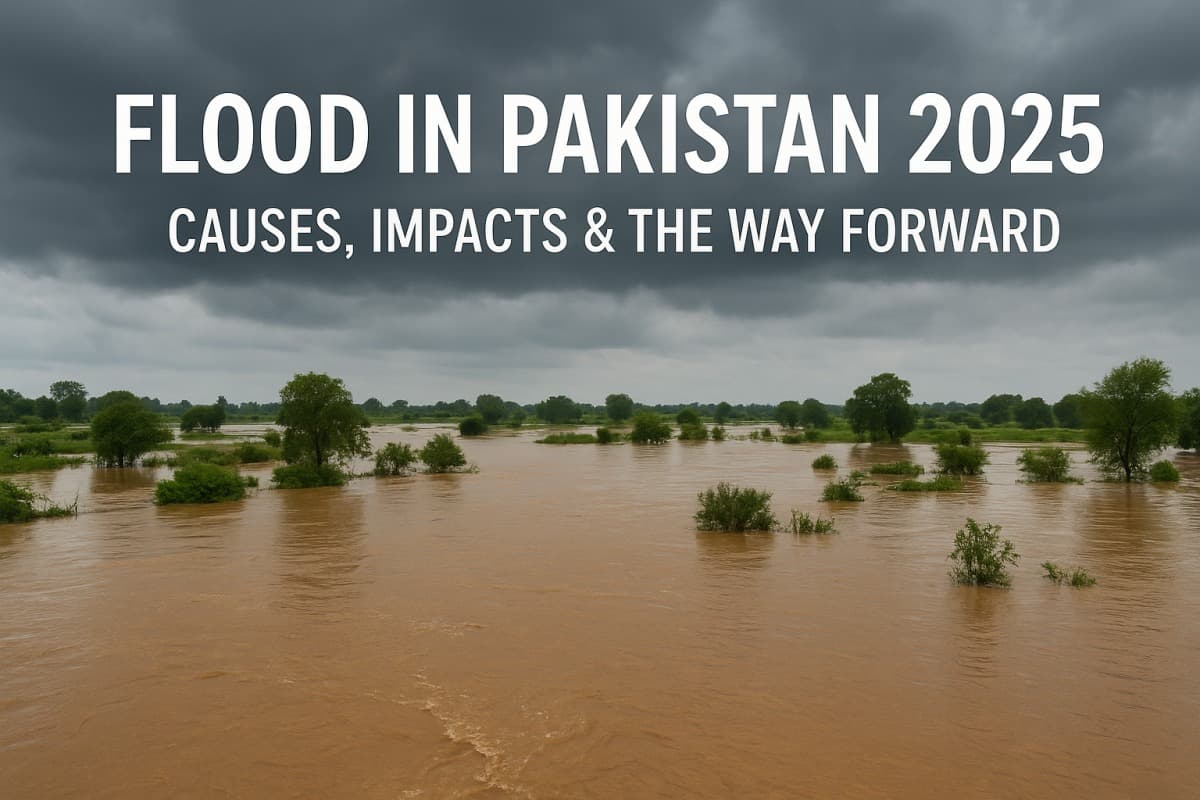
Floods in Pakistan have evolved from periodic disturbances into devastating nationwide emergencies which impact both human populations and economic systems and natural environments. The 2025 flood event demonstrated Pakistan's severe exposure to climate change effects and inadequate infrastructure and deforestation and weak governance systems. The World Bank (2023) identifies Pakistan as one of ten countries which experience the most severe climate-related disasters while annual damage costs reach into the billions. The annual flood seasons create widespread displacement and food shortages and health emergencies that affect millions of people.
The current situation requires a complete transformation from emergency-based responses to proactive protective and adaptive strategies. A safer sustainable future depends on the combination of modern early warning systems with climate-resilient infrastructure and afforestation programs and community awareness initiatives and climate-smart agricultural practices. The World Bank (2023) and WMO (2023) demonstrate that effective solutions exist for flood management through early warning systems and resilient infrastructure which generates four times more value than construction costs. The implementation of these solutions with immediate action will lead Pakistan toward flood survival and disaster resistance. The path toward national survival requires immediate implementation of essential measures.
The Way Forward: Preventive & Adaptive Measures
1. Strengthening Early Warning Systems
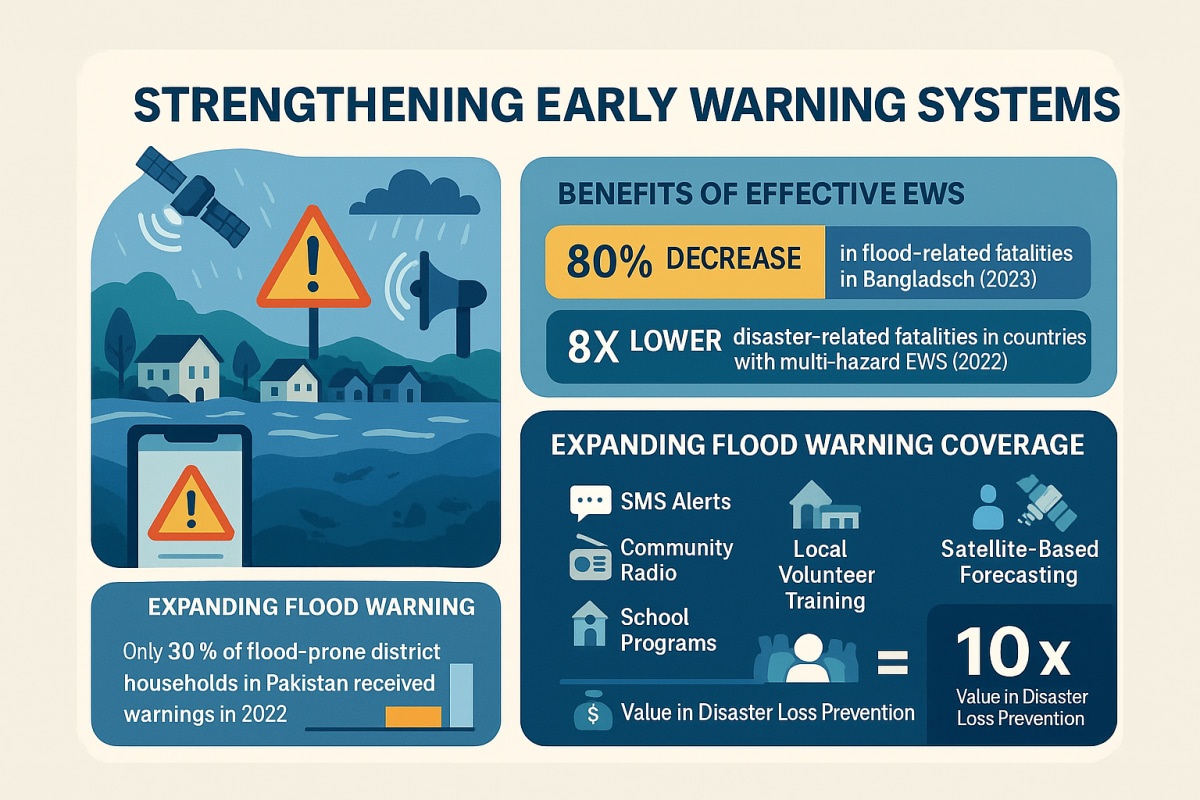
Modern forecasting technology has evolved into an essential requirement for Pakistan and other nations exposed to climate risks. The implementation of effective early warning systems (EWS) enables people to evacuate safely or prepare protective measures which results in saving numerous lives. The World Meteorological Organization (2023) reported that Bangladesh achieved an 80% decrease in flood-related fatalities through its community-based warning system which unites advanced forecasting with local communication networks. The United Nations Development Programme for Risk Reduction (UNDRR) (2022) demonstrated that nations implementing multi-hazard early warning systems reduce their disaster-related fatalities by eight times compared to countries without such systems.
The current meteorological forecasting system in Pakistan faces communication delays because rural areas lack sufficient and mosque loudspeaker announcements to reach all areas. The NDMA Flood Response Review (2024) internet and media access. The warning system expansion includes SMS alerts and community radio broadcasts and school-based programs shows that only 30% of flood-prone district households received flood warnings in time before the 2022 floods thus demonstrating the immediate requirement for localized warning solutions. The combination of local volunteer training with enhanced district disaster management capabilities and satellite-based forecasting integration will strengthen Pakistan's warning system.
The World Bank (2023) demonstrates that spending one dollar on early warning systems produces ten dollars in disaster loss prevention. The implementation of technology expansion throughout communities will enable Pakistan to protect its vulnerable people and minimize flood-related deaths.
2. Investing in Resilient Infrastructure
The Pakistan flood of 2025 demonstrates that weak outdated infrastructure structures increase flood damage from heavy rainfall events. The country faces destruction from floods because its defensive structures lack sufficient strength to handle heavy rainfall. The survival of Pakistan depends on essential investments for building climate-resistant infrastructure systems.
The Asian Infrastructure Investment Bank (AIIB, 2024) advises Pakistan to build resilient embankments and multipurpose dams and drainage systems which will withstand climate change impacts. Climate-resilient construction methods include design elements which predict extreme weather patterns to maintain operational functionality during floods and dry seasons.
The protection of floodplains together with irrigation canal systems represents a critical need for improvement. The failure of weak riverbanks and poorly maintained canals during monsoon peaks leads to widespread flooding that affects both villages and agricultural land. The combination of canal desilting operations with river embankment reinforcement and reservoir dredging activities will significantly decrease the chances of water overflows.
Urban areas must handle their own set of problems during flood events. The monsoon season causes Karachi and Lahore to become submerged under knee-deep water so their urban drainage systems and stormwater management networks require complete transformation. The implementation of smart drainage systems which combine rainwater collection with underground storage tanks and permeable pavement materials enables better flood control during heavy rainfall events.
The World Bank Infrastructure Resilience Report (2023) demonstrates that every dollar invested in resilient infrastructure development produces four dollars in savings for disaster recovery expenses. The Pakistani economy along with human lives will benefit from these investments because annual flood damages surpass billions of dollars.
The responsible design of hydropower and multipurpose dams enables them to perform two functions by producing electricity while managing river water levels to minimize flood heights. The combination of nature-based solutions with hard infrastructure becomes possible through wetland restoration and mangrove protection which function as natural flood control systems.
The construction of infrastructure represents only one part of the solution. The government of Pakistan needs to establish effective systems for managing and preserving its infrastructure assets. The primary reason behind embankment failures stems from collapse stems from inadequate maintenance instead of insufficient construction. The success of billions spent on infrastructure depends on implementing transparent monitoring systems and community involvement and anti-corruption programs.
The Pakistan flood of 2025 demonstrates that piecemeal repair efforts will not protect the country from future disasters. A complete climate-smart infrastructure plan which unites engineering advancements with ecological conservation practices will protect Pakistan from upcoming disasters. A resilient Pakistan requires the combination of robust bridges with protected canals and intelligent urban planning and sustainable floodplain management.
3. Afforestation and Ecosystem Restoration
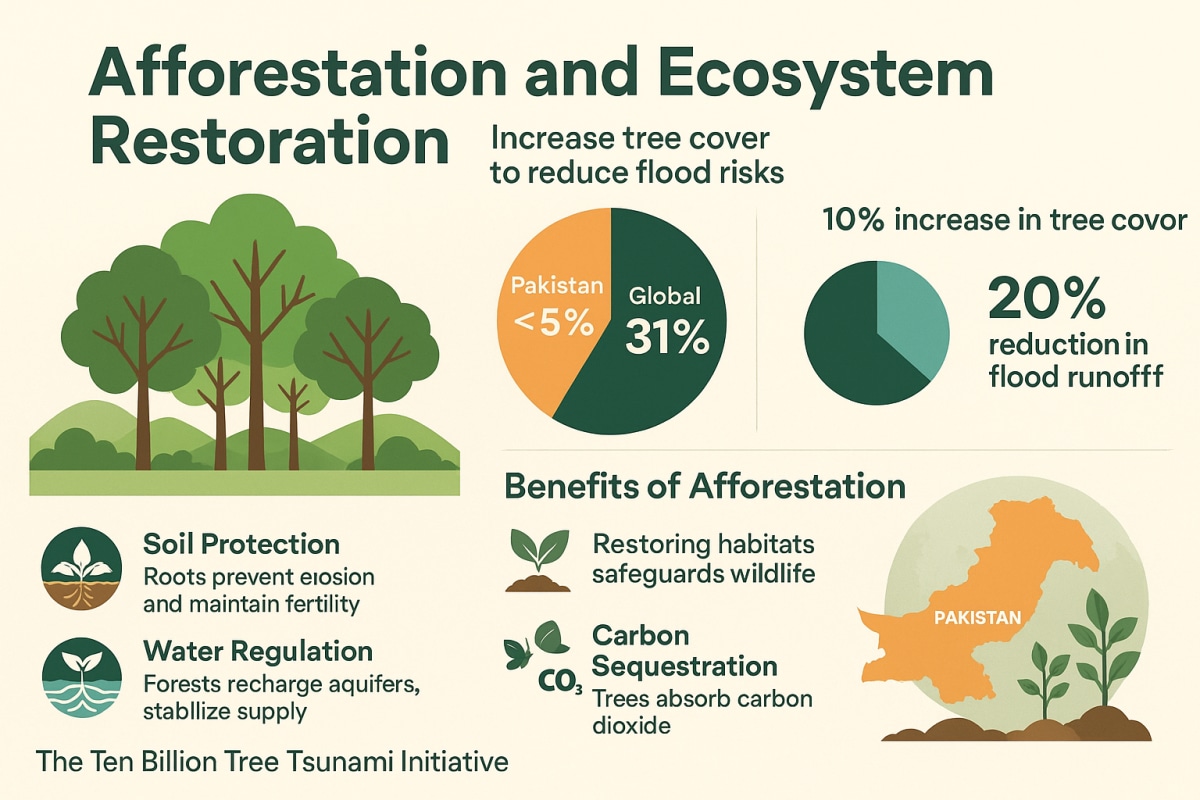
The solution to flood problems includes forested areas which function as natural barriers to control water flow and maintain soil stability and groundwater levels. Natural flood defense systems function through healthy ecosystems which control water flow and maintain soil stability and recharge groundwater resources. The protective natural barriers of Pakistan have been significantly diminished through deforestation activities. The country faces dangerous flood and soil erosion risks because its forest coverage stands at less than 5% of total land area while the global standard reaches 31% (FAO 2023).
The "Ten Billion Tree Tsunami" reforestation initiative launched by the Government of Pakistan (2023) shows promise but experts emphasize the need for faster implementation and expanded programs with proper oversight. Tree planting serves two purposes because it creates new vegetation while simultaneously rebuilding damaged flood-prone watersheds and river catchments and degraded hillside areas where deforestation has caused the most harm.
Scientific evidence supports this approach. The Food and Agriculture Organization (FAO 2022) demonstrates through research that a 10% increase in tree cover leads to a 20% reduction in flood runoff which decreases flood risks in lower areas. The root system of trees draws water from the ground while their canopy slows down raindrops on the surface and their roots create a protective barrier that weakens floodwater intensity.
The implementation of afforestation programs brings various additional advantages to the environment.
- Soil protection: Roots prevent erosion and preserve fertility for farming.
- Water regulation: Forests recharge aquifers, ensuring more reliable water supply in dry seasons.
- Biodiversity conservation: Restoring habitats protects wildlife, many of which are threatened by habitat loss.
- Carbon sequestration: Trees absorb carbon dioxide, helping Pakistan meet climate commitments.
Ecosystem restoration requires more than simply planting trees. The protection of wetlands together with mangroves and riverine forests stands equally important for environmental conservation. The Indus Delta mangroves function as natural barriers which protect coastal areas from flooding and storm surges. The loss of mangrove forests throughout Pakistan during the last hundred years has resulted in a significant decline of natural flood protection capabilities (WWF Pakistan 2022).
Community involvement stands as the essential factor for success. Forest protection initiatives need local community involvement for tree planting and maintenance and defense work to create sustainable projects that benefit people instead of remaining empty promises. Previous tree-planting initiatives failed because they lacked sustained maintenance programs and because local communities were denied participation in decision-making processes.
The 2025 Pakistan flood disaster demonstrates that environmental neglect results in fatal consequences. Natural flood protection systems that include forests and wetlands and mangroves will enhance the effectiveness of built infrastructure in Pakistan. A resilient Pakistan requires more than concrete structures because its strength originates from its living natural systems.
4. Community Awareness and Disaster Education
The value of flood forecasting and embankment strength becomes useless when communities lack preparedness to respond to flood events. The lack of community awareness about disasters along with insufficient disaster education stands as a major unaddressed challenge for flood management in Pakistan. The National Disaster Management Authority (NDMA, 2024) showed that only 25% of rural families in flood-risk areas knew evacuation procedures before the 2025 floods struck. The remaining 75% of families remained defenseless because they lacked knowledge about evacuation routes and protection methods during flood events.
People must occupy the central position for disaster preparedness to achieve success. During floods communities serve as the primary response force because neighbors assist each other and volunteers perform rescue operations and local leaders establish emergency shelters. The absence of proper knowledge and training makes these community-based efforts both disorganized and dangerous to perform.
The implementation of broad-scale awareness initiatives represents a fundamental requirement. Basic emergency preparedness information distributed through local radio stations and community centers and mosques and mobile alert systems helps families prepare their emergency supplies and develop safe evacuation plans. The World Meteorological Organization (2023) reports that Bangladesh achieved more than 50% decrease in disaster-related deaths through their ongoing public drills and awareness programs throughout two decades. The country needs to adopt the successful approach that Bangladesh has demonstrated.
The education of disaster preparedness at school level plays an essential role in disaster management. The education of children about floods and evacuation routes and first aid skills makes them safer while enabling them to spread awareness to their family members. The UNICEF (2023) South Asian program showed that school-based disaster preparedness education enhanced emergency readiness among families.
Community-based disaster management (CBDM) operates as an established method for disaster response. The training of local volunteers in basic rescue techniques and first aid and communication methods enables them to start emergency actions before professional help reaches the scene. The combination of early warning systems with CBDM creates a system which enables people to understand warnings and believe them and take appropriate action at the community level.
The awareness program needs to provide information that goes past basic evacuation procedures. The program should teach people about health dangers and sanitation methods and recovery strategies after flood events. The 2025 floods created conditions for dengue and cholera outbreaks because water remained stagnant after the disaster. The implementation of proper community education about hygiene and clean water practices would have reduced the number of preventable cases.
The 2025 Pakistan flood disaster shows that communities which lack awareness become defenseless against natural disasters. The construction of dams together with rain prediction systems becomes useless for saving lives because people need to understand their flood response actions. The investment in education programs and drills and local leadership development enables people to shift from flood victims to flood resilience participants.
5. Climate-Smart Agriculture
The agricultural sector of Pakistan faces significant risks because it generates 20% of the country's GDP while supporting rural employment for 60% of the population. The annual flooding of agricultural land results in complete crop destruction which eliminates farmers' ability to generate income for future years. The 2025 Pakistan flood demonstrated how traditional farming systems remain highly susceptible to extreme climate events.
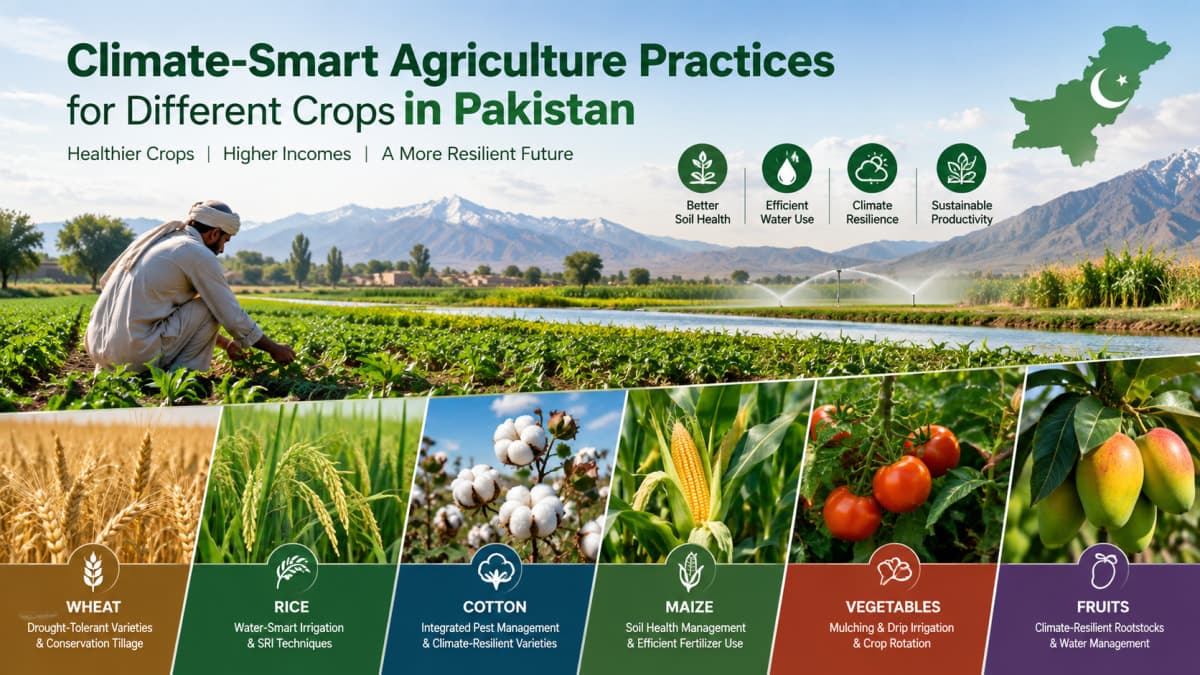
Climate-smart agriculture (CSA) represents a transformative solution for Pakistan because it enables farmers to build sustainable agricultural systems which protect their crops from floods while maintaining food security.
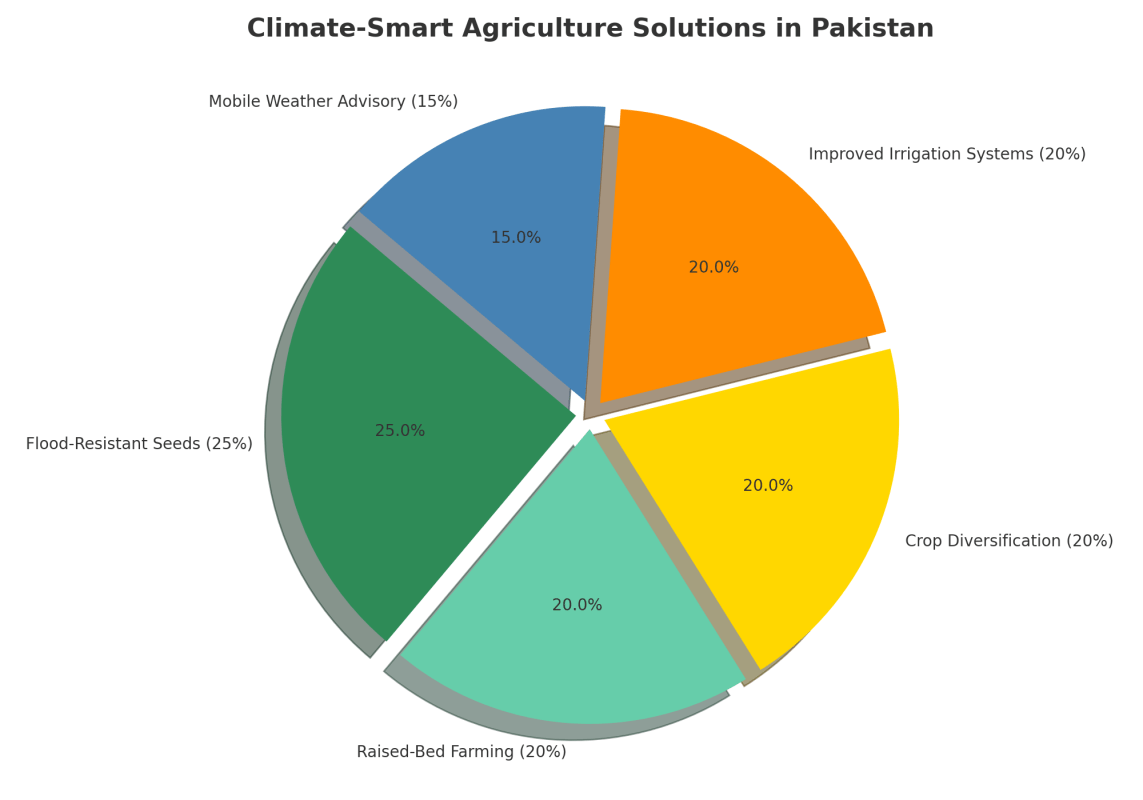
The implementation of flood-resistant seed varieties represents a fundamental solution for farmers to protect their crops from flood damage. Agricultural research in Asia developed submergence-tolerant rice which enables the crop to survive extended periods under water. The submergence-tolerant rice varieties underwent testing across South Asia which proved effective at stopping complete crop failures during flood events in affected areas. The implementation of these seed varieties across Sindh and Punjab would help protect rice farmers from seasonal flood damage.
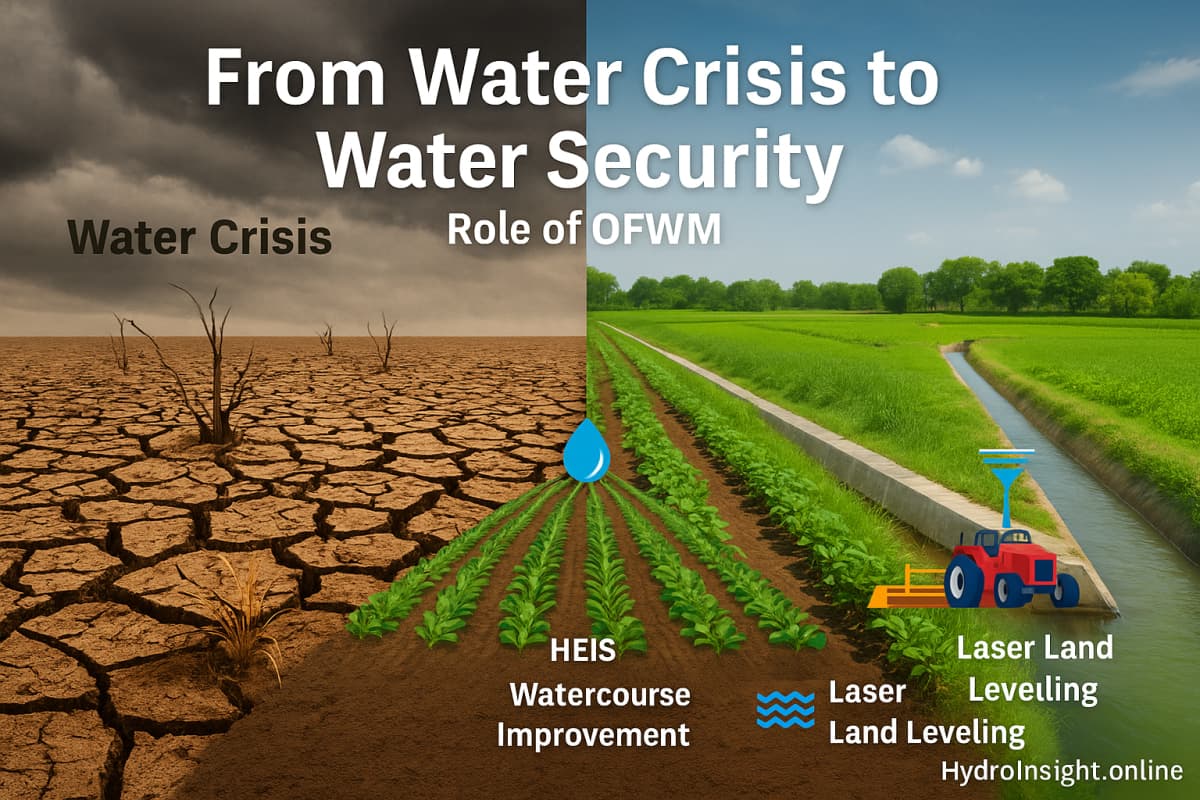
The combination of raised-bed farming with enhanced land-leveling methods represents a crucial adaptation strategy. The practice of planting crops on raised rows helps reduce waterlogging while safeguarding plant root systems. The Pakistan Agricultural Research Council (PARC) conducted a study in 2023 which demonstrated that raised-bed wheat cultivation in flood-prone areas resulted in a 20% yield increase and minimized crop damage from heavy rainfall.
The practice of planting different crops serves as a fundamental adaptation strategy. The heavy dependence on water-dependent crops such as rice and cotton makes agricultural producers extremely susceptible to damage. The combination of pulses and oilseeds and vegetables with crops helps distribute risks while creating better soil health and more varied food options.
ICRISAT research from 2023 demonstrates that climate-smart farming practices which include resilient seeds and raised beds and crop diversification and improved irrigation systems decrease flood of agricultural policies throughout Pakistan.
The implementation of CSA requires farmers to adopt better water management systems and technological-related crop damage by 30-40% while boosting agricultural productivity. The evidence supports a complete transformation solutions. Laser land leveling together with drip irrigation systems and mobile weather advisory technology enable farmers to make better choices even when dealing with unpredictable weather conditions. The International Food Policy Research Institute (IFPRI) reported in 2024 that farmers who receive real-time climate information can decrease their agricultural losses by 25% in disaster-prone areas.
The successful implementation of CSA needs more than technological solutions. The successful implementation of climate-smart agriculture depends on government and private sector financial support to provide crop insurance and seed subsidies and training programs for local farmers. The majority of smallholder farmers cannot purchase these innovative solutions because they lack financial support from both government and private sector entities.
The implementation of climate-smart agriculture provides Pakistan with a method to defend its food production system from flooding. The implementation of CSA transforms agricultural risk into agricultural strength which protects farmers from complete loss during future flood events. The agricultural sector of Pakistan requires climate-smart agriculture as a survival mechanism because it serves as the country's essential lifeblood.
Conclusion:
The Pakistan 2025 flood disaster needs to become more than a tragic event because it should create a transformative moment. The evidence demonstrates that early warning systems protect human lives and strong infrastructure systems defend economic stability and forests control flood patterns and community involvement leads to better preparedness and climate-resistant agricultural practices protect food security. The available solutions demonstrate both their effectiveness and their affordable costs. The current requirement for Pakistan involves political determination and institutional dedication and community involvement to execute planned solutions.
The pattern of destructive floods will persist unless addressed because each successive flood becomes more dangerous and expensive. These strategies when implemented will convert vulnerability into resilience which will lead to safer cities and stronger farms and healthier ecosystems and empowered communities. The common wisdom states that prevention stands superior to treatment. Prevention stands as Pakistan's sole survival option because it offers better protection than any other approach.
References:
https://news.un.org/en/story/2025/09/1165864
https://earthobservatory.nasa.gov/images/154781/monsoon-rains-flood-pakistan
https://www.aljazeera.com/news/2025/9/19/impact-of-climate-change-a-harsh-reality-facing-pakistan
https://www.unops.org/news-and-stories/stories/a-difficult-lesson-from-the-pakistan-floods