Impacts of 2025 Floods in Pakistan: Humanitarian, Economic, and Social Consequences
The impacts of 2025 floods in Pakistan go beyond damaged infrastructure. Displacing millions, crippling agriculture, and causing economic and social crises. Learn the full consequences and future solutions.

Introduction:
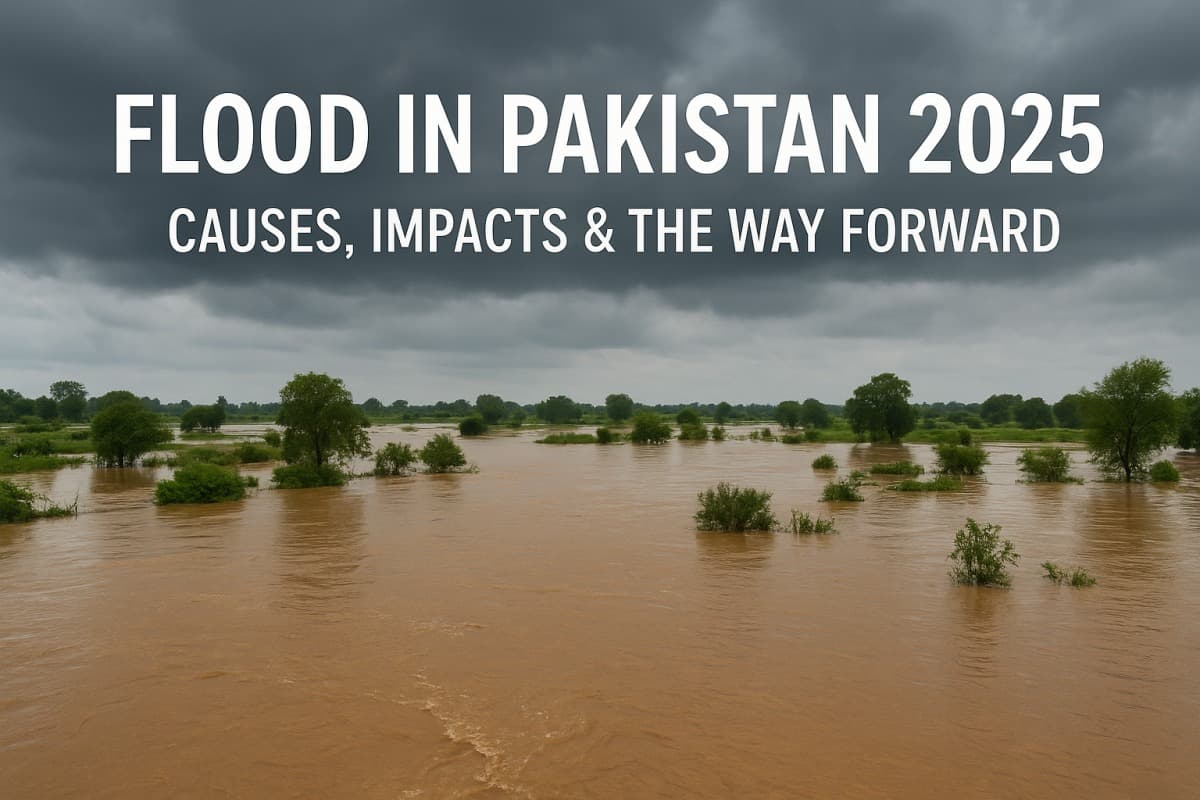
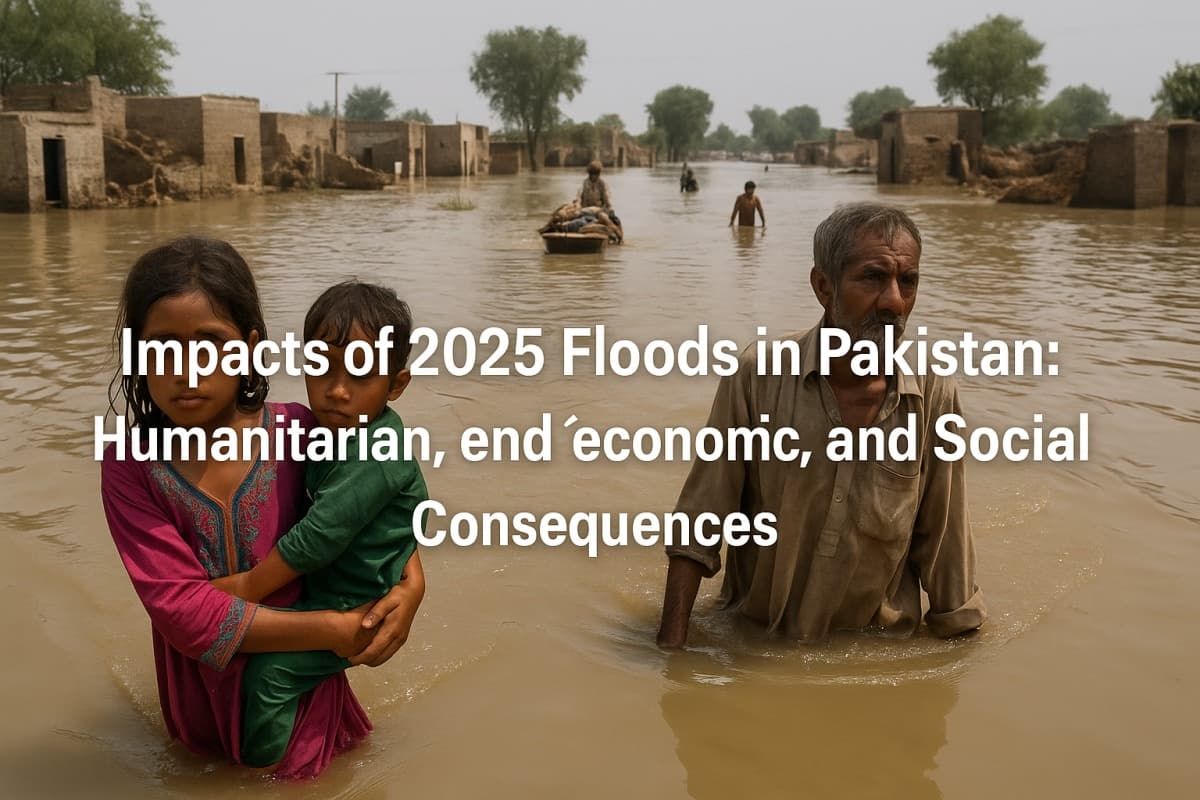
Floods used to follow a regular pattern in Pakistan but they have transformed into destructive national disasters during the last several decades. The 2025 Pakistan flood disaster established itself as the worst flood event in national history because it destroyed everything from rural settlements to public facilities. The combination of climate change with weak governance and fast-paced urbanization has turned natural flooding into a complex disaster that affects multiple dimensions of society. The disaster has caused extensive damage to residential areas and transportation systems and agricultural lands while creating a severe humanitarian crisis.
The disaster forced millions of people to leave their homes while destroying all agricultural production and causing economic losses that reached billions of dollars and creating deep psychological trauma for numerous survivors. The World Bank together with FAO and WHO and additional organizations document the extensive disaster damage which affects every social sector. The 2025 flood disaster in Pakistan demonstrates that flooding represents more than water elevation because it destroys human dignity and security and long-term development potential.
The blog investigates the extensive effects of the 2025 Pakistan flood through its humanitarian crisis, agricultural losses, economic destruction, social and psychological consequences. The assessment of these effects enables us to measure the extent of human suffering while demonstrating the critical need for Pakistan to develop protective measures against future disasters.
Impacts of Flood in Pakistan 2025
1. Humanitarian Crisis
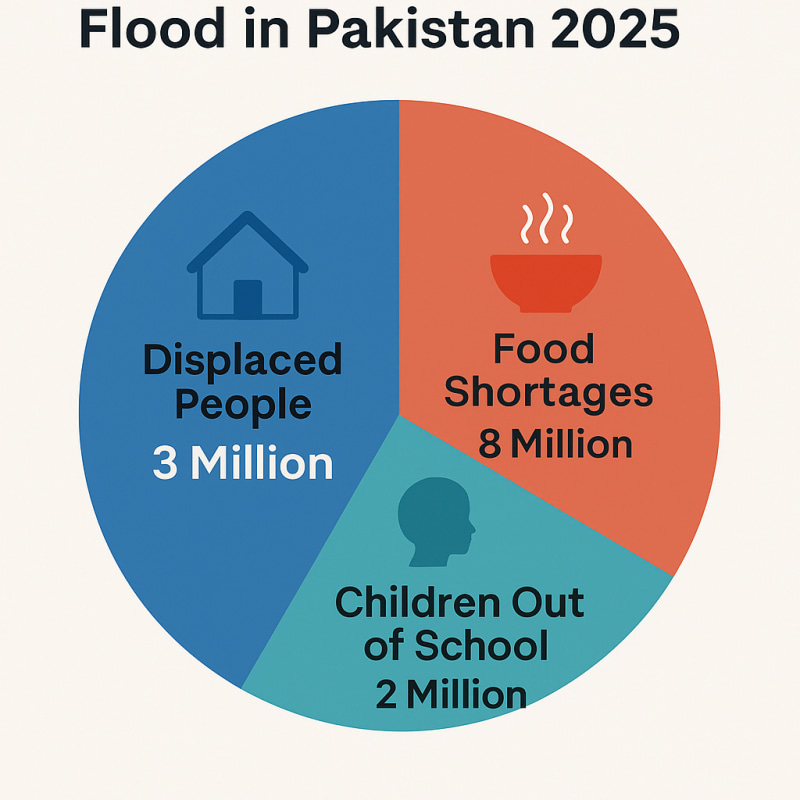
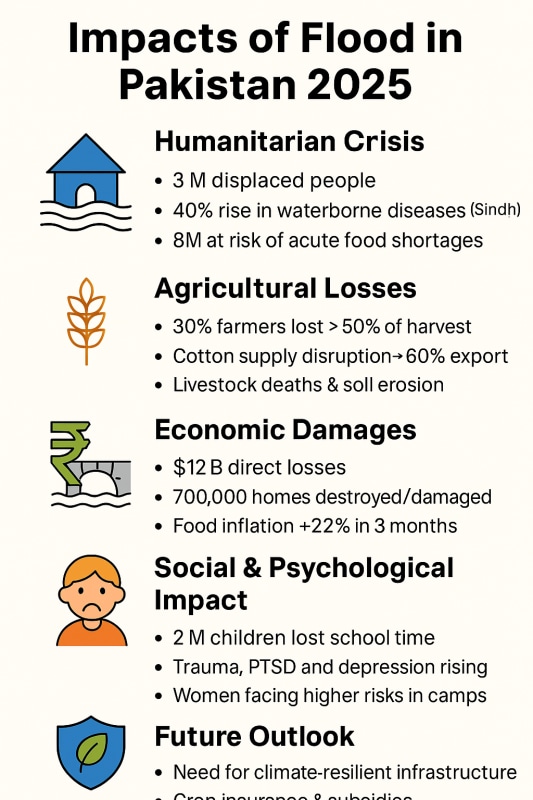
The Pakistan 2025 flood disaster created a severe humanitarian emergency which extends past physical damage to infrastructure and economic losses. The International Rescue Committee (IRC) reports that more than 3 million people have become displaced because they needed to leave their homes and possessions to find safety (2025). The displaced people must live in temporary shelters and tents and open areas while facing dangerous weather conditions and an unknown future.
The floodwaters have completely flooded multiple villages which resulted in broken family bonds and destroyed entire communities. Emergency shelters have replaced schools which has caused thousands of children to lose their educational opportunities. The most vulnerable members of society including women and children experience the worst effects of these difficult times because they face increased dangers of starvation, mistreatment and insufficient medical care.
The current health system faces collapse because it operates at maximum capacity. The floodwaters have contaminated drinking water sources which resulted in the spread of cholera, typhoid and diarrhea outbreaks. The standing water pools have transformed into mosquito breeding sites which cause dengue fever and malaria cases to rise. The World Health Organization (WHO) rapid assessment from 2025 shows Sindh province experienced a 40% increase in waterborne disease cases throughout the first month of flooding.
The situation regarding food security has become more critical. The flood damage to crops requires millions of people to receive emergency food assistance for survival. The World Food Programme (WFP) predicts that 8 million people in flood-affected regions will experience severe food shortages while children face the highest risk of malnutrition (WFP 2025).
The mental impact of this disaster has reached levels that match the physical damage. The UNDP Pakistan survey from 2025 revealed that displaced families experienced extensive psychological trauma together with anxiety and despair. Children who experience the destruction of their homes and lose family members will develop enduring emotional problems unless they receive proper psycho-social care.
Human dignity faces its most severe threat from this situation. People face long delays to receive food assistance while dealing with insufficient sanitation facilities and relief distribution problems because of poor coordination efforts. The delivery of aid becomes more challenging for women and minority groups and people with disabilities because of existing social barriers.
The Pakistan 2025 flood disaster demonstrates that floods create more than environmental damage because they create enduring human catastrophes which transform the lives of future generations. The humanitarian crisis of the Pakistan 2025 flood requires immediate coordinated relief efforts which must include all affected populations to prevent long-term poverty, disease and displacement.
2. Agricultural Losses
The agricultural sector functions as Pakistan's economic backbone because it generates 19% of national GDP and provides employment to 37% of the workforce (Pakistan Economic Survey 2024–25). The floodwaters create extensive damage to agricultural fields which subsequently breaks down the complete food chain and destroys rural economic stability and export revenue streams.
The 2025 flood disaster has created extensive damage to the agricultural regions of Sindh and Punjab which serve as the main food-producing areas of Pakistan. The extensive rice paddies, cotton fields and sugarcane farms remain underwater for multiple weeks. The crops play two essential roles because they fulfill both domestic food requirements and serve as vital export products. The textile industry of Pakistan depends on cotton as its main export material since it generates more than 60% of national export revenue. The destruction of cotton fields leads to factory material shortages which causes export delays that create economic instability across the entire nation.
The Food and Agriculture Organization (FAO) conducted a survey in 2025 which showed that 30% of farmers experienced complete loss of their seasonal harvests with small-scale farmers suffering the most damage. The loss of agricultural income through flooding prevents rural families from paying their loans and buying seeds for planting and feeding their livestock.
The flood damage extends past the immediate loss of crops because:
- Soil erosion together with nutrient depletion will decrease future agricultural productivity.
- The prolonged floodwaters create delays for the upcoming planting season of crops.
The death of livestock weakens rural communities because animals play a vital role in maintaining food security and generating income.
The International Food Policy Research Institute (IFPRI) reported in 2024 that multiple floods in Pakistan have forced numerous farmers to enter a state of permanent poverty. The poverty rate in rural areas of flood-affected districts exceeds the national average by 15 to 20 percent.
Food security stands as a major issue that threatens the nation. The World Food Programme (2025) predicts that millions of people will experience food shortages because of disrupted wheat and rice production caused by flooding. The rising food costs affect urban residents while rural families experience the dual impact of destroyed crops and rising market prices.
The agricultural losses from floods in Pakistan prove that these disasters create economic and social catastrophes which extend beyond environmental damage. The long-term agricultural decline of Pakistan faces because of insufficient recovery support for farmers including crop insurance and seed and fertilizer subsidies and climate-resistant farming investments will harm both agricultural producers and consumers.
3. Economic Damages
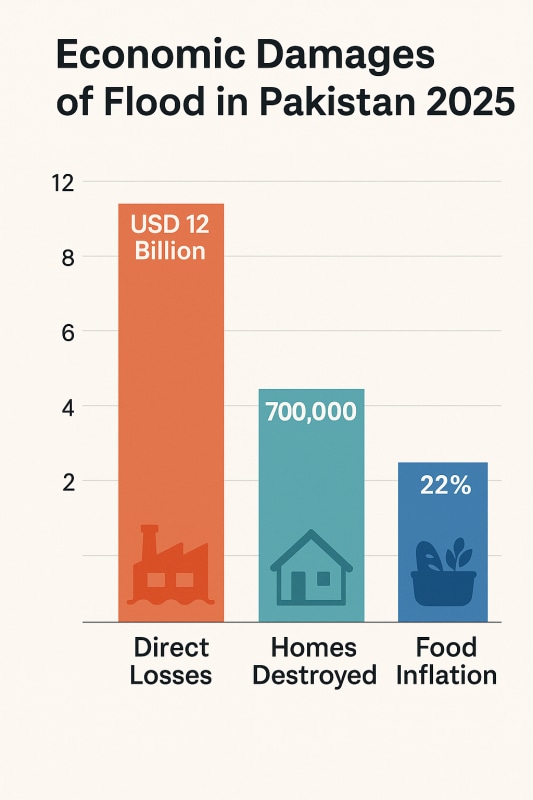
The Pakistan 2025 flood disaster has caused severe economic damage to a nation that already faced economic instability. The World Bank conducted an initial assessment in 2025 which showed direct economic losses exceeding USD 12 billion thus establishing this disaster as one of Pakistan's most expensive natural disasters. The disaster has destroyed more than residential properties because it has damaged critical national development infrastructure which includes roads and bridges and power plants and irrigation systems and educational facilities and healthcare facilities.
The transportation systems throughout the country have suffered the most severe impact from the disaster. The destruction of highways and bridge collapses has separated multiple districts from the rest which has blocked both commercial activities and emergency response efforts. The National Highway Authority documented that floods destroyed 15% of the national road network which blocked essential transportation between ports and domestic markets.
The housing sector experienced severe destruction throughout the affected areas. The Pakistan Engineering Council (2025) documented that floods destroyed more than 700,000 homes which left numerous families without shelter and without sufficient funds to rebuild their properties. The process of rebuilding these homes will extend over multiple years which will exhaust the available government funding.
The economic impact of agricultural destruction continues to affect the entire national economy. The combination of destroyed crops and interrupted food distribution networks has caused inflation to rise which primarily affects common people. The Pakistan Bureau of Statistics recorded a 22% increase in food prices during the three months following the floods because wheat and rice and vegetable supplies became scarce. The price increase for urban food products coincides with rural agricultural losses that eliminate the main revenue stream for producers thus creating two separate economic challenges.
The current situation affects both industrial operations and export activities. The textile industry of Pakistan faces raw material shortages because cotton fields suffered damage from the floods. The situation endangers both Pakistan's domestic manufacturing capacity and its export revenue which represents 60% of total exports thus creating financial instability in the balance of payments. The power generation sector faces ongoing problems because hydropower stations and other power plants experience operational disruptions which reduce industrial manufacturing capabilities.
The floods have established long-term financial challenges for the country which extend past the initial destruction. The government needs to redirect its limited budget from development initiatives to support relief efforts and reconstruction work. The Asian Development Bank (2025) predicts Pakistan needs between USD 16–18 billion for recovery funding throughout the next five years. The increased need for foreign aid and loans will worsen Pakistan's debt situation because of its current high debt levels.
Small and medium enterprises (SMEs) which sustain local economic activity have suffered complete destruction throughout the affected regions. The flood damage has eliminated both stock and customer base for numerous shopkeepers and traders and service providers operating in flooded areas. The lack of specific financial support programs will probably result in the permanent closure of thousands of businesses.
The Pakistan 2025 flood disaster demonstrates that catastrophic events create more than environmental damage because they represent major obstacles to national development. The flood disaster has harmed all economic sectors including agriculture and industry and trade and infrastructure which proves the necessity for climate-resistant development strategies and sustainable funding approaches. The lack of systemic reforms in Pakistan will create a destructive pattern of disasters and reconstruction that will damage its economic stability throughout multiple decades.
4. Social and Psychological Impact
The 2025 Pakistan floods destroyed physical structures yet they also caused profound psychological damage to people who lost their homes and their sense of self-worth. The physical floodwaters have receded but the social and psychological effects of displacement and uncertainty and loss will persist.
The UNDP Pakistan survey from 2025 showed that displaced people experienced severe psychological distress and emotional turmoil and anxiety symptoms. The floodwaters destroyed more than physical possessions because they took away the sense of security and dignity that people once had. The rural families who used to maintain their own self-sufficient lifestyle now live in crowded shelters while they receive relief aid and try to restore their lost identity.
Children face the greatest risk during this situation. The combination of underwater schools and emergency shelters has resulted in prolonged educational disruptions for students. The UNICEF Situation Report (2025) shows that 2 million children from flood-affected areas have lost their educational opportunities for several months. The children who survived the disaster experience long-term psychological damage which includes recurring nightmares and rain-induced fear and learning difficulties. Research from previous disasters demonstrates that children who do not receive immediate psychosocial help will develop lasting trauma which affects their ability to succeed in life.
The disaster situation reveals how social disparities become more pronounced. Women and girls bear the greatest responsibility during this crisis because they must care for their children and obtain limited clean water while facing increased dangers of violence in relief centers. The Human Rights Watch (2024) study about Pakistan's floods discovered that women in emergency shelters encountered multiple challenges including insufficient privacy and restricted access to reproductive care and protection from harassment.
The social bonds between people start to break down when communities face this crisis. The need to move to cities forces families to leave their ancestral lands which results in the destruction of their extended family networks that used to support them emotionally and financially. The massive influx of people into cities like Karachi and Lahore creates severe overcrowding while intensifying existing social conflicts.
The extended duration of recovery work intensifies the mental health consequences experienced by people. People develop feelings of abandonment and anger when they experience delayed compensation payments and unequal distribution of aid. People start to doubt institutional reliability because they feel abandoned to survive independently. The breakdown of social bonds between people creates an environment where long-term anger and social instability will develop.
Mental health experts identify a rising silent mental health crisis which includes depression and post-traumatic stress disorder and hopelessness among flood victims. The World Health Organization reports that Pakistan dedicates less than 0.5% of its health spending to mental health services (2023) which results in millions of people without access to psychological support.
The social and psychological effects of the 2025 Pakistan flood are invisible yet they cause as much destruction as the destroyed bridges and flooded fields. Survivors need more than house reconstruction because they require dignity restoration and educational support and mental health services and women empowerment to rebuild their lives and their future aspirations.
Conclusion:
The flood in Pakistan 2025 has revealed the country’s deep vulnerabilities including environmental, economic and social. Beyond the billions in damages and the loss of crops or infrastructure, it has disrupted the very fabric of society, displacing families, dismantling livelihoods, and leaving lasting scars on survivors’ mental health. For millions, the flood is not just a temporary hardship but the beginning of a prolonged struggle against poverty, food insecurity, and trauma.
At its core, this disaster is more than a test of Pakistan’s physical resilience; it is a test of its governance, planning, and compassion. Relief efforts must go beyond emergency aid and address long-term needs:
- Investments in climate-resilient infrastructure
- Crop insurance, mental health services
- Women’s protection
- Stronger disaster governance systems.
Without these measures, Pakistan risks repeating the same cycle of devastation in future monsoon seasons. The lessons of the 2025 flood are clear that floods in Pakistan are not just natural disasters, but human tragedies shaped by policy gaps and systemic neglect. Turning this tragedy into a turning point requires political will, inclusive planning, and a commitment to building resilience for generations to come. Only then can Pakistan move from reacting to disasters toward preventing and withstanding them.
References:
https://concernusa.org/news/pakistan-floods-explained-2025/
https://www.emro.who.int/pak/pakistan-infocus/situation-reports-on-the-flooding-in-pakistan.html
https://humanitarianoutcomes.org/sites/default/files/publications/pakistan_floods_1122.pdf