Climate-Smart Agriculture in Pakistan: Adapting to Climate Change
Discover how climate-smart agriculture can help Pakistan tackle climate change, water scarcity, extreme weather, and food security challenges.

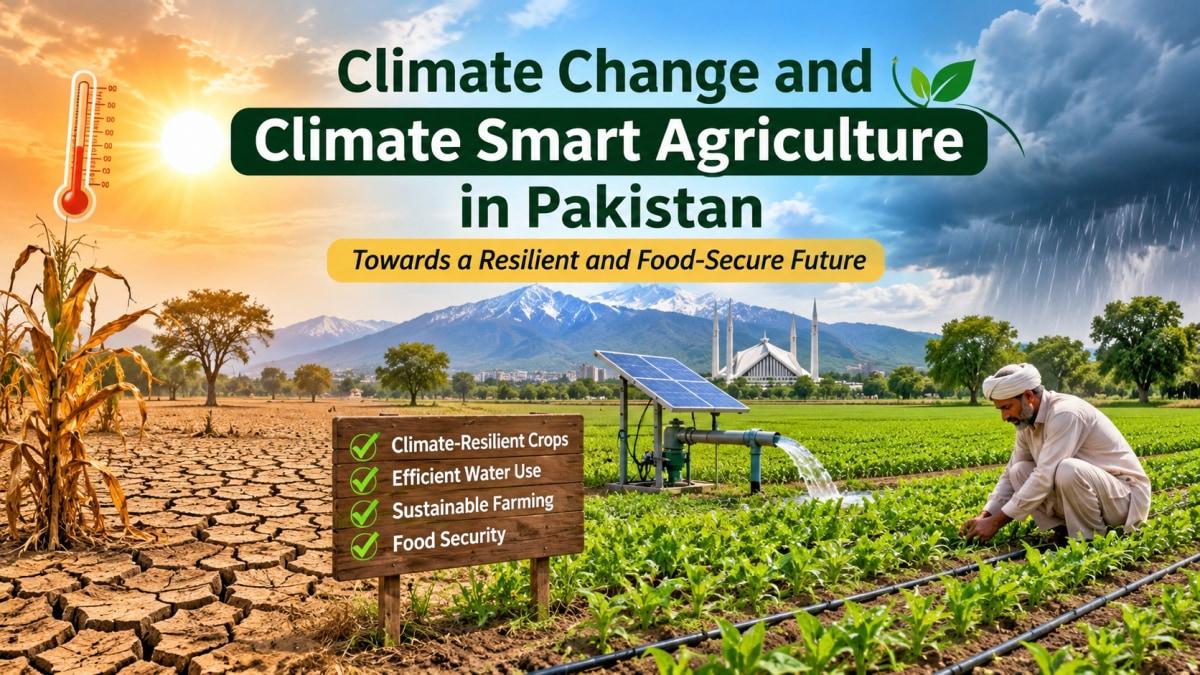
Global Climate Crisis
Based on 2014-2023 data, the earth is now about 1.2oC warmer than it was in the pre-industrial era (1850-1900). Year 2023 was the warmest year on record, with the global average near surface temperature 1.45oC above the pre-industrial baseline. The period of 2011-2023 was the warmest decade on record for both land and ocean.
Pakistan's Climate Vulnerability
Pakistan is present in heat surplus zone. Pakistan is least contributor to climate change but more vulnerable to climate variability, placing the country at 12th number among most vulnerable countries to climate change in the world. Pakistan has witnessed 152 extreme weather events from 1998 to 2018 & is continue to experience, intense and frequent flooding, long duration droughts, heatwaves, erratic rainfall patterns, Glacial retreat and Glacial Lake Outburst Floods (GLOFs). These climate induced phenomena make water availability highly uncertain and unpredictable which leads to spatio-temporal water scarcity, food insecurity and environmental degradation.
Climate Change: A Growing Threat to Pakistan's Agricultural Economy
Pakistan is agro-based economy. Agriculture sector contributes 23% in national GDP, supports 45% Pakistan’s labour force and constitutes 60% of Pakistan’s export. Major events like 2010, 2022 & 2025 floods, 2015 heatwave in Karachi, three-day heavy monsoon spell in 2020 resulted in huge loss to human lives, livestock, properties and on overall economy of country. The prevailing challenge of climate change is badly impacting the agriculture sector. Crop yields are falling, produce quality is declining, fertile land is becoming uncultivable, and food insecurity is rising.
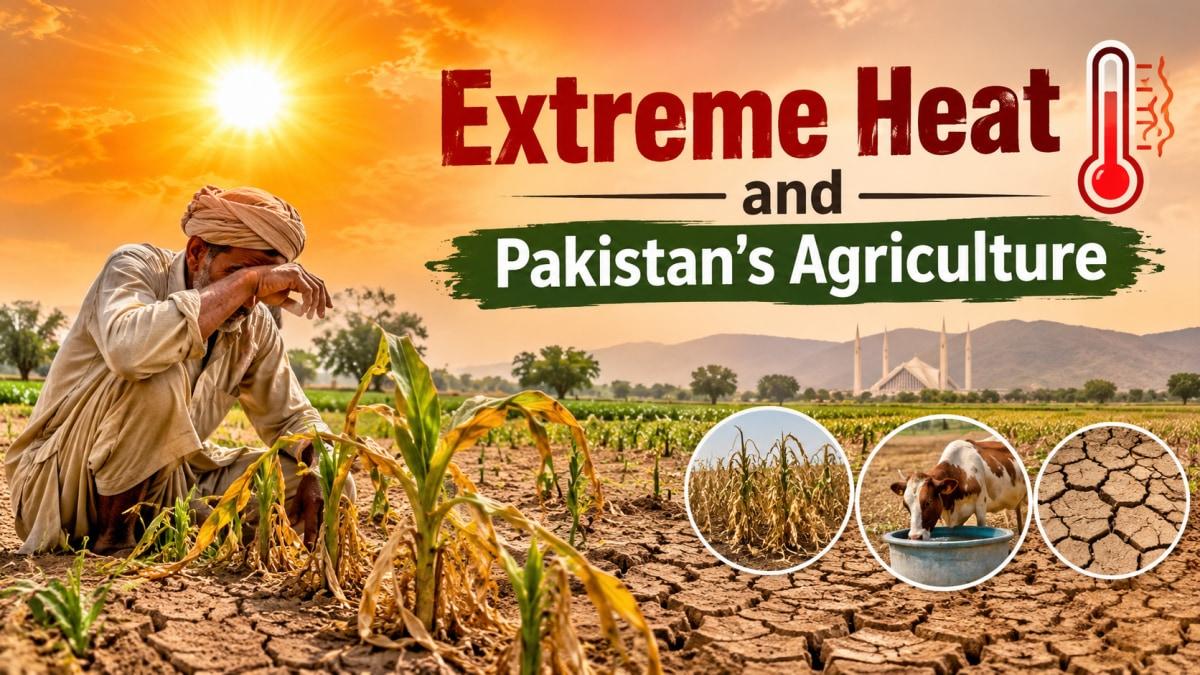
Recent UN assessment "Extreme Heat and Agriculture" by the Food and Agriculture Organization (FAO) has revealed that climate change has reduced the farm productivity, especially in rain-fed regions in Pakistan. The findings are particularly worrying for Punjab, where frequent and severe heatwaves are disrupting rural livelihoods. Fruit productivity in the province’s high-rainfall areas has reduced to halve.
In Khyber Pakhtunkhuwa, yield of key rabi-crops including wheat has decreased. Declining precipitation and already depleting groundwater table in major crop growing area in the said province has reduced land area available for cultivation. Due to climate change, recurrent and severe tropical storms, along with seawater intrusion and coastal rains, have been observed at coastal belts of Balochistan and Sindh.
Climate-Smart Agriculture: A Pathway Towards a Resilient Future
Above facts highlights the importance of adopting the climate smart agriculture approach to ensure resilient and sustainable agriculture future in Pakistan. Climate smart agriculture is no longer an option but has become necessity to support the dwindling economy of Pakistan and to ensure food and water security for coming generations.
Climate-Smart Agriculture (CSA)
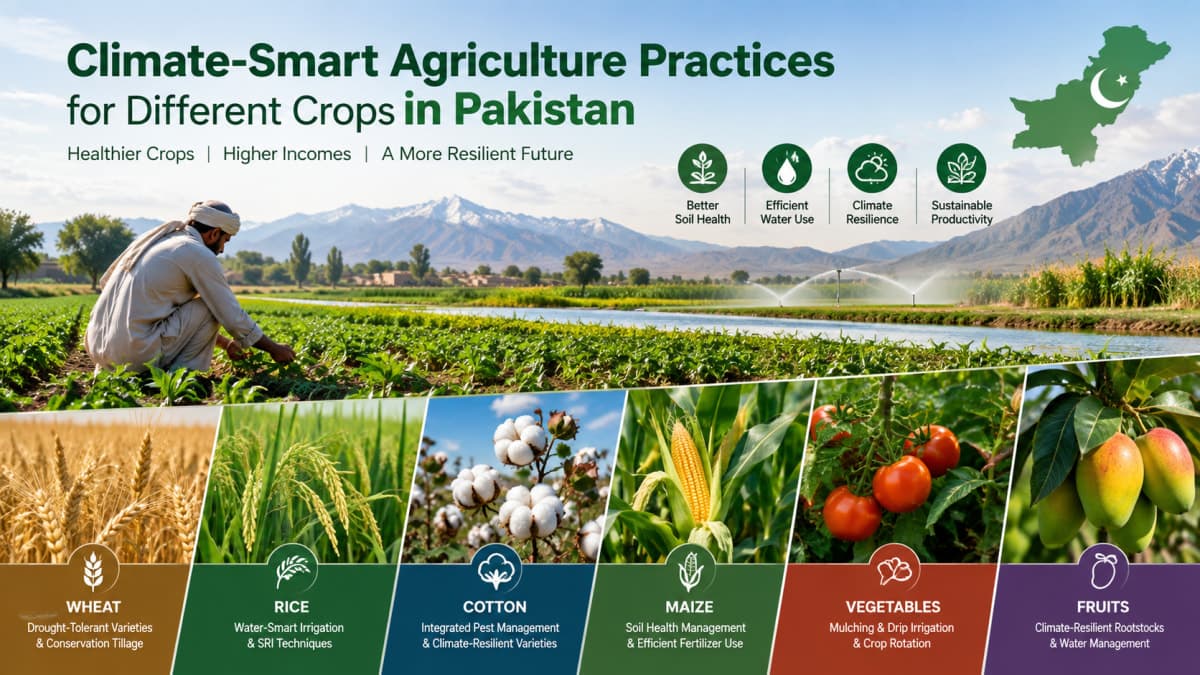
Climate smart agriculture is strategic approach which supports the three main objectives, adaptation, mitigation and sustainable production.
A. Climate-Smart Adaptation
Climate smart adaptation is basically adopting technologies which build resilience to climate change. For example,
- Constructing rainwater harvesting ponds
- Adopting heat and drought tolerant varieties
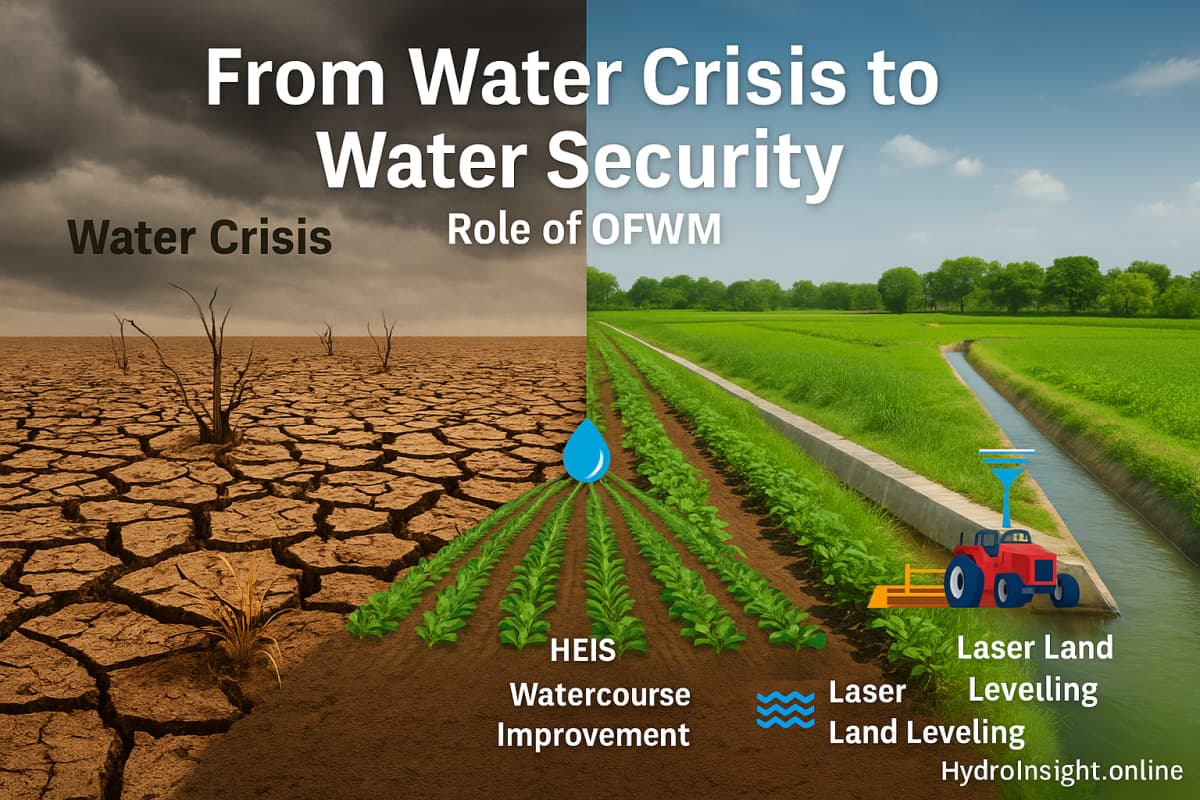
- Adopting High Efficiency Irrigation System (HEIS)
- Integrated pest management practice
- Adopting bed and furrow technique
B. Climate-Smart Mitigation
Climate change mitigation promotes practices that help to reduce greenhouse gas emissions like CH4 & CO2 . For example,
- Adopting Alternate Wetting and Drying (AWD) technique in paddy
- Increase carbon sequestration in farmlands through cover cropping, agroforestry etc
- Promoting zero tillage practice
- Solarization of diesel or electricity operated tubewells
C. Sustainable Production
Sustainable agriculture aims to increase crop production, improve farmers' profitability, conserve natural resources, and maintain long-term soil health without damaging the environment.
- Use balanced fertilizers based on soil testing.
- Adjust sowing dates according to changing climatic conditions.
- Monitor soil moisture to optimize irrigation scheduling.
- Adopt precision agriculture technologies
Challenges to Climate-Smart Agriculture
- Weak implementation of policies and institutional barriers
- Lack of knowledge and awareness of farming community
- Unavailability of certified heat and drought tolerant varieties
- Lack of funds for research and development on technologies
- Weakness of extension services
- Small and fragmented landholding
- Limited financial resources of small landholding farmers
- Climate related risks and extreme weather events
- Limited climate information and early warning systems
Solutions to Climate-Smart Agriculture Challenges
| Challenges | Recommended intervention |
| Policy and governance | Strengthen institutional coordination, ensure effective policy implementation, and establish transparent monitoring and accountability mechanisms. |
| Lack of awareness | Organize farmer training programmes, awareness campaigns, and demonstrations on climate-smart agricultural practices. |
| Climate vulnerability | Strengthen agricultural research, seed certification systems, and distribution networks to ensure farmers' access to climate-resilient crop varieties. |
| Lack of funds for R&D | Increase government funding and encourage private-sector investment and international climate finance for agricultural research and innovation. |
| Weak extension services | Strengthen agricultural extension departments by recruiting trained staff and providing regular farmer advisory and technical support services. |
| financial limitations | Provide affordable agricultural credit, targeted subsidies, crop insurance, and financial assistance for adopting climate-smart technologies. |
| Climate-related risks | Promote climate-resilient crops, diversified farming systems, sustainable water management, and climate adaptation practices. |
| Small landholdings | Promote farmer cooperatives, collective farming, and shared machinery services to improve economies of scale. |
| Weak institutions | Better coordination between federal and provincial governments |
| Market constraints | Improved storage, transportation and value-chain development |
| Limited climate information | Digital advisory services and improved early-warning systems |
Output of Climate Smart Agriculture
- Increase productivity
- Increase net return
- Improve input use efficiency
- Reduce greenhouse gas (GHG) emissions
- Increase resilience
Conclusion
Climate change is no longer a distant threat but a present-day reality which is reshaping Pakistan’s agriculture landscapes. The nation’s heavy dependence on agriculture makes it highly vulnerable to rising temperatures, erratic rainfall, and extreme climate events. Yet within this challenge lies a remarkable opportunity: to transform Pakistan’s agriculture into a climate-resilient and sustainable system through adaptation, mittigation and sustainable production strategies.
The effects of climate change on agriculture sector cannot be mitigated by providing subsidies, setting minimum support prices. It is prime responsibility of state and allied department to ensure the provision/availability of heat-resistant crop varieties, adoption of modern irrigation practices, access to advance farming machinary. Moreover, investment in research and development is equally important.
By adopting water-efficient irrigation systems, renewable energy sources, resilient crop varieties, and soil conservation practices, farmers can not only adapt to a changing climate but also help mitigate its impact. However, success demands more than just technology, it requires strong policy implementation. A coordinated effort between government, private sector, academia, and local communities can turn climate risks into growth opportunities.
Pakistan stands at a crucial crossroads. Choosing sustainability over short-term gains and resilience over vulnerability will determine its agricultural future. By embracing Climate-Smart Agriculture today, Pakistan can sow the seeds of a greener, stronger, and more food-secure tomorrow.
References
https://climateknowledgeportal.worldbank.org/sites/default/files/2019-06/CSA-in-Pakistan.pdf
https://www.sciencedirect.com/science/article/pii/S2667010021004078
https://concaveagri.com/climate-change/
https://www.apn-gcr.org/wp-content/uploads/2022/04/CSA-module-book-_-08-Apr-2022-2.pdf
https://openknowledge.fao.org/items/9a05e639-eff9-47bd-89b2-98d710f188e6
FAQs
What are the three pillars of climate-smart agriculture?
The three pillars of climate-smart agriculture (CSA) are sustainably increasing agricultural productivity and incomes, adapting and building resilience to climate change, and reducing and/or removing greenhouse gas emissions where possible.
What are the key conclusions about smart agriculture?
Smart agriculture represents the future of modern food production by combining data science, artificial intelligence, IoT sensors, and automation to maximize yields while minimizing environmental impact.