Water Scarcity: Global Overview & Pakistan’s Ranking
Explore global water scarcity, its causes and impacts, and discover Pakistan’s water scarcity ranking, challenges, and urgent water security needs.

Introduction
Over 70% of our Earth’s surface is covered by water. Although water is seemingly abundant, the real issue is the amount of fresh water available because 97.5% of all water on Earth is salt water in oceans and seas, leaving only 2.5% as fresh water. Agriculture represents 65% of the total water used globally. In Asia, it accounts for 86% of total annual water withdrawals, compared with 49% in North and Central America and 38% in Europe.
Water scarcity is rapidly becoming one of the most pressing global challenges of the 21st century. With rising populations, climate change, and unsustainable consumption patterns, many countries are facing severe water shortages. New data from WRI’s Aqueduct Water Risk Atlas show that at least 50% of the world’s population live under highly water-stressed conditions for at least one month of the year. Living with this level of water stress jeopardizes people’s lives, food and energy security.
This blog explores the global water crisis, Pakistan’s ranking and challenges along with practical solutions.
Importance of Water: Global and Pakistan Perspective
Water is central to growing crops and raising livestock, producing electricity, maintaining human health, fostering equitable societies and meeting the world’s climate goals. It means that water is essential for survival, economic growth, and environmental balance. Without reliable water resources, food systems collapse, economies weaken, and health crises emerge. Whereas in Pakistan, water plays an even more critical role due to:
- Heavy reliance on agriculture
- Single basin irrigation system
Agriculture alone consumes nearly 90% of Pakistan’s water, making water availability directly tied to food security and livelihoods.
Global Per Capita Water Availability and Concerns About Water Quantity & Quality
It is now recognized that fresh water will be a critical limiting resource for many regions in the 21st Century. In Asia, water has been recognized as an abundant resource but per capita availability declined by 40-60% between 1955 and 1990. On the other hand, most of Africa historically has been water-poor. Projections suggest that most Asian countries including Pakistan will have severe water problem by 2030.
As already mentioned, freshwater comprises only 2.5% of global water resources. Out of this only about 1.2% is freshwater in the lakes and rivers that has served as the major source of water. However, societies worldwide have not always appreciated this easily accessible freshwater and the need to protect it. Thus, water consumption has nearly doubled since 1960, and much of the world suffers greatly from inadequate access to potable water.
Demand for Water resources is continuing to increase. At the same time, the capacity of the planet to meet this demand is in decline because of over-harvesting, innapropriate agricultural practices, and pollution.
What’s Causing Global Water Stress?
Across the world, demand for water is exceeding and has more than doubled since 1960. Increased water demand is often the result of growing populations and industries like irrigated agriculture, livestock, energy production and manufacturing. Meanwhile, lack of investment in water infrastructure, unsustainable water use policies or increased variability due to climate change can all affect the available water supply.
Water stress is basically the ratio of water demand to renewable supply, measures the competition over local water resources. A country facing “extreme water stress” means it is using at least 80% of its available supply, “high water stress” means it is withdrawing 40% of its supply. Without better water governance, water stress will continue to get worse, particularly in places with rapidly growing populations, economies and climate variability.
Top Water-Stressed Countries & Pakistan’s Ranking
According to World Resource Institute report, Qatar ranked top of the list among most water stressed countries in the world. It has been witnessed that top water stressed countries lie in tropical belt with an average temperature ranging from 20 to 30 degree Celsius and receive less rainfall.
The top ten most water stressed countries are tabulated below.
- Qatar
- Israel
- Lebanon
- Iran
- Jordan
- Libya
- Kuwait
- Saudi Arabia
- Eriteria
- San Marino
Most of these countries rely heavily on desalination and groundwater depletion to meet their needs. North Africa is extremely water stress country. Middle east countries also water stress countries. Some part of Europe also include in water stress countries like Belgium and Greece are among top 25 water stress countries.
Pakistan ranks among the top 25 water-stressed countries globally, placing it in the high-risk category. Pakistan ranked at 14 number and India ranked at 13 number. Some alarming key facts about Pakistan are enlisted below:
- Per capita water availability has dropped from 5260 m3 in 1950 to less than 1000 m3 to date, approaching absolute water scarcity.
- Pakistan stores only 10% of available annual flows against the world average of 40% That’s why Pakistan has only 30 days storage as compare to India and America which have 130 days and 900 days storage respectively.
- On an average, annually 30 MAF water goes to sea unutilized because of limited storage capacity.
- Over 80% of the population faces seasonal water scarcity.
- Indus basin aquifer is the 2nd most over stressed aquifer in world which meets around 50% water requirement of agriculture sector, 70% domestic and 100% industrial demand.
- Groundwater has become inaccessible in 15% and 20% of the irrigated area of Punjab and Baluchistan respectively.
Top Water consuming countries
In 1975 Pakistan ranked at 3rd number in the list of most water consuming countries list after India and China but now ranked at 5th position because USA and Indonesia have crossed Pakistan.
- India
- China
- USA
- Indonesia
- Pakistan
Top countries having renewable fresh water resources
- Brazil
- Russia
- Canada
- USA
- China
- Columbia
- Indonesia
- Peru
- India
- Congo
Notably, Pakistan does not rank among the world’s top ten countries in terms of renewable freshwater resources. Yet, paradoxically, Pakistan is among the countries with very high levels of water consumption. This stark imbalance between limited water availability and excessive consumption. As a result, per capita water availability in Pakistan has declined dramatically over the decades, transforming water scarcity from a future concern into a pressing challenge that demands immediate and responsible action.
Major Causes of Water Crisis in Pakistan
1. Rapid Population Growth
Pakistan population has increased by 2.6 times during last 6 decades but storage capacity remained stagnant that is around 14 MAF including Terbela, Mangla and Chashma. Pakistan has not built any new storage since commissioning of Terbela.
2. Climate Change
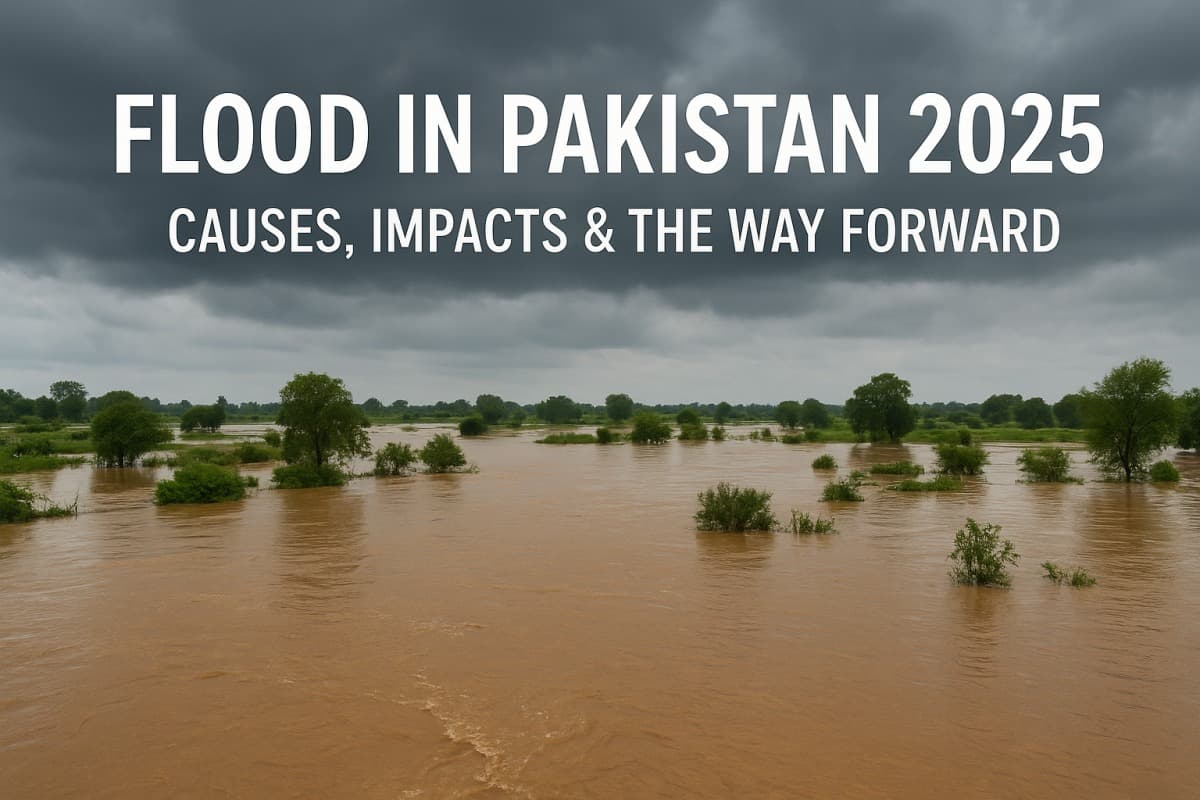
Pakistan is located in a heat surplus zone, which makes the country more vulnerable to climate change. Pakistan ranked among top 10 countries which are highly affected by prevailing challenge of climate crisis. During the last three decades, Pakistan has witnessed intense and frequent floods, long-duration droughts, heat waves, erratic rainfall patterns, glacial retreats, and Glacial Lake Outburst Flood (GLOF) phenomena. These climate crises make water availability highly unpredictable.
3. Groundwater Over-Exploitation
Unregulated extraction is lowering water tables at alarming rates. Average annual abstraction of groundwater is about 55 MAF which has crossed the safe yield limit. Many tubewells have gone out of production whereas production of many tubewells has reduced below 50%. Groundwater has become inaccessible in 15% and 20% of the irrigated area of Punjab and Baluchistan respectively.
4. Limited Storage
Pakistan stores only 10% of available annual flows against the world average of 40%. That’s why Pakistan has only 30 days storage as compare to India and America which have 130 days and 900 days storage respectively. On an average, annually 30 MAF water directly goes to sea unutilized because of limited storage capacity (Pakistan's Water Resources).
5. Transboundary Disputes
Existing and proposed development on western rivers by India badly impacted water availability in Pakistan. Pakistan is fighting a losing battle on this front.The unilateral suspension of the Indus Water Treaty by India has severely affected the flows of the western rivers, placing Pakistan’s agriculture and overall economy under significant pressure.
6. Poor Water Management
The country’s irrigation is one of the most inefficient in the world with an overall efficiency of 40 percent, reflecting aging and poor maintenance of the irrigation system. This means, out of 143 BCM of water available at the canal headworks, only 55 BCM is being used for the farm sector. The rest (61 percent or 87 BCM) of water is lost during conveyance through canals, distributaries, minors and watercourses and during application in the field.
7. Water Quality Deterioration
Both surface and groundwater reserves of water are getting deteriorated due to indiscriminate discharge of untreated wastewater from industrial, agriculture and domestic sector. Subsequently this is leading to severe contamination of groundwater (including drinking water), pollution of surface water in major rivers and seawater. Pakistan ranks among the countries with the lowest water treatment rate.
8. Competing Demands & Future Water Requirements
Water is becoming scarcer due to continuous increase in competing demands of various sectors like agriculture, domestic and industry. All additional water requirements of these sectors will have to be met out of the water already committed to agriculture which is barely able to meet the existing need. The study has established that Pakistan need 40 MAF additional water requirement by the year 2050 at the farm gate or 50 MAF additional diversion.
9. Inefficient Irrigation Practices
Traditional irrigation methods waste large amounts of water. Agriculture sector consumes almost 90% of Pakistan’s total available freshwater and relies on centuries old inefficient irrigation practice of flood irrigation. Currently, nearly 90% of farmers depend on this highly inefficient method, which results in massive water losses, declining water productivity, and increasing environmental degradation.In a country where per capita water availability has drastically declined and climate variability is intensifying, continuing with such inefficient irrigation practices is no longer viable.
Pakistan-Specific Solutions
1. Increase Water Storage Capacity
Pakistan needs more dams and reservoirs to store seasonal water. Amid prevailing challenges of increasing population, climate change, water scarcity and food insecurity, Pakistan need additional storage of 40 MAF by 2050 which is only possible by constructing large storage dams on top priority basis which will help in conservation of unutilized water of 30 MAF below Kotri.
2. Modernize Irrigation Practices
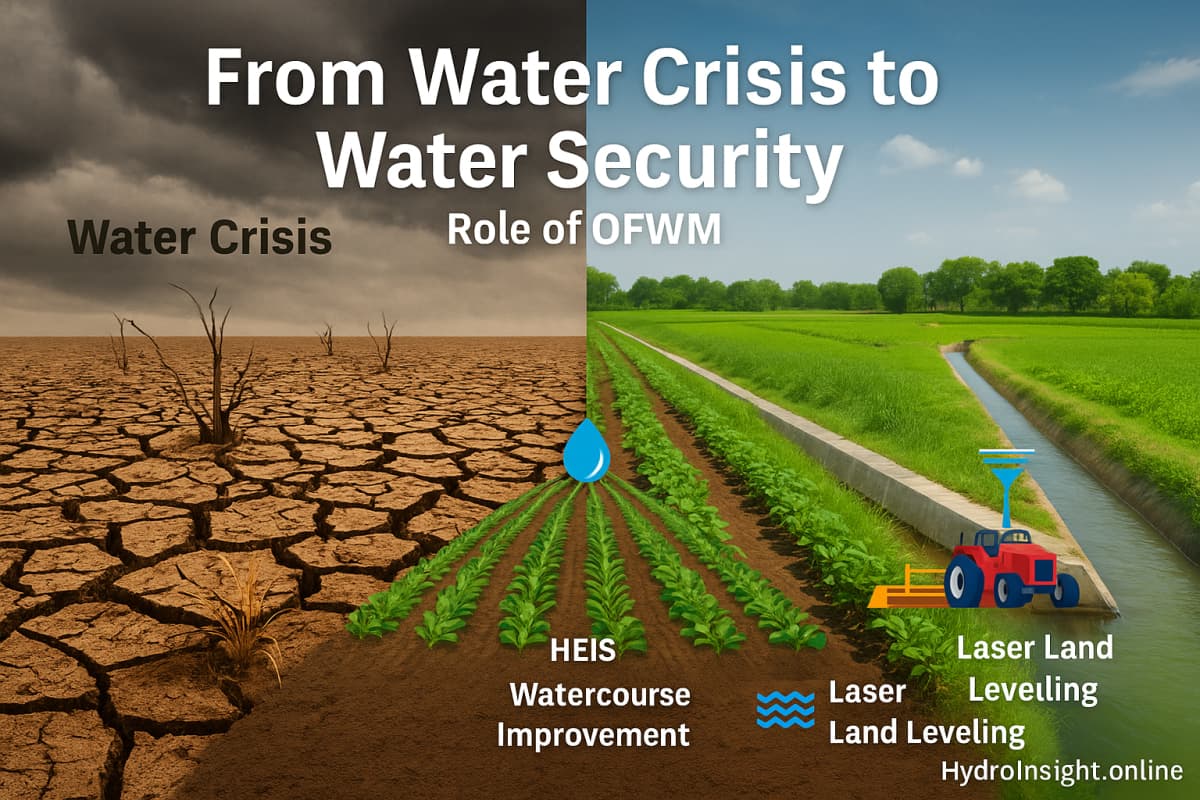
Need to replace inefficient flood irrigation with High Efficiency Irrigation System (HEIS) like drip and sprinkler system, Bed & Furrow irrigation and Alternate Wetting and Drying (AWD) techniques etc. The drip system is 95% efficient is properly installed whereas sprinkler system is up to 85% efficient.In addition, these modern technologies make farmers resilient to climate variability.
3. Promote Water Conservation
Construction of dams require huge financial resources. Amid dwindling economic condition, focus should be given on conserving water to achieve the short and medium term goals which is possible by rainwater harvesting, increasing conveyance efficiency, on farm water management, efficient use of water in every sector, waste water treatment etc.
4. Regulate Groundwater Use
Policies must control excessive extraction. There is dire need to develop regulatory framework for efficient utilization of ground water. An effective monitoring and management system that encourages ground water sustainability is needed. Initial focus should be given to groundwater monitoring and gradually shifted to the groundwater management.
5. Shift Agricultural Practices
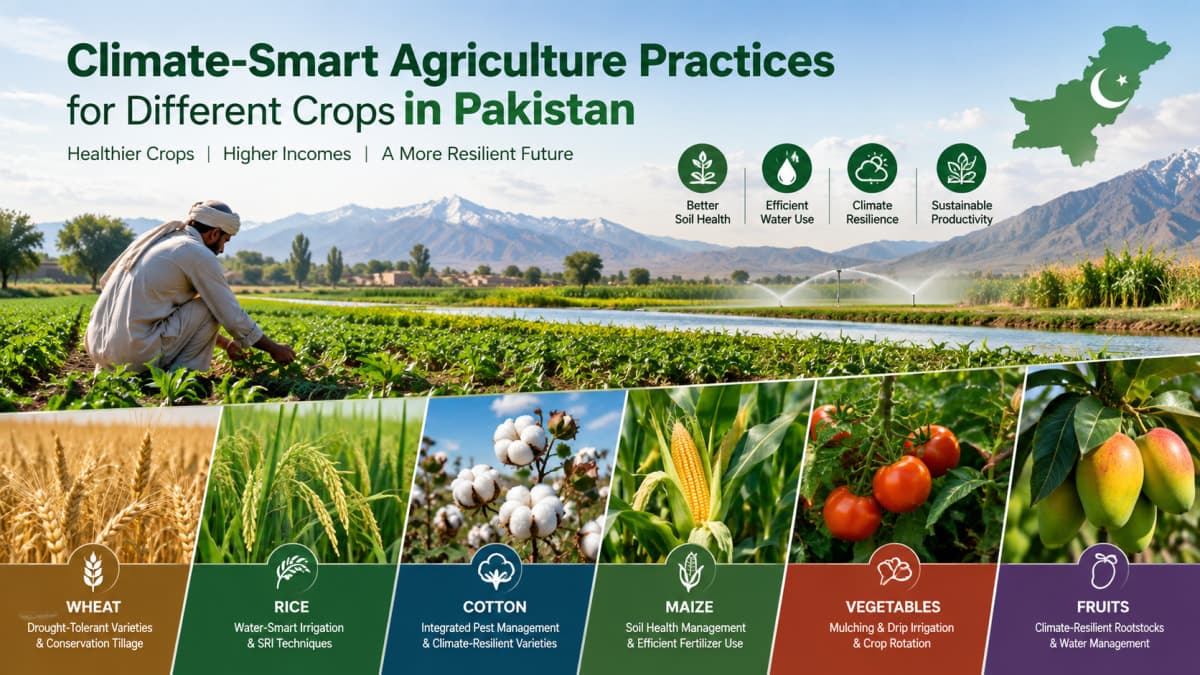
Encouraging less water-intensive crops can reduce demand.Currently, Pakistan grows highly water intensive crops like Rice, Wheat, Maize, Cotton and Sugarcane. These crops consume 80% of the total water available to the agriculture sector and contributes only 5% in national GDP. Under present situation of water scarcity, we need to focus on less water intensive crops like pulses and oilseeds. Secondly, sowing of high value crops on High Efficiency Irrigation System (HEIS) should be encourage.
6. Public Awareness
The participatory approach involves raising awareness of the importance of water among policy makers and general public. The awareness campaign regarding water issues, self-regulation, groundwater monitoring and management interventions need to be started through electronic and print media.
7. Water Pricing
Past failure to recognize the economic value of water has led to wasteful and environmentally damaging uses of the resources. Managing water as an economic good is an important way of achieving efficient and equitable use and of encouraging conservation and protection of water resources.
8. Strengthen Water Governance
Better policies, enforcement, and institutional coordination are critical. Strengthening water governance is the key to ensuring that water resources are managed efficiently, protected responsibly, and distributed fairly. If timely and coordinated actions are taken, Pakistan can address its current water challenges.
9. Wastewater Recycling
Pakistan can turn wastewater from a source of pollution into a source of water, nutrients and economic value through treatment, recycling and safe reuse. It converts a currently underused and often polluting stream into a reliable secondary water source, reduces pressure on groundwater and rivers, supports agriculture and industry, and improves the quality of Pakistan's environment.
10. Climate Resilience
A climate resilient approach does not simply try to increase the supply of water; it makes the entire water system more efficient, flexible and capable of coping with uncertainty. This is particularly important because climate change affects water through both too little water (drought) and too much water (flooding), while also increasing pollution and unpredictability.
Conclusion
The global water crisis is no longer a distant threat, it is a present reality. Many countries are already experiencing severe water stress, and Pakistan is among the most vulnerable. Without immediate and coordinated action, water scarcity could severely impact Pakistan’s economy, food security, and public health. However, through sustainable practices, technological innovation, and effective governance, the crisis can still be managed.
The time to act is now.
“water scarcity in not about just having less water, it’s about survival, economics and national security all rolled into one. When aquifer run dry, cities don’t just get thirsty; they collapse, agriculture fails, industry shut down. People migrate in massive waves that can create conflict in entire region.”
REFERENCES
World Resources Institute (WRI) – Water Stress Rankings
World Bank – Water Resource Management
https://www.iwmi.org/news/explainer-alternate-wetting-and-drying-irrigation-technique/
https://www.seagoinggreen.org/blog/2023/05/23/2023-5-23-7-sustainable-solutions-to-water-scarcity
FAQs
What are water-stressed countries?
Water-stressed countries are those where water demand exceeds available supply or where access to clean water is limited.
Why is Pakistan water-stressed?
Pakistan faces water stress due to population growth, inefficient irrigation, groundwater depletion, and climate change.
Which region is most affected by water stress?
The Middle East and North Africa (MENA) region has the highest concentration of water-stressed countries.
What is Pakistan’s water future?
If current trends continue, Pakistan may face severe water shortages in the coming decades.
How can water scarcity be reduced?
Through conservation, efficient irrigation, wastewater reuse, and better water management policies.