Pakistan’s National Water Policy 2018: Key Features, Goals & Implementation Challenges
Learn about Pakistan’s National Water Policy 2018. Its key features, goals, and implementation challenges. A simple overview of how Pakistan plans to manage its water future.

1. Introduction
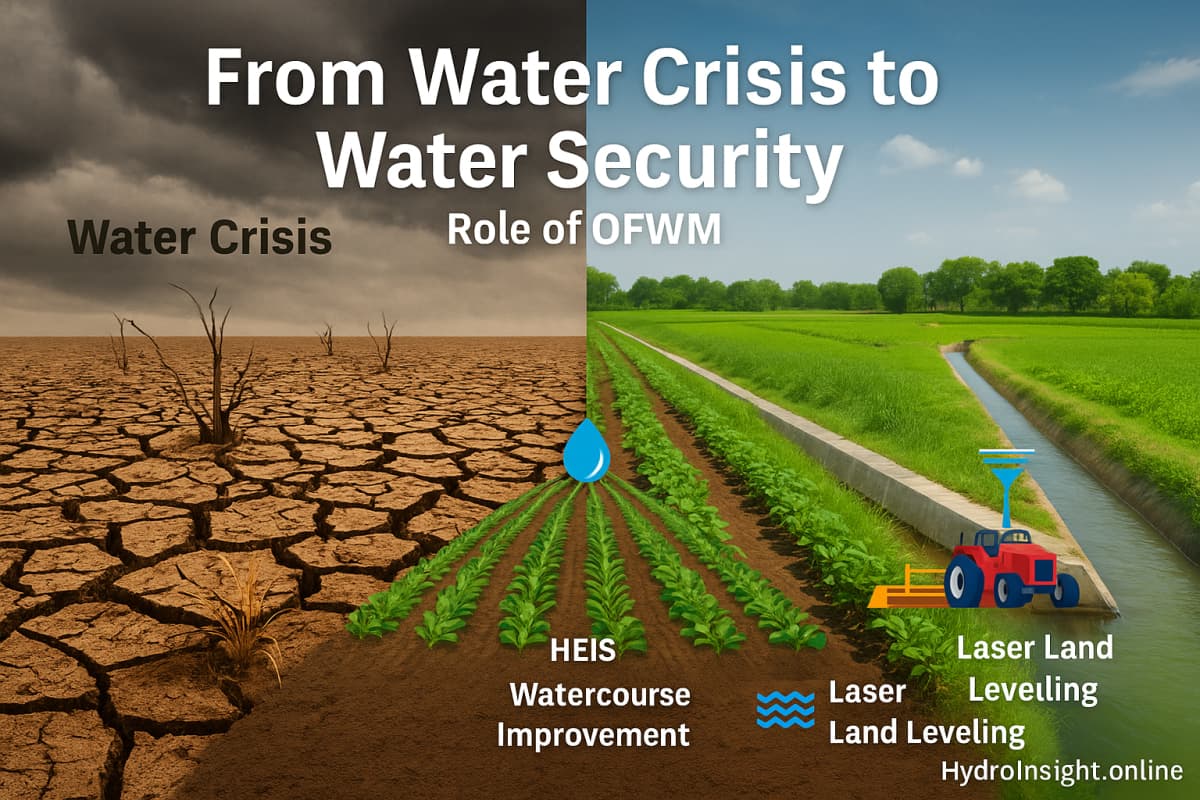
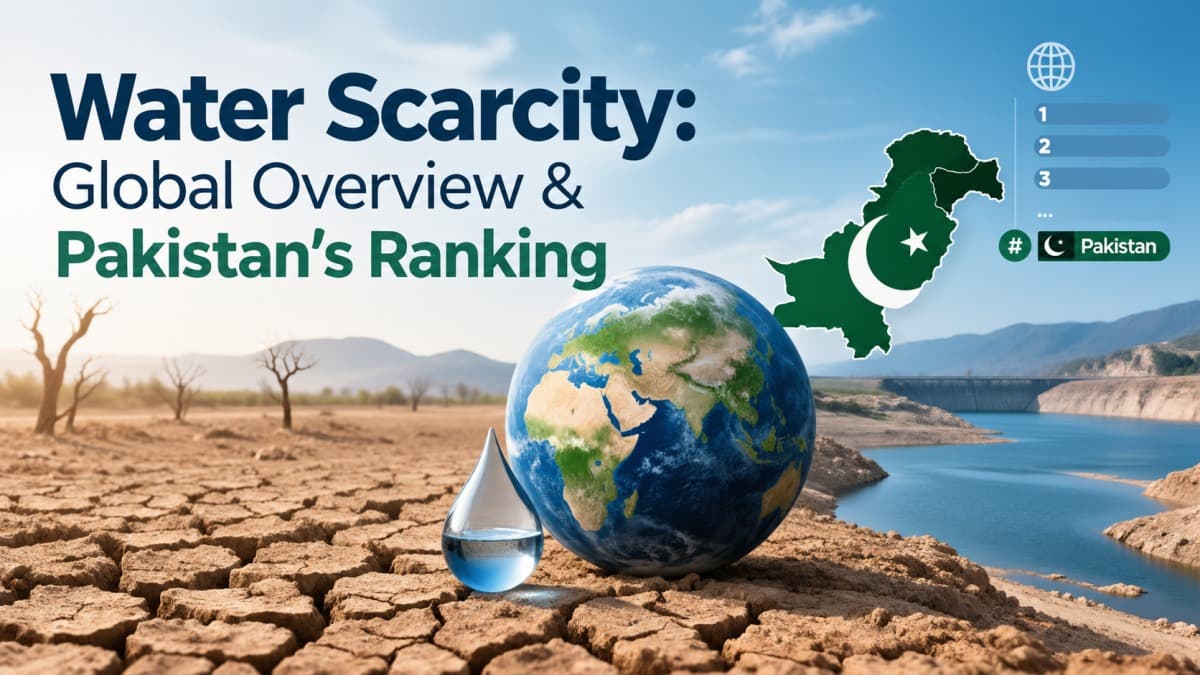
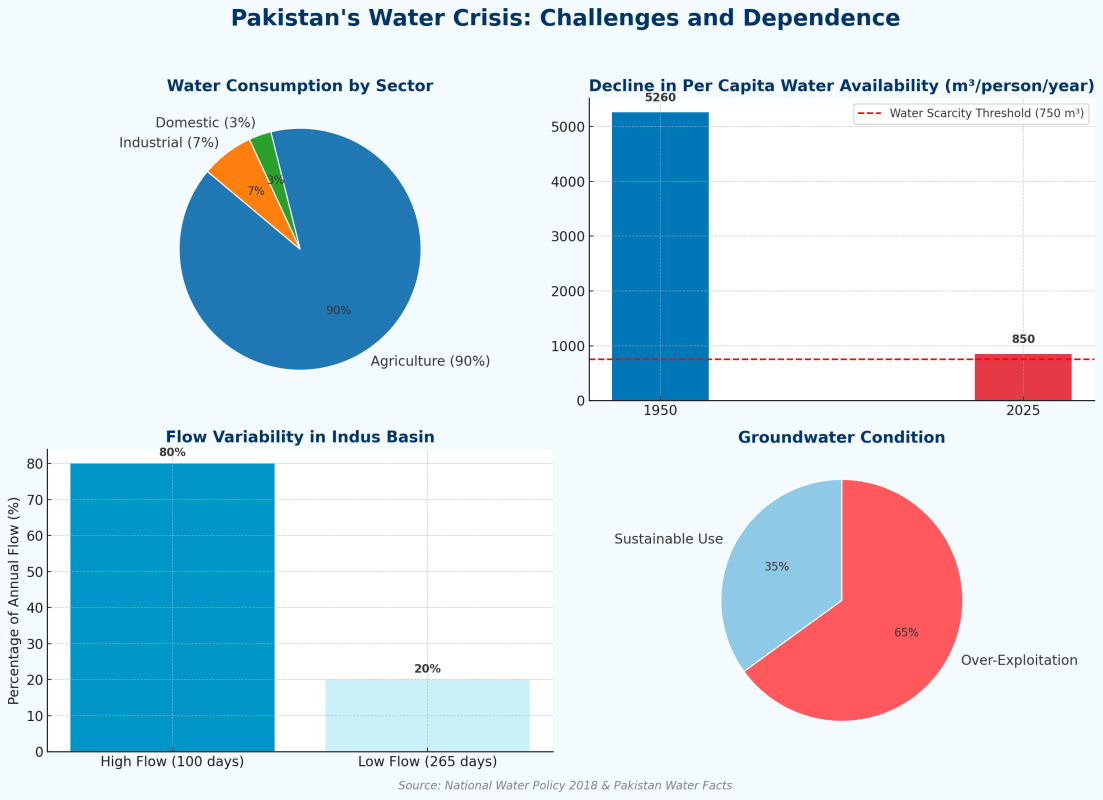
Water is the lifeline of Pakistan, the foundation of its agriculture, economy, and survival. Agriculture sector consumes 90% of available water whereas consumption in domestic and industrial sector is 3% and 7% respectively. Being a single basin country which receive 80% of flows from outside the country also make it more vulnerable that’s why country stands at the brink of a severe water crisis. In addition, rapid population growth, mismanagement of water and climate change have pushed Pakistan into a state where water scarcity threatens food security and livelihoods.
In 1950, per capita water availability was about 5260 m3/person/anum which has reduced to 850 m3 almost near to threshold of water scarcity that is 750 m3. Pakistan receives 80% of it’s flows during 100 days and rest of the 20% flows in 265 days. This variability in flows further widens the gap between supply and demand, ultimately increase stress on groundwater resources.
Groundwater contribution in uplifting the Pakistan’s economy by increasing crop productivity are tremendous. But uncontrolled and unregulated abstraction of groundwater has put this precious resource under severe stress.
To address above issues, the Government of Pakistan launched the National Water Policy (NWP) in 2018, a landmark document aimed at ensuring sustainable water management and equitable distribution across all sectors. It is indeed a tremendous achievement in itself that we were able to come to a consensus on the document. National water policy is based on Integrated Water Resource Management (IWRM) and set a principles/framework so that federal and provincial governments may devise their master plan in the light of National Water Policy 2018. The policy also embraces the recommendations of the National Climate Change Policy (2012) to counter the adverse effects of climate change.
This blog will give you deep insight regarding the key features, goals, and challenges of Pakistan’s National Water Policy 2018.
2. Drivers of the National Water Policy 2018
a. Geographic location of Pakistan
Pakistan is located in heat surplus zone making it more vulnerable to climate change.
b. Limited storage
Pakistan has only 30 days storage with total available capacity of about 14 MAF. Pakistan stores only 10% of its surface supplies which is very low as compare to the world average that is 40%.
c. Trans-boundry development on Western rivers
Already executed and planned trans-boundry development on westen rivers by India is vioaltion of Indus Water Treaty which is not only threatening the availability of flows in Pakistan but also affecting the ecology, morphology and ecosystem of Indus River Basin System.
d. Climate change
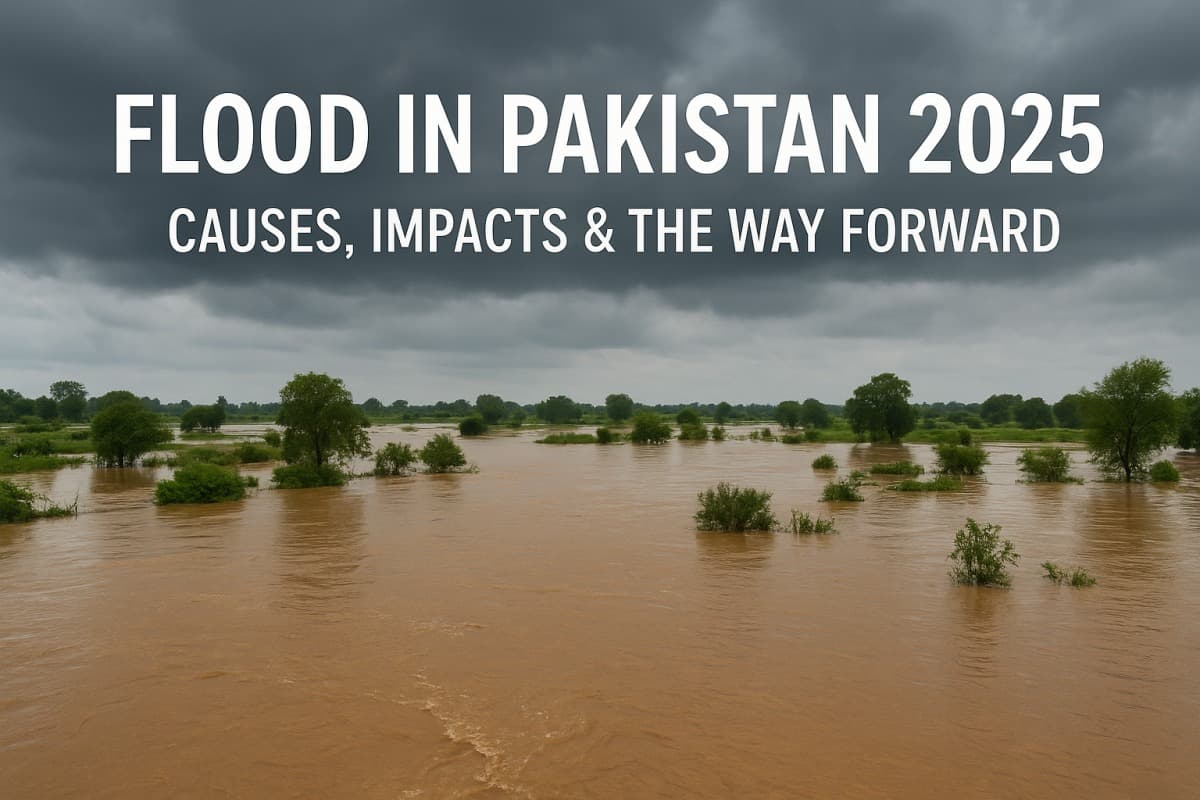
Pakistan ranked among top 10 most vulnerable countries to climate change. Due to prevailing challenges of climate change, Pakistan is experiencing phenomena of extreme weather events, Glacier retreat, Glacial Lake Outburst Floods(GLOF), more frequent and intense floods and droughts, changing and unpredictable precipitation patterns etc.
e. Population growth
Pakistan population has increased by 2% during last 5 decades and expected to reach 260 million by 2050 and may seriously threats the already finite fresh water resources.
f. Overexploitation of groundwater
Uncontrolled and unregulated abstraction of groundwater has put this precious resource severe stress.
g. Lack of awareness
Wastage and misuse of fresh water by general public is posing serious threat to already limited water resources.
h. Deteriorating water quality
Unchecked addition of waste coming from agriculture, domestic and industrial sectors is deteriorating the quality of fresh water resources at fast rate
i. Lack of equity in water allowance
Lack of equity in water allowance at different canal commands resulting in salt and water imbalance at regional level
j. Deteriorating soil quality
Negative salt balance is deteriorating the soil which leads to poor crop yield and water productivity.
k. Food & Energy insecurity
Without water security, food and energy security can not be ensured. Prevailing challenges of climate changes, population growth and limited storage has posed serious threats to food and energy security.
l. Lack of data
lack of Transparent, accurate and timely data has resulted in poor decision making in past.
3. Key Goals of the National Water Policy 2018
The NWP outlines a visionary roadmap to safeguard Pakistan’s water future. Its major goals include:
Management related goals
1. Watershed Management– Improving watershed management through soil conservation, preserving the forest and increasing forest cover.
2. Flood Management– To mitigate flood and minimize the flood damages
3. Drought Management– For long term vulnerability reduction
4. Urban Water Management–For handling of waste water and industrial effluent
5. Groundwater Management– To regulate the uncontrolled abstraction of groundwater
Development related goals
6. Hydropower Development– To increase share of renewable energy
7. Storage Development– Building new dams to minimize the gap between supply & demand and to meet future water demands.
Others Goals
8. Ensuring Water Security for All – To provide every citizen access to safe, affordable, and sufficient water for domestic, agricultural, and industrial use.
9. Strengthening Water Governance – Establishing a National Water Council (NWC) for coordination between federal and provincial governments.
10. Promoting Water Conservation – Encouraging efficient use through modern irrigation technologies and awareness campaigns.
11. Protecting the Environment – Preserving rivers, wetlands, and ecosystems by maintaining minimum environmental flows.
12. Adapting to Climate Change – Preparing for floods, droughts, and glacier melt impacts through proactive planning.
13. Improving Drinking Water and Sanitation – Ensuring universal access to safe drinking water and proper sanitation facilities.
14. Public Participation – Involving citizens, farmers, and industries in water decision-making and management.
15. Upgrading Water Information system– To collect transparent, accurate and timely data to develop decision support system which will be helpful in data base decision making
16. Water Pricing– Adequate water pricing to meet O&M of irrigation system
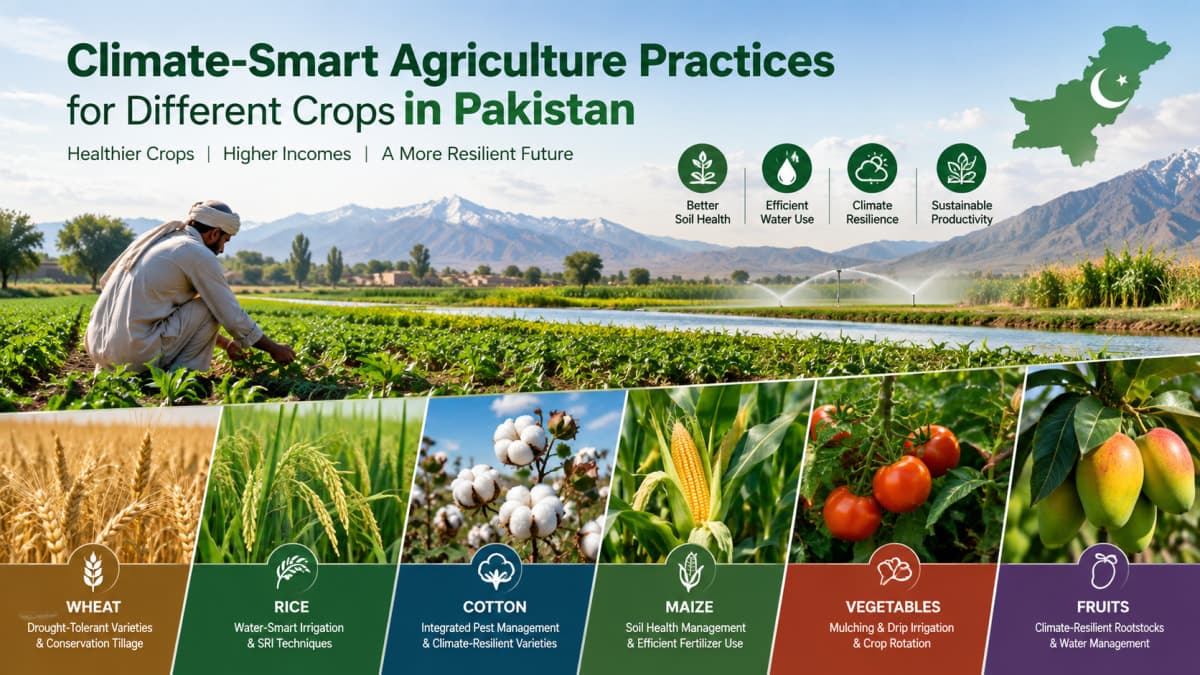
17. Enhancing Water Productivity– By adopting improved irrigation practices and method at farm level
4. Key Features of the National Water Policy
a. Integrated Water Resource Management
The policy adopts a basin-level planning approach, combining surface and groundwater management to ensure long-term sustainability.
b. Water Conservation and Efficiency
Introduces strategies to reduce wastage, recycle wastewater, and promote water-efficient technologies in homes, industries, and farms.
c. Regulation of Groundwater
Acknowledges the urgent need to regulate groundwater extraction and proposes laws to prevent overuse and contamination.
d. Urban Water Management
Focuses on minimizing losses in urban supply networks and increasing wastewater treatment, which is currently under 1%.
e. Hydropower and Renewable Energy
Encourages hydropower as a clean, renewable source to reduce dependence on imported fuels.
f. Water Quality and Pollution Control
Calls for national standards, strict enforcement, and continuous monitoring of both surface and groundwater quality.
g. Flood and Drought Preparedness
Includes early warning systems, watershed management, and infrastructure to mitigate water-related disasters.
h. Legal and Institutional Reforms
Proposes modernization of outdated water laws and strengthening of water-related institutions for effective coordination and transparency.
5. Implementation Challenges
While the policy is visionary, it faces several implementation challenges:
a. Institutional Fragmentation
Overlapping roles among federal, provincial, and local bodies cause delays and inefficiency.
b. Financial Constraints
Infrastructure like dams, treatment plants, and irrigation modernization require heavy investment.
c. Weak Enforcement
Groundwater laws and pollution regulations often lack proper implementation.
d. Public Awareness
Many citizens remain unaware of the crisis and continue unsustainable water usage practices.
e. Climate Change Impacts
Irregular rainfall, glacial melting, and extreme events continue to disrupt planning.
f. Data and Monitoring Gaps
Lack of reliable and shared data affects informed decision-making and transparency.
6. The Way Forward
For Pakistan’s National Water Policy 2018 to succeed, the following steps are crucial:
- Strengthen coordination between provinces and the federal government.
- Invest in modern irrigation systems and urban water infrastructure.
- Enforce pollution control and groundwater management laws.
- Promote public awareness and community participation.
- Integrate climate resilience into all water development projects.
7. Conclusion
The National Water Policy 2018 is a historic milestone for Pakistan. It provides a clear roadmap for tackling water scarcity, improving governance, and ensuring sustainability. However, true success depends on effective implementation through political will, institutional reform, and citizen participation.
With a collective effort, Pakistan can transform its water challenges into opportunities for a more secure, resilient, and sustainable future.
References
https://mowr.gov.pk/SiteImage/Misc/files/National%20Water%20Policy.pdf
https://dialogue.earth/en/water/pakistan-national-water-policy/
https://thecsspoint.com/pakistans-national-water-policy-by-dr-imran-khalid/
FAQs
What is the main goal of a national water policy?
A National Water Policy 2018 (NWP) shapes the goals and objectives for the development and management of water resources and related services. Following the Integrated Water Resource Management (IWRM) approach, NWP is intended to cover all water-related sectors (e.g., drinking-water, irrigation, disaster risk, navigation, land use, etc.).
What is the Pakistan water Vision 2025?
Pakistan Vision 2025 recognizes that sufficient, reliable, clean and cost-effective availability of energy, water and food – for now and the future – is indispensable to ensure sustainable economic growth and development.